
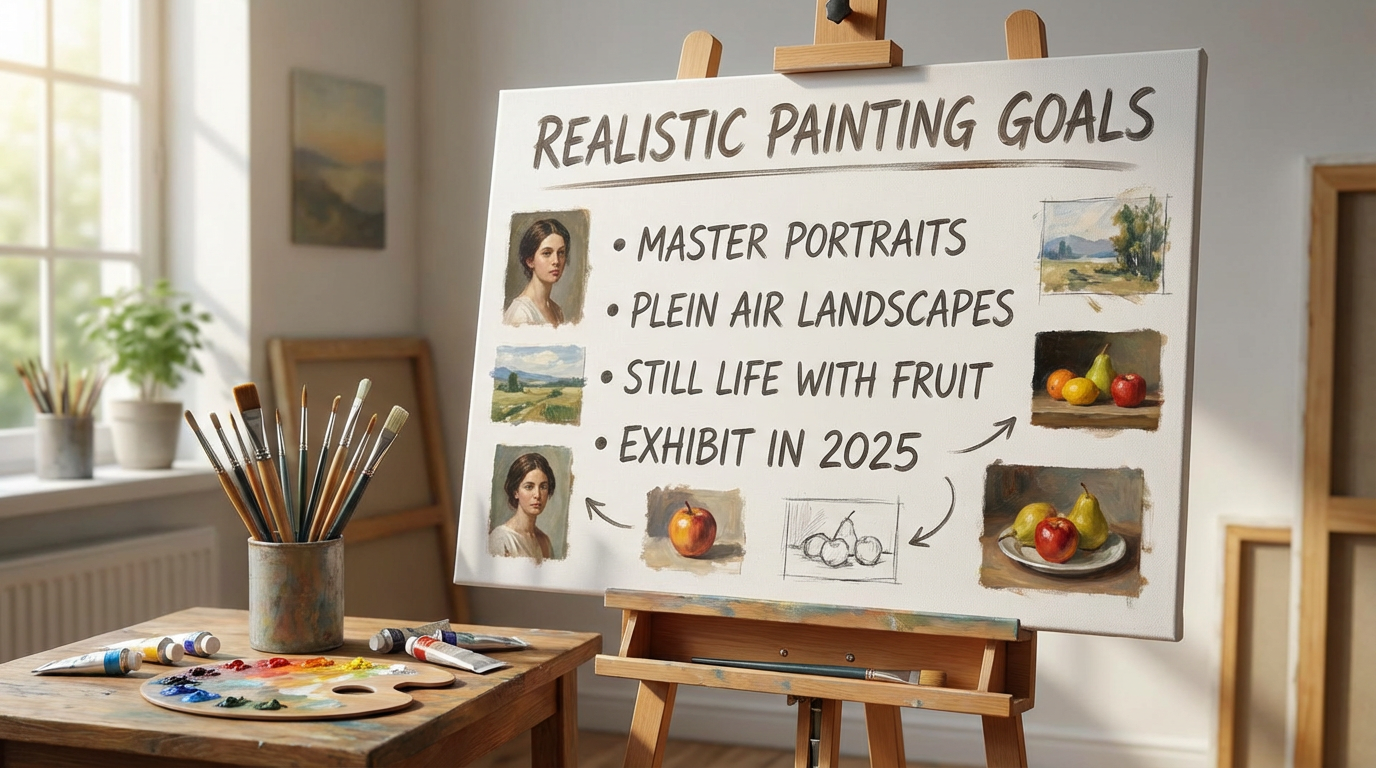

Every painter dreams of improvement. Better technique. Stronger confidence. A clearer voice. Yet many artists stall, not because of lack of talent, but because their goals work against them. Setting realistic painting goals is often the difference between steady growth and constant frustration.
Think of progress like hiking a long trail. If you focus only on the mountain peak, exhaustion hits early. However, when you focus on the next marker, momentum builds. Painting works the same way. Growth happens through small, intentional steps that add up over time.
This article shows how to set realistic painting goals that support learning, motivation, and long-term success. No pressure. No guilt. Just progress that feels sustainable.
Why Realistic Painting Goals Matter More Than Big Dreams
Big dreams inspire. Still, they rarely guide daily action.
Many painters set goals like “become amazing” or “paint like a master.” These goals sound motivating. Unfortunately, they offer no clear direction. When progress feels slow, discouragement follows.
Realistic painting goals translate ambition into action. They break the journey into achievable steps. Each step builds confidence. Over time, small wins create lasting momentum.
The Hidden Cost of Unrealistic Painting Goals
Unrealistic goals drain energy quietly.
Painting every day for hours may sound admirable. However, it often leads to burnout. Missed days create guilt. Guilt kills motivation.
When goals demand perfection or speed, joy disappears. Painting becomes a chore rather than a practice. Growth slows because stress replaces curiosity.
Realistic painting goals protect enthusiasm. They align effort with real life instead of fantasy schedules.
Understanding What “Steady Growth” Really Looks Like
Growth in art is not linear. Plateaus happen. Breakthroughs appear suddenly.
Expecting constant improvement creates false expectations. Real growth looks uneven. Some weeks feel stagnant. Others feel transformative.
Setting realistic painting goals accounts for this rhythm. It allows space for rest, reflection, and absorption. Progress happens quietly, then reveals itself clearly.
Start with Process Goals, Not Outcome Goals
Outcome goals focus on results. Process goals focus on actions.
Instead of aiming to “paint better,” aim to “practice color mixing twice a week.” Instead of “sell art,” aim to “finish one painting this month.”
Process goals create control. Outcomes depend on many variables. Processes depend on you.
Realistic painting goals rooted in process feel achievable. Each completed action builds trust in yourself.
How to Break Large Goals into Manageable Steps
Large goals overwhelm easily.
Break them down until each step feels almost too easy. That is a good sign.
For example, instead of “master portrait painting,” start with “sketch facial planes for 20 minutes twice a week.” Each small step supports the larger vision.
Realistic painting goals work like bricks. One brick seems insignificant. Together, they build a foundation.
Aligning Painting Goals with Your Current Skill Level
Ambition often outruns skill. That gap creates frustration.
Assess your current abilities honestly. Identify strengths and weaknesses without judgment.
Set goals slightly above your comfort zone. Not far beyond. Stretching gently encourages growth. Leaping too far causes strain.
Realistic painting goals respect where you are while pointing forward.
Time-Based Goals That Actually Work
Time-based goals feel straightforward. However, they require realism.
Instead of committing to long sessions, choose shorter, consistent blocks. Thirty minutes twice a week beats three hours once a month.
Consistency builds habits. Habits support growth. Short sessions reduce resistance.
Realistic painting goals fit into life instead of fighting it.
Using Skill-Focused Goals for Clear Progress
Skill-focused goals target specific areas.
Examples include improving edges, studying value, or practicing brush control. These goals sharpen awareness.
When goals focus on one skill at a time, improvement becomes noticeable. That visibility boosts motivation.
Realistic painting goals work best when attention narrows before expanding again.
Setting Realistic Painting Goals for Creative Confidence
Confidence grows through repetition, not praise.
Completing achievable goals reinforces belief in your ability to follow through. Each finished task builds momentum.
Confidence fades when goals remain unfinished. Therefore, aim for completion over ambition.
Realistic painting goals create success loops. Success encourages effort. Effort fuels improvement.
Why Comparing Goals to Other Artists Backfires
Comparison distorts perception.
Every artist has different schedules, backgrounds, and responsibilities. Measuring your goals against others ignores context.
Focus on personal progress instead. Compare today’s work to last month’s, not someone else’s highlight reel.
Realistic painting goals center on self-improvement rather than external benchmarks.
Adjusting Goals Without Guilt
Goals are not contracts. They are tools.
Life changes. Energy shifts. Interests evolve. Adjusting goals reflects awareness, not failure.
If a goal no longer serves growth, revise it. Reduce scope. Change focus.
Realistic painting goals remain flexible. Flexibility supports sustainability.
Balancing Discipline and Enjoyment
Discipline drives consistency. Enjoyment fuels longevity.
Goals should challenge without draining joy. If painting feels heavy, reassess.
Include playful goals occasionally. Try new subjects. Explore techniques without pressure.
Realistic painting goals blend structure with curiosity.
Tracking Progress Without Obsession
Tracking progress helps motivation. Obsession harms it.
Use simple markers. Finished paintings. Hours practiced. Skills explored.
Avoid perfection metrics. Growth shows in subtle ways. Improved decisions. Faster corrections. Increased confidence.
Realistic painting goals focus on direction rather than speed.
Short-Term Goals Versus Long-Term Vision
Long-term vision provides direction. Short-term goals provide movement.
Define a broad vision. Then set short-term goals that support it.
For example, a long-term goal might involve gallery readiness. Short-term goals could include finishing a small series or refining composition skills.
Realistic painting goals bridge vision and action effectively.
Creating Weekly Painting Goals That Stick
Weekly goals feel immediate and achievable.
Choose one to three small objectives. Avoid overcrowding.
Clear goals prevent indecision. You sit down knowing exactly what to do.
Realistic painting goals thrive when simplicity leads the way.
Monthly Goals for Reflection and Adjustment
Monthly goals allow evaluation.
Review what worked. Notice challenges. Adjust upcoming goals accordingly.
Reflection prevents stagnation. It reveals patterns and preferences.
Realistic painting goals evolve through regular reflection.
Using Challenges and Prompts Wisely
Challenges motivate some artists. They overwhelm others.
Choose challenges aligned with your goals. Avoid pressure-driven events that conflict with learning needs.
Prompts encourage exploration without expectation. They support creativity gently.
Realistic painting goals use external tools selectively.
Goal Setting for Hobbyists Versus Aspiring Professionals
Hobbyists prioritize enjoyment. Professionals balance enjoyment with output.
Both need realistic goals. The difference lies in structure.
Professionals may include deadlines and series. Hobbyists may focus on exploration and skill-building.
Realistic painting goals adapt to intention rather than status.
Recognizing When Goals Are Too Easy
Goals should challenge slightly.
If goals feel effortless, growth may stall. Increase difficulty gently.
Add complexity. Increase frequency. Introduce new skills.
Realistic painting goals evolve as capacity grows.
Using Failure as Feedback, Not Proof
Missed goals happen. They are data, not verdicts.
Analyze why. Too ambitious? Poor timing? Lack of clarity?
Adjust accordingly. Learning replaces self-criticism.
Realistic painting goals improve through feedback loops.
Building Long-Term Momentum Through Small Wins
Small wins compound.
Each completed goal reinforces trust in your process. Over time, confidence solidifies.
Momentum feels effortless once habits form. Growth becomes natural.
Realistic painting goals prioritize consistency over intensity.
How Goal Clarity Improves Focus While Painting
Clear goals reduce mental noise.
When you know what you are practicing, distractions fade. Focus sharpens.
Sessions feel purposeful rather than random.
Realistic painting goals guide attention effectively.
Knowing When to Pause Goal Setting
Sometimes, rest supports growth.
Burnout signals the need for pause. Stepping back renews perspective.
Returning refreshed improves quality.
Realistic painting goals include permission to rest.
Conclusion
Setting realistic painting goals transforms the artistic journey. It replaces pressure with purpose. It trades overwhelm for clarity. Through manageable steps, steady growth becomes inevitable rather than forced.
Realistic goals honor where you are while guiding where you want to go. They support confidence, consistency, and joy. Over time, small efforts compound into meaningful progress. Painting stops feeling like a race. It becomes a path you enjoy walking.
FAQ
1. How many painting goals should I set at once?
One to three goals works best to maintain focus and momentum.
2. Should goals be skill-based or project-based?
Both work well, but skill-based goals often support deeper growth.
3. What if I miss my painting goals consistently?
Reduce scope and reassess time expectations without self-judgment.
4. Can realistic painting goals still be ambitious?
Yes, ambition works when broken into achievable steps.
5. How often should I revise my painting goals?
Review them monthly or whenever motivation or circumstances change.