
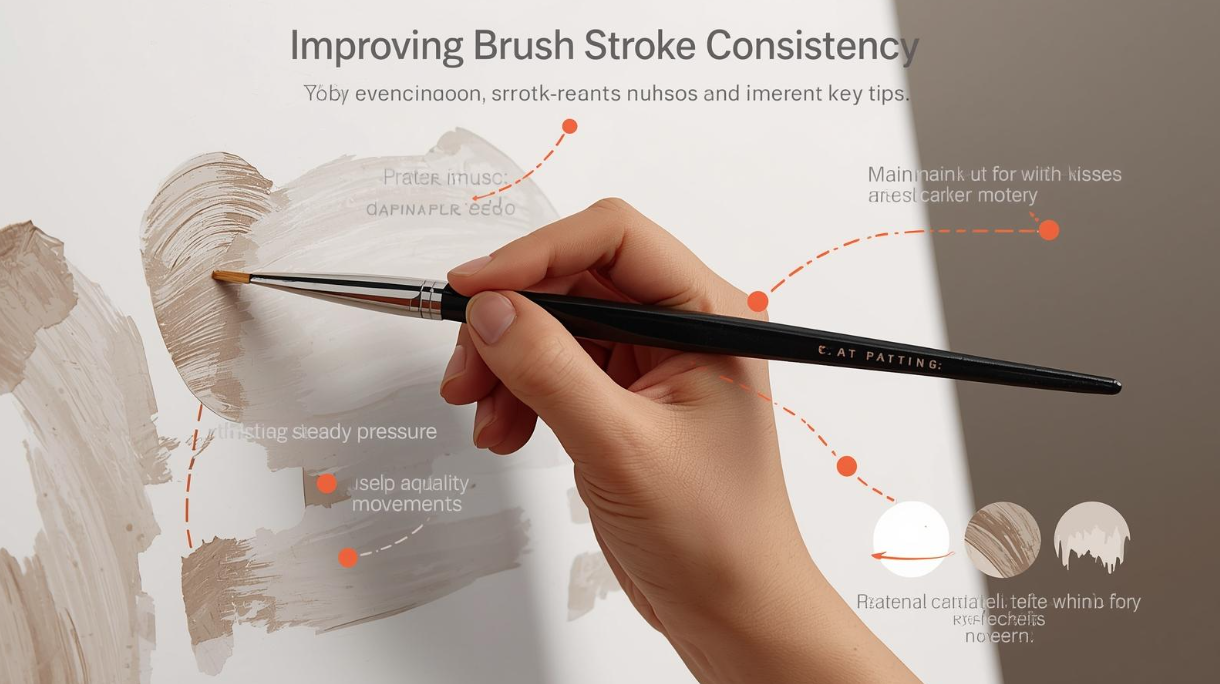

Every painter reaches a moment when something feels off. The colors look right. The composition works. Yet the painting still lacks polish. More often than not, the issue lies in brush stroke consistency.
Uneven strokes distract the eye. Hesitant marks reveal uncertainty. Meanwhile, smooth, intentional strokes signal control and confidence. The good news is this skill can be learned. With practice and awareness, consistency becomes second nature rather than forced effort.
This guide explores how to improve brush stroke consistency using practical techniques that professional artists rely on daily.
Why Brush Stroke Consistency Defines Professional Art
Professional paintings feel cohesive. Each stroke supports the next. Nothing looks accidental.
Brush stroke consistency creates that unity. When strokes follow a rhythm, the surface feels intentional. Viewers may not know why the piece feels refined, but they sense it instantly.
In contrast, inconsistent strokes break immersion. They pull attention away from the subject. Therefore, mastering stroke control elevates the entire painting, regardless of style.
Understanding the Mechanics Behind Consistent Strokes
Consistency starts with mechanics. How you hold the brush matters. How you move your arm matters even more.
Many beginners paint only with their wrist. This creates short, shaky marks. Professionals engage the whole arm. Movement flows from the shoulder through the elbow and wrist.
Once motion becomes fluid, strokes appear smoother. Control improves because tension decreases.
How Grip Affects Brush Stroke Consistency
Grip pressure often goes unnoticed. However, it shapes every stroke.
Holding the brush too tightly restricts movement. Strokes become stiff and uneven. A relaxed grip allows the brush to glide naturally.
Think of holding a brush like holding a pen loosely. Control remains, yet flexibility increases. As a result, brush stroke consistency improves without strain.
Choosing the Right Brush for Consistent Results
Not all brushes behave the same. Some hold more paint. Others snap back quickly.
Consistency improves when the brush matches the task. Flat brushes create even strokes. Round brushes suit controlled lines. Filbert brushes blend edges smoothly.
Using the wrong brush forces compensation. That compensation often leads to inconsistency. Choosing wisely simplifies control.
Paint Load and Its Role in Stroke Control
Paint load affects every mark. Too much paint floods the surface. Too little causes drag.
Professional results depend on balance. The brush should feel full yet responsive. Paint should flow without dripping.
Learning this balance takes repetition. Over time, muscle memory develops. Brush stroke consistency follows naturally.
Surface Texture and Stroke Uniformity
The painting surface influences stroke behavior. Rough textures break lines. Smooth surfaces enhance flow.
Canvas tooth grips paint. Paper absorbs differently. Panels provide resistance.
Understanding surface interaction allows adjustment. Consistency improves when expectations match reality.
The Importance of Stroke Direction
Random directions create chaos. Intentional direction creates harmony.
Professional artists plan stroke direction to support form. Vertical strokes suggest growth. Horizontal strokes suggest calm. Curved strokes imply movement.
When direction stays consistent, the painting feels organized. Visual noise decreases. Brush stroke consistency strengthens composition.
Practicing Repetition to Build Muscle Memory
Consistency lives in repetition. One perfect stroke means little. Hundreds create reliability.
Daily warm-up exercises help. Simple lines. Repeated curves. Controlled pressure changes.
These drills may feel basic. However, they build muscle memory. Over time, the hand learns control without conscious thought.
Slowing Down to Improve Stroke Accuracy
Speed often causes inconsistency. Rushing leads to uneven pressure and broken lines.
Slowing down reveals control issues. Each stroke becomes intentional. Corrections happen before mistakes settle.
Ironically, slowing down early increases speed later. Confidence replaces hesitation.
Breathing and Brush Stroke Consistency
Breathing affects movement more than expected. Holding breath increases tension.
Steady breathing relaxes the body. Relaxation improves fluid motion.
Many professionals exhale during long strokes. This keeps motion smooth and controlled.
Using the Whole Arm for Professional Strokes
Wrist-only movement limits range. Whole-arm movement expands control.
Large strokes benefit from shoulder movement. Medium strokes engage the elbow. Small details involve the wrist.
Knowing when to use each part improves consistency. Movement becomes efficient rather than forced.
Maintaining Consistency Across Long Sessions
Fatigue disrupts control. As muscles tire, strokes lose uniformity.
Taking breaks preserves consistency. Stretching helps. Hydration matters.
Professional results depend on endurance as much as skill. Protecting energy protects quality.
Adjusting Pressure for Even Brush Marks
Pressure inconsistency shows immediately. Heavy pressure creates thick edges. Light pressure fades lines.
Practicing pressure control smooths transitions. Gradual changes feel intentional.
This skill transforms shading and blending. Brush stroke consistency becomes visible in subtle areas.
Layering Techniques That Support Consistent Strokes
Layering hides inconsistency. Thick layers reveal it.
Thin, controlled layers allow correction. Each pass refines texture.
Professionals build depth gradually. Consistency improves because errors are corrected early.
Matching Stroke Style to Painting Style
Not all styles require perfect uniformity. However, intentional inconsistency differs from accidental inconsistency.
Abstract art still relies on controlled chaos. Realism demands precision. Impressionism balances freedom with rhythm.
Understanding stylistic goals guides consistency choices. Control adapts rather than restricts.
Correcting Inconsistent Strokes Without Overworking
Overworking ruins surfaces. Fixing inconsistency requires restraint.
Let paint set slightly before correcting. Soft edges blend better when not rushed.
Patience preserves texture. Confidence grows when corrections succeed.
Mental Focus and Stroke Reliability
Distraction disrupts control. Focus sharpens movement.
Professional painters enter a mental flow. External noise fades. Attention narrows.
This focus stabilizes strokes. Consistency becomes effortless.
Evaluating Your Own Brush Stroke Consistency
Stepping back reveals patterns. Uneven areas stand out.
Viewing work from a distance highlights inconsistencies. Adjustments become clearer.
Self-evaluation accelerates improvement. Awareness fuels refinement.
Building Confidence Through Consistent Practice
Confidence grows through reliability. Reliable strokes reduce fear.
As control improves, experimentation feels safer. Creativity expands.
Brush stroke consistency supports artistic freedom rather than limiting it.
Conclusion
Brush stroke consistency separates skilled painters from professional artists. It reflects control, intention, and confidence. Through mindful practice, relaxed movement, and thoughtful technique, consistency becomes natural. When strokes flow with purpose, paintings speak clearly. Professional results follow not from perfection, but from disciplined control repeated over time.
FAQ
1. Why is brush stroke consistency important in painting?
It creates visual harmony and makes artwork look intentional and professional.
2. How long does it take to improve brush stroke consistency?
With regular practice, noticeable improvement often appears within weeks.
3. Does brush type affect stroke consistency?
Yes. The right brush improves control and paint flow significantly.
4. Can beginners achieve professional stroke consistency?
Yes. Consistency is learned through technique and repetition, not talent alone.
5. Should I practice strokes separately from full paintings?
Absolutely. Isolated stroke practice builds muscle memory faster.