
Every painter reaches a point where technique matters more than inspiration. The colors are right. The composition works. Still, the surface looks uneven. Often, the missing skill is brush pressure control.
Pressure shapes every stroke. Too much pressure drags paint and leaves harsh marks. Too little pressure creates weak, broken lines. Smooth paint application lives in the balance between the two.
Learning brush pressure control is like learning to drive smoothly. At first, movements feel stiff. Over time, they become instinctive. This guide shows how to develop that control and apply paint with confidence and consistency.
Why Brush Pressure Control Matters in Painting
Brush pressure control affects more than appearance. It influences mood, flow, and professionalism.
When pressure stays consistent, strokes feel intentional. The surface looks calm. Viewers sense confidence immediately.
In contrast, uneven pressure creates visual noise. The eye gets distracted. Even strong compositions suffer.
Smooth paint application begins with awareness. Once pressure becomes deliberate, control follows naturally.
How Pressure Impacts Paint Behavior
Paint responds instantly to pressure. Heavy pressure spreads paint thin and wide. Light pressure deposits paint softly.
Different paints react differently. Acrylics resist heavy pressure once drying begins. Oils remain forgiving longer. Watercolors bloom under light pressure and collapse under force.
Understanding this relationship improves brush pressure control. Instead of fighting paint, you guide it.
Recognizing Common Pressure Mistakes
Most painters apply too much pressure. Tension sneaks into the hand without notice.
Over-pressing flattens brush hairs. Lines lose variation. Texture disappears.
On the other hand, overly light pressure causes skipping. Paint fails to connect. Strokes look hesitant.
Recognizing these habits is the first step toward smooth paint application.
Relaxing the Hand for Better Brush Pressure Control
Tension blocks control. A tight grip limits movement.
Relaxing the hand allows flexibility. The brush responds more naturally. Pressure becomes adjustable instead of fixed.
Think of holding the brush like holding a feather. Control remains, yet rigidity fades.
This small shift dramatically improves brush pressure control over time.
Adjusting Grip to Improve Pressure Sensitivity
Grip position affects sensitivity. Holding the brush too close to the ferrule increases force.
Moving the grip slightly back reduces pressure automatically. Strokes feel lighter. Flow improves.
Professional painters adjust grip constantly. Each task demands a different level of control.
Experimenting with grip height sharpens awareness and precision.
Using the Whole Arm Instead of Only the Wrist
Wrist-only movement limits control. Pressure fluctuates quickly.
Whole-arm movement distributes effort. Pressure becomes smoother and more predictable.
Large strokes benefit from shoulder motion. Medium strokes use the elbow. Fine details rely on the wrist.
Knowing when to shift movement improves smooth paint application instantly.
Practicing Pressure Gradients for Stroke Control
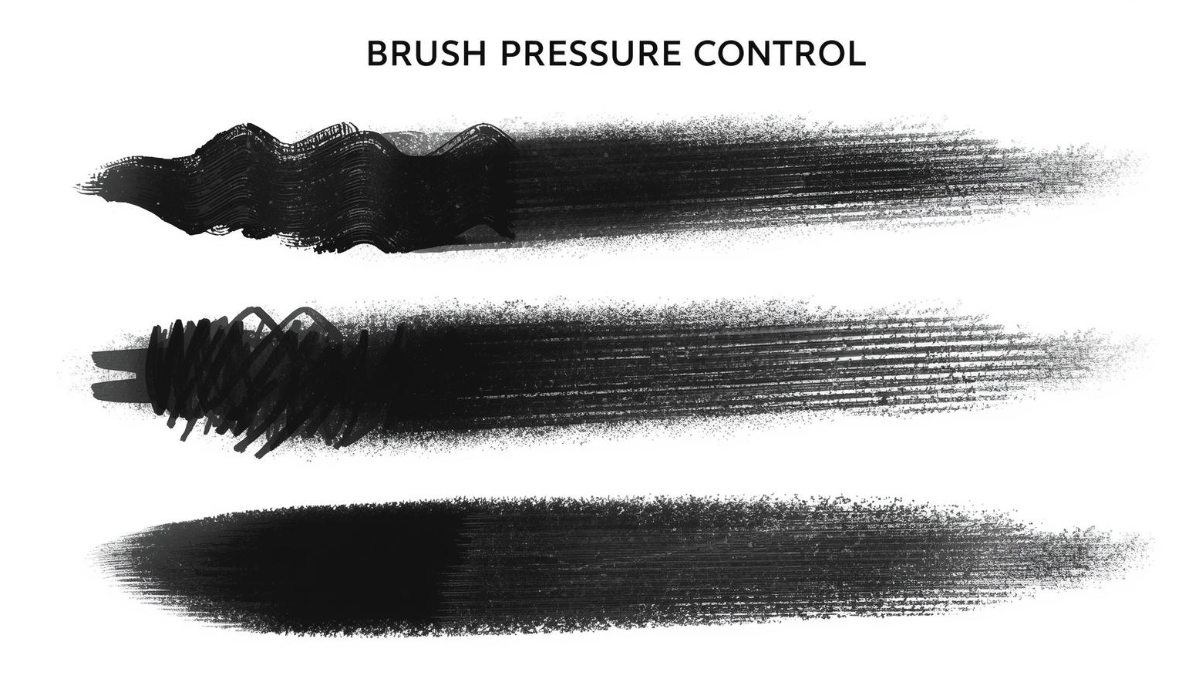
Pressure gradients train control. Start a stroke heavy. End it light.
This exercise builds sensitivity. The hand learns to adjust mid-stroke.
Practicing gradients daily strengthens muscle memory. Over time, brush pressure control becomes automatic.
These drills may feel simple. Their impact is powerful.
How Brush Type Affects Pressure Response
Not all brushes react equally to pressure. Soft brushes compress easily. Stiff brushes resist.
Choosing the right brush reduces pressure problems. Soft brushes suit blending. Stiff brushes suit texture.
Matching brush type to task prevents overcompensation. Control improves because the tool supports intent.
Paint Load and Its Role in Pressure Control
Paint load influences pressure needs. A dry brush requires more force. A loaded brush requires less.
Overloading causes spills. Underloading causes drag.
Balanced paint load reduces pressure demands. Smooth paint application becomes easier.
Checking paint load before each stroke builds consistency.
Controlling Pressure on Different Surfaces
Surface texture changes pressure response. Rough canvas grips paint. Smooth panels glide.
Applying the same pressure everywhere causes inconsistency. Adjustments must be made.
Awareness improves results. Pressure adapts to surface rather than remaining fixed.
This adaptability defines professional brush pressure control.
Slowing Down to Improve Pressure Awareness
Speed hides mistakes. Slowing down reveals them.
Slow strokes highlight pressure changes. Corrections become possible.
Although patience feels difficult, it pays off. Control improves faster when movement is intentional.
Eventually, speed returns with confidence.
Breathing Techniques for Steady Brush Pressure
Breath affects movement. Holding breath increases tension.
Steady breathing relaxes muscles. Pressure stabilizes naturally.
Many artists exhale during long strokes. The result feels smoother and calmer.
Breathing awareness enhances brush pressure control subtly yet effectively.
Maintaining Consistent Pressure During Long Sessions
Fatigue disrupts control. Hands tire. Pressure varies.
Taking breaks restores sensitivity. Stretching helps. Hydration matters.
Smooth paint application depends on endurance. Caring for the body protects technique.
Layering Paint Without Losing Pressure Control
Layers demand patience. Pressing harder does not speed results.
Light, controlled pressure preserves underlying layers. Blending improves.
Layering rewards restraint. Texture remains intentional.
Brush pressure control shines in layered work.
Pressure Control in Blending and Transitions
Blending exposes pressure errors quickly. Harsh transitions signal uneven force.
Light pressure softens edges. Gradual movement blends colors seamlessly.
Practicing blending trains finesse. Smooth paint application becomes second nature.
Correcting Pressure Mistakes Without Overworking
Overworking ruins surfaces. Fixing pressure mistakes requires timing.
Allow paint to settle slightly. Then adjust gently.
Patience saves texture. Confidence grows through restraint.
Adapting Brush Pressure for Different Painting Styles
Styles demand different pressure levels. Realism favors subtle control. Expressionism welcomes variation.
However, intentional variation differs from accidental inconsistency.
Brush pressure control allows choice. Style becomes deliberate rather than chaotic.
Developing Muscle Memory Through Daily Practice
Muscle memory builds reliability. Short, daily practice works best.
Pressure exercises reinforce control. Repetition trains instinct.
Over time, thinking disappears. Movement flows.
Brush pressure control becomes part of your artistic identity.
Evaluating Your Pressure Control Progress
Distance reveals truth. Step back from your work.
Uneven areas stand out. Smooth transitions shine.
Self-evaluation sharpens awareness. Improvement accelerates.
Building Confidence Through Controlled Strokes
Control builds trust. Trust builds confidence.
As pressure improves, fear fades. Expression expands.
Smooth paint application frees creativity rather than limiting it.
Conclusion
Brush pressure control transforms painting from struggle to flow. It shapes every stroke, transition, and texture. Through awareness, relaxation, and deliberate practice, smooth paint application becomes natural. Mastering pressure does not restrict creativity. Instead, it unlocks confidence, precision, and professional results that speak clearly through every mark.
FAQ
1. Why is brush pressure control important in painting?
It ensures smooth paint application and prevents uneven, distracting strokes.
2. How can I practice brush pressure control daily?
Practice pressure gradients, slow strokes, and light blending exercises regularly.
3. Does brush type affect pressure control?
Yes, different brushes respond uniquely to pressure and influence control.
4. Can beginners learn smooth paint application quickly?
Yes, consistent practice builds pressure awareness faster than expected.
5. How do I know if I am pressing too hard?
Flattened brush hairs, harsh lines, and dragged paint are common signs.