
Color mixing exercises sit at the heart of artistic growth. From the very first brushstroke, your ability to mix color accurately shapes mood, depth, and realism. When colors miss the mark, frustration follows. However, when color control improves, confidence rises and creativity flows.
Many artists struggle not because they lack vision, but because their color choices feel unpredictable. Fortunately, this skill can be trained. With the right exercises, color stops being a guessing game and becomes a reliable tool.
This guide explores practical color training methods that sharpen perception, strengthen control, and elevate artistic results.
Why Color Mixing Practice Is Essential for Artists
Color carries emotion before form is even noticed. A painting may be well-drawn, yet still fall flat if color feels off.
Regular color practice trains the eye to detect subtle differences. Temperature, value, and saturation become clearer. As a result, decisions feel intentional instead of rushed.
Professional artists consistently revisit color fundamentals. According to resources from https://www.tate.org.uk, color theory and mixing remain central even at advanced levels.
Training Visual Perception Before Mixing Paint
Before paint touches the palette, the eye must be trained. Many color issues begin with misjudgment rather than poor technique.
Studying real-world references helps. Notice how shadows shift in warmth. Observe how light changes local color. These habits sharpen perception.
Once observation improves, paint mixing becomes easier. The hand follows what the eye understands.
Using the Color Wheel Through Hands-On Practice
The color wheel is often taught early. However, real learning happens through repetition.
Mixing primaries repeatedly reveals predictable relationships. Secondary colors become familiar. Tertiary colors feel less mysterious.
Hands-on color practice reinforces theory. Over time, relationships feel intuitive rather than academic.
Primary-Only Mixing for Stronger Control
Limiting options strengthens skill. Using only red, blue, and yellow forces problem-solving.
Greens vary widely. Purples demand balance. Oranges test restraint.
These exercises build control and patience. Complexity becomes manageable through limitation.
Exploring Warm and Cool Color Variations
Temperature changes everything. Warm colors advance. Cool colors recede.
Mixing warm and cool versions of the same hue trains subtle judgment. Emotional impact improves dramatically.
Artists who understand temperature create believable light and atmosphere with ease.
Value-Based Color Practice for Depth
Value defines form more than hue. Without correct value, color loses structure.
Mixing lighter and darker versions of a color reveals restraint. Adding white reduces saturation. Darkening with complements preserves richness.
These exercises strengthen realism and depth across all styles.
Managing Saturation Through Controlled Mixing
Bright colors demand attention. Too many overwhelm the viewer.
Practicing desaturation teaches balance. Neutralizing color builds harmony.
Professional paintings rely on controlled saturation. Energy appears only where needed.
Mixing Neutrals Without Using Black
Black shortcuts learning. Although useful later, it hides color relationships early on.
Mixing neutrals with complementary colors builds sensitivity. Browns, grays, and shadows feel alive.
This approach is widely recommended in foundational color studies, including those discussed at https://www.artistsnetwork.com.
Matching Colors From Observation
Color matching accelerates growth. Choose a reference and mix until it matches.
This exercise demands accuracy. Small shifts matter.
Over time, matching becomes faster and more reliable. Confidence grows with each success.
Timed Color Challenges for Decision-Making
Speed reveals habits. Under time pressure, hesitation disappears.
Short mixing challenges improve decisiveness. Choices become instinctive.
Accuracy improves alongside speed. Control feels natural rather than forced.
Limited Palette Studies for Focus
Working with fewer colors sharpens judgment. Harmony becomes easier.
Limited palettes teach balance and restraint. Creativity increases within boundaries.
These studies also support stronger compositional color choices.
Creating Color Scales for Smooth Transitions
Scales teach gradual change. Abrupt jumps reveal control issues.
Mixing smooth transitions builds patience and precision.
These studies directly improve blending and realism.
Complementary Color Practice for Balance
Complementary colors neutralize and intensify each other.
Mixing them reveals control over vibrancy and depth. Small adjustments create dramatic shifts.
Understanding complements prevents muddy results.
Documenting Results for Long-Term Growth
Recording mixtures reinforces learning. Notes and photos build a personal reference.
Future projects benefit from past experiments.
Consistency improves when results are tracked intentionally.
Adapting Color Practice Across Mediums
Acrylics dry fast. Oils stay workable. Watercolors behave delicately.
Repeating exercises across mediums builds adaptability. Skills transfer more easily.
Understanding medium behavior prevents frustration.
Avoiding Common Color Mixing Mistakes
Overmixing dulls paint. Adding too many colors muddies results.
Stopping early preserves vibrancy. Subtle adjustments work best.
Awareness prevents repeated mistakes.
Using Color Skills to Improve Composition
Color guides the eye. Poor mixing weakens structure.
Balanced color supports focal points. Harmony improves naturally.
Strong color decisions enhance overall composition.
Building Confidence Through Repetition
Reliability builds confidence. Confidence fuels creativity.
Short, consistent practice sessions outperform occasional marathons.
Improvement compounds quietly over time.
Applying Practice Skills to Finished Artwork
Exercises matter only when applied. Transfer skills intentionally.
Pause during paintings. Mix with purpose.
Finished work improves because fundamentals strengthen.
Developing a Personal Color Style
Preferences emerge through practice. Some artists favor muted tones. Others embrace vibrancy.
Practice reveals tendencies. Style develops naturally.
Personal color language becomes clearer with experience.
Staying Patient With the Learning Process
Progress may feel slow at first. Frustration is normal.
Patience protects motivation. Skill builds quietly.
Color mastery rewards consistency more than speed.
Conclusion
Color mixing exercises transform uncertainty into confidence. They sharpen perception, refine control, and elevate artistic results. With regular practice, color becomes predictable rather than frustrating. When mixing feels natural, creativity flows freely. Strong color choices bring clarity, depth, and emotion to every piece of art.
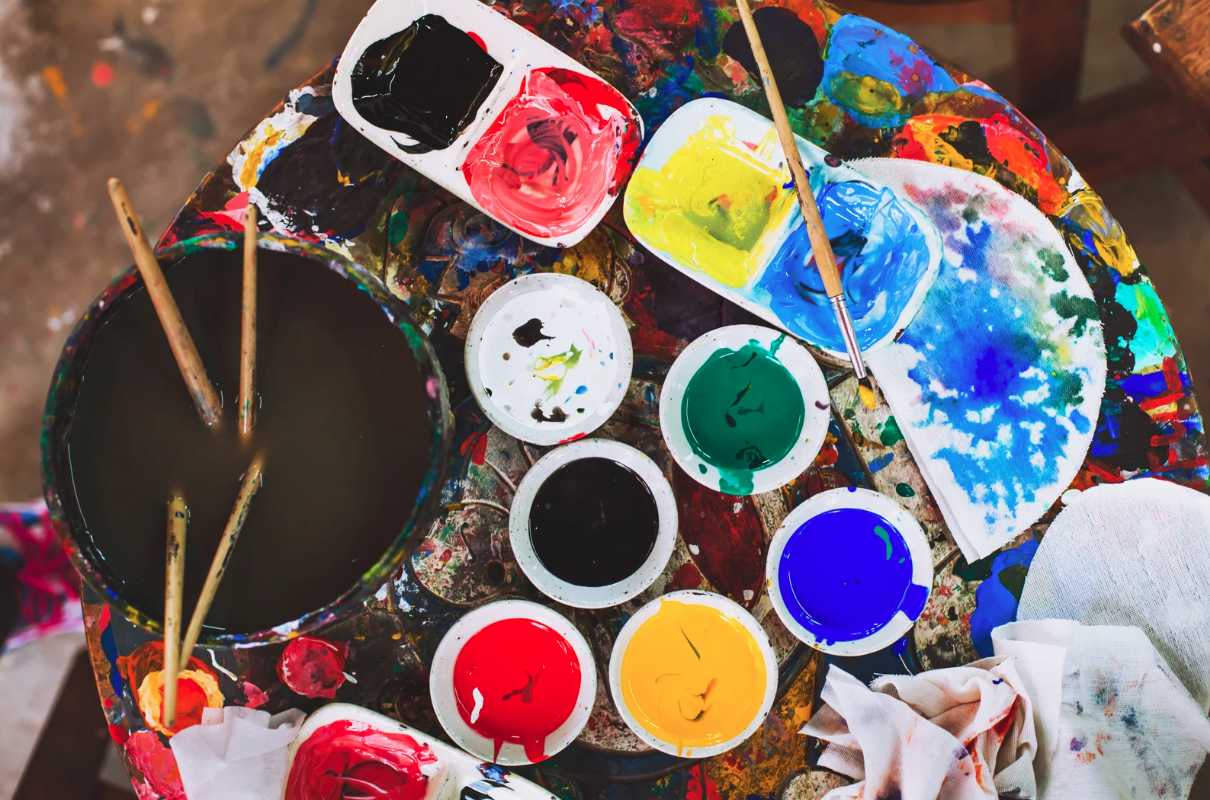
Alt text: color mixing exercises on a paint palette for artists
FAQ
1. How often should I practice color mixing exercises?
Short daily sessions are more effective than occasional long ones.
2. Can beginners benefit from color practice early on?
Yes. Early practice builds strong habits and prevents frustration.
3. Do color mixing skills apply to all painting styles?
Absolutely. Color control benefits realism, abstraction, and everything between.
4. Should black paint be avoided completely?
Not permanently, but avoiding it early strengthens color sensitivity.
5. How long does it take to see improvement?
Most artists notice better control within a few weeks of consistent practice.