
Learning how to choose the right brush can dramatically improve your painting results. The brush you select affects texture, control, blending, and overall finish. Therefore, when you choose the right brush for each technique, your work becomes cleaner, more expressive, and more intentional.
Many artists focus heavily on color and composition. However, tools matter just as much. A poorly matched brush can create frustration, while the correct one enhances confidence. As a result, understanding brush types and their uses becomes essential for growth.
If you want more control and stronger technique, you must learn to choose the right brush consistently and strategically.
Understand the Main Types of Paint Brushes
Before you refine technique, you need to understand brush categories. Each shape serves a specific purpose.
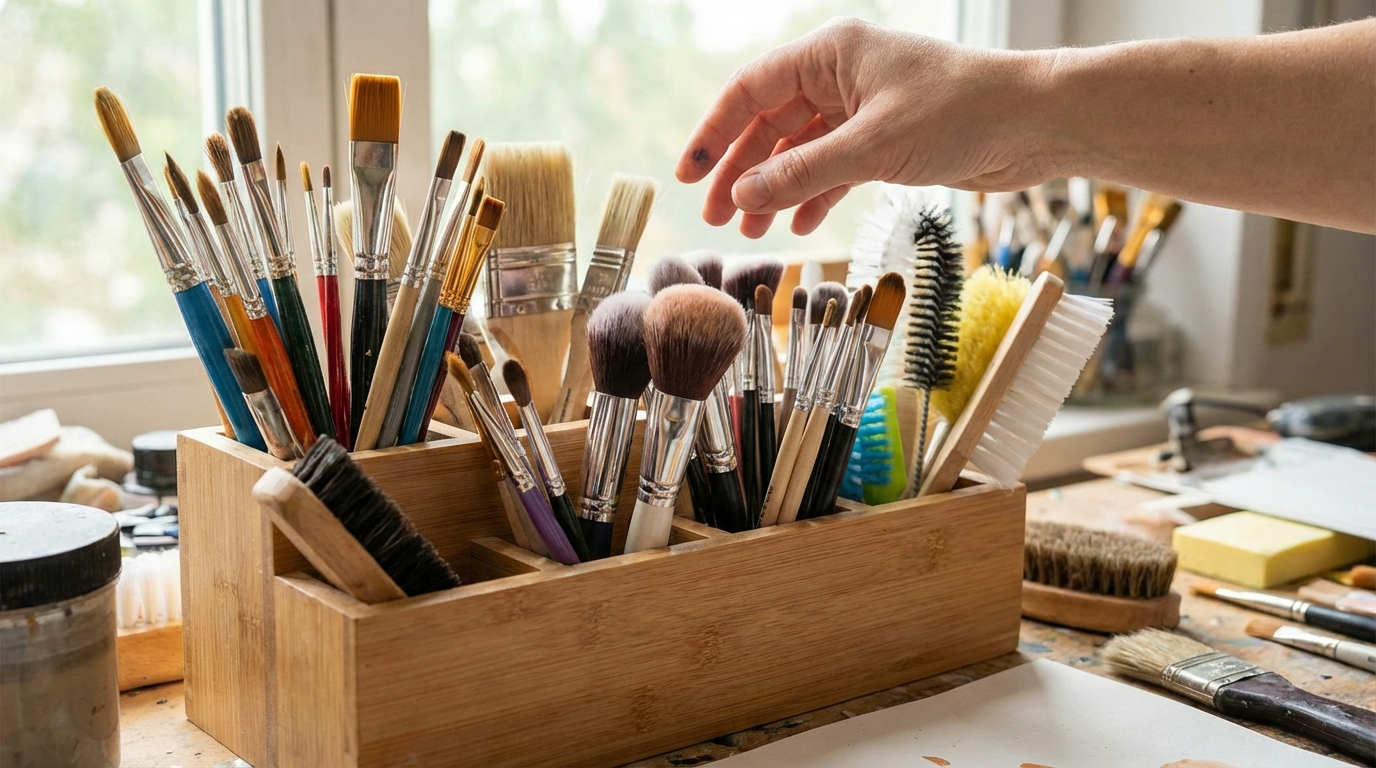
Round brushes feature a pointed tip. They allow detail work and controlled strokes. Flats, on the other hand, provide sharp edges and bold lines. Filbert brushes combine rounded edges with flat bodies, making them versatile for blending.
Fan brushes create texture and soft transitions. Meanwhile, angled brushes help with precise corners and directional strokes.
Because each shape produces different marks, you must match brush design to your artistic goal. When you choose the right brush for structural lines or soft shading, results improve immediately.
Additionally, size matters. Larger brushes cover broad areas quickly. Smaller ones refine detail. Balanced selection strengthens efficiency.
Match Brush Shape to Painting Technique
Every painting method demands a specific tool. Therefore, brush selection should support technique rather than hinder it.
For smooth blending, use soft, rounded brushes. They create gradual transitions. If you prefer bold strokes, flat brushes deliver strong edges and confident marks.
Dry brushing techniques benefit from stiff bristles. They produce broken textures and layered effects. Conversely, glazing requires soft, flexible fibers for smooth transparency.
Because technique varies across styles, practice with multiple shapes. Notice how stroke patterns change. Through experimentation, you learn to choose the right brush instinctively for each task.
Moreover, consistency improves speed. When you know which tool fits a technique, workflow becomes efficient and focused.
Consider Bristle Material Carefully
Brushes come in natural and synthetic options. Each type influences performance.
Natural bristles hold more paint. Therefore, they work well with oil paints and thicker mediums. Synthetic bristles, however, resist moisture better and suit acrylics or watercolors.
Stiffness also matters. Hard bristles create visible texture. Softer fibers allow smoother blending. Evaluate your preferred style before making a selection.
Additionally, durability plays a role. Quality brushes maintain shape longer. Investing in reliable tools reduces frustration and waste.
When you choose the right brush material for your medium, control increases and finish improves significantly.
Select Brush Size for Precision and Coverage
Brush size directly impacts detail and efficiency. Therefore, avoid using one size for everything.
Large brushes establish backgrounds quickly. They create broad strokes and strong foundations. Smaller brushes refine edges and add intricate details.
Switching sizes strategically prevents muddy textures. It also enhances clarity in layered work.
For example, start with wide flats for base layers. Then transition to medium filberts for shaping forms. Finally, use small rounds for highlights.
This layered approach helps you choose the right brush at each stage of the process. As a result, paintings feel structured and balanced.
Adapt Brush Choice to Paint Medium
Different paints behave differently. Therefore, brush compatibility matters.
Oil paint is thick and slow drying. It pairs well with natural bristles that hold heavy pigment. Acrylic paint dries quickly, so synthetic brushes often perform better. Watercolor requires soft, absorbent brushes for smooth washes.
Moreover, mixed media techniques demand flexibility. You may need both stiff and soft options available.
Testing brushes with your chosen medium builds confidence. As you gain experience, you naturally choose the right brush based on paint behavior.
Use Specialty Brushes for Unique Effects
Some techniques require specialty tools. For example, fan brushes create foliage textures. Liner brushes produce long, continuous lines. Mop brushes soften edges in watercolor.
Texture brushes can simulate fabric, grass, or abstract patterns. While not essential for beginners, they expand creative range.
However, avoid overcomplicating your toolkit. Master foundational brushes first. Once comfortable, gradually introduce specialized tools.
By integrating specialty options thoughtfully, you expand possibilities without sacrificing control.
Maintain Brushes for Long-Term Performance
Even the best tools fail without proper care. Therefore, maintenance is crucial.
Clean brushes immediately after use. Residual paint hardens bristles and ruins shape. Use appropriate cleaners for each medium.
Reshape bristles gently while wet. Allow them to dry flat or upright. Proper storage extends lifespan significantly.
When brushes maintain their structure, precision remains consistent. This reliability helps you choose the right brush confidently without second-guessing quality.
Additionally, inspect tools regularly. Replace damaged brushes to preserve professional results.
Avoid Common Brush Selection Mistakes
Many artists struggle because they misuse tools. Awareness prevents frustration.
First, avoid pressing too hard. Excess pressure damages bristles and distorts strokes. Instead, allow the brush to glide naturally.
Second, do not overload paint. Too much pigment reduces control. Balanced loading improves texture and clarity.
Third, resist using one brush for every step. Switching tools creates cleaner transitions and sharper results.
When you consistently choose the right brush for each stage, technique improves rapidly.
Develop Intuition Through Practice
Technical knowledge provides a foundation. However, intuition develops through repetition.
Practice exercises with different brushes and strokes. Notice how each tool feels in your hand. Pay attention to how bristles respond to pressure and paint.
Over time, you stop overthinking selection. Instead, you choose the right brush naturally based on visual goals.
Confidence grows through familiarity. Familiarity strengthens artistic freedom.
As skill increases, your brush choices become extensions of your creative voice.
Align Brush Choice With Your Artistic Style
Your painting style influences tool selection. If you favor realism, precision brushes support detail. If you enjoy abstract expression, larger and textured brushes may suit you better.
Additionally, consider pace. Fast painters often prefer broader tools. Detail-oriented artists rely on smaller options.
When tools align with personality and style, work flows smoothly. Therefore, regularly evaluate whether you choose the right brush for your creative strengths.
Consistency across projects builds mastery. Mastery enhances recognition and professionalism.
Build a Balanced Brush Collection
A thoughtful collection prevents limitation. Start with essential shapes: round, flat, and filbert. Add varying sizes within each type.
Next, include at least one specialty brush. This addition supports texture exploration.
Avoid buying excessive duplicates. Instead, invest in durable, high-quality tools. Reliable brushes maintain shape and responsiveness.
With a balanced toolkit, you can choose the right brush for nearly any technique without hesitation.
Conclusion: Precision Begins With the Right Tool
Painting success depends on more than talent. Tools influence outcome significantly. When you learn to choose the right brush for each technique, you gain control, clarity, and confidence.
Start by understanding brush shapes and materials. Then match size and stiffness to your medium and style. Practice regularly to strengthen intuition.
Over time, brush selection becomes second nature. Instead of fighting your tools, you work with them seamlessly.
Ultimately, when you consistently choose the right brush, every stroke supports your artistic vision. That alignment transforms technique into expressive mastery.
FAQ
- How do I know which brush works best for blending?
Soft, rounded brushes usually provide smooth transitions and gentle layering for blending techniques. - Are synthetic brushes good for beginners?
Yes. Synthetic options are versatile, durable, and suitable for acrylic and watercolor mediums. - How often should I replace my brushes?
Replace them when bristles lose shape, shed excessively, or fail to hold paint properly. - Can one brush work for multiple techniques?
Some brushes are versatile, but switching tools improves precision and efficiency across techniques. - What is the most essential brush shape to start with?
A medium-sized round brush offers flexibility for detail, lines, and controlled strokes in many styles.