
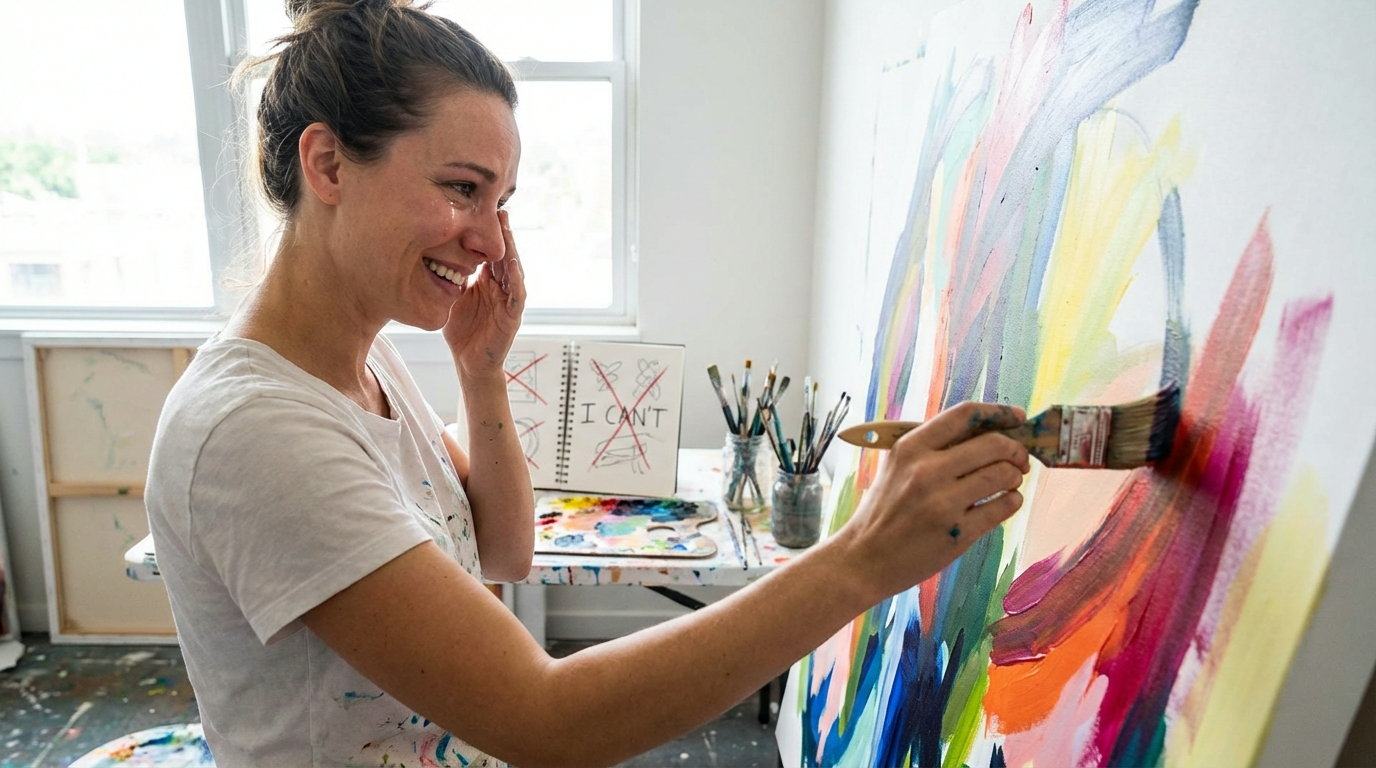

Learning to overcome self-doubt in painting is just as important as mastering technique. Many artists struggle with insecurity, comparison, and fear of failure. However, confidence does not appear overnight. Instead, you build it through mindset shifts and consistent practice.
When you actively work to overcome self-doubt in painting, you free yourself from creative paralysis. As a result, your skills improve faster and your enjoyment increases. Doubt may never disappear completely, yet it can lose its power.
Confidence grows when you take action despite uncertainty. Therefore, the key is not eliminating fear but managing it productively.
Understand Where Artistic Doubt Comes From
Before you can address insecurity, you must identify its source. Often, doubt begins with comparison. Social media exposes artists to endless polished work. Consequently, unrealistic expectations develop quickly.
Additionally, perfectionism fuels hesitation. Many painters expect flawless results every time. When reality falls short, frustration grows.
Past criticism may also linger. Negative feedback, especially early in your journey, can shape self-perception.
However, recognizing these triggers helps you regain control. When you understand why doubt appears, you can respond thoughtfully rather than emotionally.
To overcome self-doubt in painting, begin by observing your internal dialogue without judgment. Awareness creates space for change.
Shift Focus From Outcome to Process
Many artists measure success only by final results. Yet growth depends on process.
Instead of asking whether a painting is perfect, ask what you learned. Every brushstroke teaches something. Therefore, mistakes become stepping stones rather than proof of failure.
When you prioritize improvement over validation, pressure decreases. You begin to experiment more freely.
Moreover, consistent practice builds evidence of progress. Over time, small improvements accumulate into visible growth.
If you want to overcome self-doubt in painting, celebrate effort and persistence. Confidence grows through action, not comparison.
Set Realistic and Achievable Goals
Large ambitions inspire creativity. However, unrealistic expectations create anxiety.
Break goals into manageable steps. For example, focus on mastering blending before tackling complex compositions.
Short-term wins build momentum. Each completed exercise reinforces belief in your ability.
Additionally, track progress visually. Compare current work to pieces from six months ago. Improvement often becomes clearer over time.
When you see tangible growth, it becomes easier to overcome self-doubt in painting consistently. Evidence strengthens confidence.
Create a Consistent Practice Routine
Consistency reduces uncertainty. When painting becomes a regular habit, fear loses intensity.
Schedule dedicated creative time each week. Even short sessions maintain momentum.
Routine practice also strengthens muscle memory. As technical control improves, confidence naturally increases.
Moreover, repetition normalizes imperfection. Not every piece will succeed, yet regular output reduces attachment to single outcomes.
By showing up consistently, you gradually overcome self-doubt in painting through familiarity and resilience.
Reframe Mistakes as Feedback
Mistakes feel discouraging at first. However, they contain valuable information.
Instead of labeling work as a failure, analyze what needs adjustment. Perhaps color harmony requires refinement. Maybe composition feels unbalanced.
Objective evaluation transforms emotion into strategy.
Additionally, keep a learning journal. Document challenges and solutions. Over time, patterns emerge.
When you view errors as lessons, you gain control over growth. This mindset shift helps you overcome self-doubt in painting with clarity rather than fear.
Limit Comparison and Curate Inspiration
Comparison often magnifies insecurity. Therefore, reduce exposure to content that triggers discouragement.
Follow artists who inspire growth rather than competition. Study their techniques thoughtfully instead of measuring yourself against them.
Remember that social media often highlights only finished masterpieces. Rarely do you see drafts or struggles behind the scenes.
By curating your influences carefully, you protect your confidence.
When comparison decreases, it becomes easier to overcome self-doubt in painting and focus on personal progress.
Seek Constructive Feedback, Not Validation
Feedback supports growth when approached correctly. However, constant validation seeking can weaken resilience.
Ask trusted mentors or peers for specific critiques. Request actionable suggestions instead of general praise.
Constructive insights provide direction. Consequently, improvement becomes measurable.
At the same time, avoid harsh environments that discourage experimentation. Supportive critique builds strength without crushing motivation.
Balanced feedback plays a powerful role as you overcome self-doubt in painting and refine your skills.
Develop a Growth-Oriented Mindset
A growth mindset assumes that ability improves with effort. This belief transforms challenges into opportunities.
Instead of thinking, “I am not talented,” replace it with, “I am still learning.” Language shapes perception.
When setbacks occur, remind yourself that mastery takes time. Even experienced artists continue refining techniques.
Furthermore, embrace experimentation. Trying new methods builds versatility and confidence.
As you adopt a growth perspective, you gradually overcome self-doubt in painting through resilience and patience.
Celebrate Small Wins Regularly
Confidence thrives on acknowledgment. Therefore, recognize progress frequently.
Finished a complex background? Celebrate it. Improved blending technique? Notice the achievement.
Small wins accumulate into meaningful milestones.
Keeping a portfolio of successful pieces reinforces belief in your abilities. When doubt resurfaces, review past accomplishments for perspective.
Celebration strengthens motivation and helps you overcome self-doubt in painting consistently.
Build Confidence Through Community
Creative isolation can intensify insecurity. Engaging with supportive communities reduces that burden.
Join local workshops or online groups focused on growth. Share progress and exchange insights.
Seeing others struggle and improve normalizes your own journey.
Additionally, teaching or explaining techniques to others reinforces your understanding. Confidence increases when you articulate knowledge clearly.
Through shared experiences, you gradually overcome self-doubt in painting and replace it with connection.
Visualize Success and Practice Self-Encouragement
Mental rehearsal influences performance. Therefore, visualize completing paintings successfully.
Imagine steady brush control and confident decision-making. This practice reduces anxiety before starting new projects.
Additionally, replace self-criticism with supportive language. Speak to yourself as you would to a friend.
Positive reinforcement strengthens creative courage.
When you intentionally cultivate encouragement, it becomes easier to overcome self-doubt in painting and approach challenges calmly.
Accept That Doubt Is Part of Growth
Even accomplished artists experience insecurity. Doubt signals expansion beyond comfort zones.
Instead of fearing it, recognize it as evidence of growth.
When you attempt something new, uncertainty naturally appears. However, persistence builds skill over time.
Accepting doubt reduces its intensity. You learn to work alongside it rather than against it.
By embracing this reality, you overcome self-doubt in painting with maturity and self-awareness.
Conclusion: Confidence Comes From Action
To overcome self-doubt in painting, you must combine mindset shifts with consistent practice. Identify triggers, set realistic goals, and prioritize process over perfection.
Celebrate small victories and seek constructive feedback. Limit harmful comparison while nurturing supportive connections.
Over time, action builds evidence of progress. Evidence builds confidence.
Although doubt may appear occasionally, it no longer controls your creative path. Ultimately, when you actively overcome self-doubt in painting, you unlock growth, resilience, and authentic artistic expression.
FAQ
- Why do many artists struggle with insecurity?
Creative work feels personal, so comparison and perfectionism often trigger feelings of inadequacy. - Can confidence improve without formal training?
Yes. Consistent practice and a growth mindset build skill and self-belief over time. - How long does it take to feel confident as a painter?
Confidence develops gradually through repeated effort and measurable progress. - Should I share unfinished work with others?
Sharing works in progress can invite helpful feedback and reduce fear of imperfection. - Is self-doubt always negative?
Not necessarily. Doubt can signal growth and motivate improvement when managed constructively.