
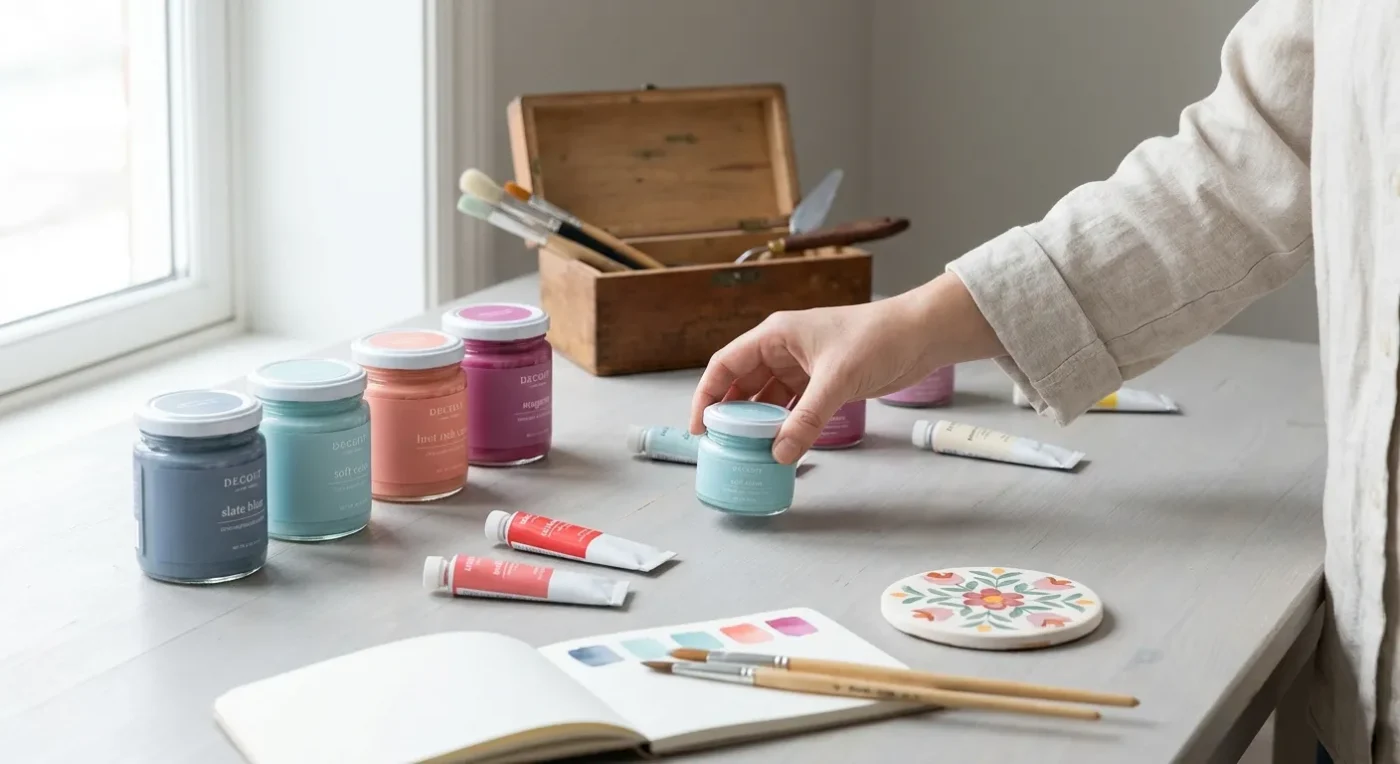

Embarking on a new decorative painting project is always exciting. However, the journey to a beautiful finished piece often begins with a crucial decision: choosing decorative paints. For hobbyist decorative painters and folk art enthusiasts, the array of options can sometimes feel overwhelming. Fear not! This guide from Paint Works Mag is here to demystify the world of paints, helping you select the perfect hues and formulas to bring your artistic visions to life with confidence and skill.
Understanding Paint Types: Acrylics, Oils, and Specialty Finishes
Each type of paint offers unique characteristics. These lend themselves to different styles and techniques in decorative and folk art painting. Knowing these distinctions is key to making informed choices.
Acrylic Paints: The Versatile Favorite
Acrylics are a go-to for many decorative painters. This is due to their quick drying time, vibrant colors, and easy water cleanup. They are incredibly versatile, adhering well to a variety of surfaces like wood, canvas, paper, and even some fabrics. Furthermore, their fast-drying nature allows for layering and quick project completion. This is perfect for those who love to see their ideas materialize swiftly. However, this also means you need to work quickly or use retarders to extend drying time for blending.
Oil Paints: Richness and Blendability
Oil paints are renowned for their rich, luminous colors and exceptional blending capabilities. They dry much slower than acrylics. This offers artists ample time to mix colors directly on the canvas and achieve seamless transitions and subtle gradients. While traditional oils require solvents for cleanup, modern water-mixable oils offer a more convenient, less-fume alternative. Oils are ideal for achieving deep, complex textures and historical folk art styles where intricate blending is desired.
Specialty Finishes: Adding That Extra Touch
Beyond basic acrylics and oils, a world of specialty paints can elevate your decorative projects. These include metallic paints for shimmer, crackle mediums for antique effects, glazes for translucent layers, and chalk paints for a matte, distressed look. Integrating these can add unique character and depth to your folk art pieces. Thus, you can push the boundaries of traditional techniques.
Factors to Consider When Choosing Decorative Paints for Your Palette
When you’re ready to start choosing decorative paints, consider these vital aspects. This ensures your selections align with your project goals.
Project Type and Desired Effect
What are you painting? Is it a wooden sign, a canvas, or a piece of furniture? The surface will often dictate the best paint type. Do you want a smooth, glossy finish or a textured, matte appearance? Understanding your desired outcome will guide your paint choices. For example, chalk paint is excellent for a distressed, antique look on furniture.
Durability and Longevity
For pieces that will be handled frequently or displayed in varied environments, durability is paramount. Some paints offer better resistance to wear and tear, moisture, or UV light. Consider the final placement of your artwork. Will it be indoors or outdoors? This significantly impacts the type of paint and sealant you should choose. Quality paints, when properly sealed, can last for many years.
Color Palette and Pigment Quality
The vibrancy and lightfastness of your colors are essential. High-quality paints typically contain more pigment. Consequently, they offer better coverage and truer colors that resist fading over time. When selecting your palette, think about the mood and theme of your folk art piece. Do you need bright, bold colors or more subdued, earthy tones? Building a core set of primary and secondary colors, along with white and black, is a good starting point. You can always expand your collection later.
Drying Time and Workability
As mentioned, acrylics dry quickly, while oils dry slowly. Your working style and the complexity of your project will influence which is best. If you prefer to layer colors rapidly, acrylics are ideal. Conversely, if you enjoy extended blending time, oils might be more suitable. Some artists even combine types, using acrylics for underpainting and oils for final details. This offers a balanced approach.
Surface Compatibility
The surface you intend to paint on is crucial. Most decorative paints are versatile. Nevertheless, some perform better on specific materials. For instance, specialized fabric paints are designed to withstand washing. Similarly, outdoor paints are formulated to resist weather conditions. Always check the paint’s label for recommended surfaces to ensure optimal adhesion and longevity. This prevents issues down the line.
Essential Tools and Techniques for Decorative Painting
Beyond simply selecting paints, having the right tools and understanding basic techniques will greatly enhance your folk art projects. These elements work together to create beautiful results.
Brushes: Your Artistic Extensions
The quality and type of your brushes make a significant difference. Invest in a variety of brushes: flats for broad strokes, rounds for details, liners for fine lines, and angled brushes for precise edges. Synthetic brushes are generally good for acrylics and water-mixable oils, while natural hair brushes are often preferred for traditional oils. Proper brush care extends their life and maintains their performance.
Palettes: Mixing Your Masterpieces
A good palette is indispensable for mixing colors. Options range from simple plastic or ceramic plates to specialized stay-wet palettes for acrylics, which keep paints moist longer. For oils, a wooden or glass palette is often favored. Always clean your palette thoroughly after each use to prevent dried paint from contaminating new colors.
Mediums and Additives: Expanding Possibilities
Mediums can alter the characteristics of your paints. For acrylics, gloss medium increases shine, matte medium reduces it, and flow improver thins paint without losing pigment intensity. Retarders slow drying. For oils, linseed oil increases flow and gloss, while turpentine or mineral spirits thin the paint and speed drying. Experimenting with mediums opens up new artistic avenues.
Varnishes and Sealers: Protecting Your Art
Once your painting is complete and fully dry, applying a varnish or sealer is crucial. This protects the artwork from dust, UV damage, and everyday wear. Varnishes come in various finishes—gloss, satin, or matte—allowing you to choose the final look. Ensure your paint is completely cured before varnishing. This can take weeks for oils. For acrylics, it usually takes a few days. Always follow manufacturer instructions for application.
Advanced Tips for Elevating Your Folk Art
Once you are comfortable with the basics of choosing decorative paints and applying them, consider these advanced tips. They will help you take your folk art to the next level.
Layering Techniques for Depth
Layering is fundamental in decorative painting. Start with thin, opaque base coats. Then, gradually build up color and detail. For folk art, this might involve applying a solid background, followed by main motifs, and finally, intricate details. Each layer should be dry before applying the next. This prevents muddying of colors. Consequently, it creates a clean, professional finish.
Achieving Unique Textures
Texture adds visual interest and tactile appeal. You can achieve texture by using impasto techniques (applying thick paint), stippling with a sponge, or incorporating specialty mediums like texture paste. For example, creating a weathered wood effect might involve dry brushing and then adding a crackle medium. Experiment with different tools beyond brushes, such as palette knives or even household items, to create unique marks.
Color Theory in Folk Art
Understanding basic color theory will significantly improve your color choices. Learn about complementary colors, analogous colors, and warm versus cool tones. Folk art often uses bold, contrasting colors. However, a harmonious palette can also create a serene or traditional feel. Practice mixing your own colors from a limited palette. This develops a deeper understanding of how colors interact. Furthermore, it saves money on buying many pre-mixed shades.
Incorporating Historical Motifs
Folk art is rich in history and cultural symbolism. Research traditional motifs from different regions or eras that inspire you. Incorporate these elements into your designs. For example, Pennsylvania Dutch hex signs, Scandinavian rosemaling, or Mexican Talavera patterns offer a wealth of inspiration. Adapt these motifs to your own style while respecting their origins. This adds authenticity and meaning to your work.
Where to Find Quality Decorative Paints and Supplies
Finding reliable sources for your art supplies is just as important as knowing how to use them. Here are some options:
- Local Art Supply Stores: These stores often have knowledgeable staff who can offer personalized recommendations. Moreover, you can see the colors and feel the quality of the brushes firsthand.
- Online Retailers: Websites like Dick Blick Art Materials or Jerry’s Artarama offer a vast selection, often at competitive prices. They are excellent for finding specialty items.
- Craft Stores: Chains like Michaels or Hobby Lobby carry a good range of beginner-friendly decorative paints and basic supplies. These are convenient for quick purchases.
- Direct from Manufacturers: Some brands sell directly from their websites. This can be a good option for specific product lines or bulk purchases.
Always read reviews and compare prices. This ensures you get the best value for your investment. Prioritizing quality over quantity, especially for essential paints and brushes, will pay off in the long run.
Common Mistakes to Avoid When Choosing Decorative Paints
Even experienced artists can make missteps. Being aware of common pitfalls can save you time and frustration.
Buying Too Many Colors Initially
It’s tempting to buy every color imaginable. However, a limited palette forces you to learn color mixing. This builds a stronger foundation. Start with primaries, secondaries, and a few neutrals. Then, expand as needed.
Ignoring Surface Preparation
Proper surface preparation is crucial for good adhesion and a lasting finish. Skipping priming, sanding, or cleaning can lead to paint peeling or uneven application. Always follow the manufacturer’s recommendations for surface prep.
Not Testing Paints First
Colors can look different on a palette than on your chosen surface. Always test a small swatch of your paint on a scrap piece of the same material. This helps you confirm the color and consistency before committing to your main project.
Using the Wrong Brush for the Job
Trying to paint fine details with a large flat brush, or broad washes with a tiny liner, will only lead to frustration. Match your brush to the task. This makes painting much more enjoyable and effective. Investing in a good set of brushes is truly worthwhile.
Skipping the Sealing/Varnishing Step
Many decorative painters overlook this final, critical step. Varnishing protects your finished piece from environmental damage. It also unifies the sheen of your painting. Always seal your work. This preserves your hard work for years to come.
Conclusion: Master the Art of Choosing Decorative Paints
Choosing decorative paints is a foundational skill for any folk art enthusiast. By understanding the different types of paints, considering project-specific factors, and utilizing the right tools and techniques, you can approach your artistic endeavors with confidence. Remember that practice and experimentation are key to developing your unique style. Paint Works Mag encourages you to explore, create, and enjoy every stroke of your folk art journey. With this guide, you are well-equipped to make informed decisions and bring your vibrant visions to life.
FAQ
What are the best types of paints for folk art beginners?
For beginners, acrylic paints are highly recommended. They are easy to use, dry quickly, and clean up with water. This makes them very forgiving and ideal for practicing various techniques. Many brands offer student-grade acrylics that are affordable and good quality.
How do I make my decorative artwork last longer?
To ensure your artwork lasts, always prepare your surface properly by cleaning and priming it. Use quality paints and brushes. Most importantly, apply a protective varnish or sealer once your painting is completely dry. This shields it from dust, moisture, and UV light.
Can I mix different brands of acrylic paints?
Generally, yes, you can mix different brands of acrylic paints. Most acrylics are compatible with each other. However, always test a small amount first to ensure they blend well and don’t react negatively. Some brands might have slightly different consistencies or pigment loads.
What is the difference between craft paint and artist-grade paint?
Craft paints are typically less expensive and have a lower pigment concentration. They are suitable for general decorative projects. Artist-grade paints, on the other hand, contain more pigment, offer better lightfastness, and have a smoother consistency. They are preferred for fine art or pieces requiring longevity.
How do I clean my paint brushes effectively?
For acrylics and water-mixable oils, clean brushes immediately after use with soap and water until all paint is removed. Reshape the bristles and let them dry flat or brush-head up. For traditional oils, use an appropriate solvent like mineral spirits, then wash with soap and water.
Explore more: More from Paint Works Mag