
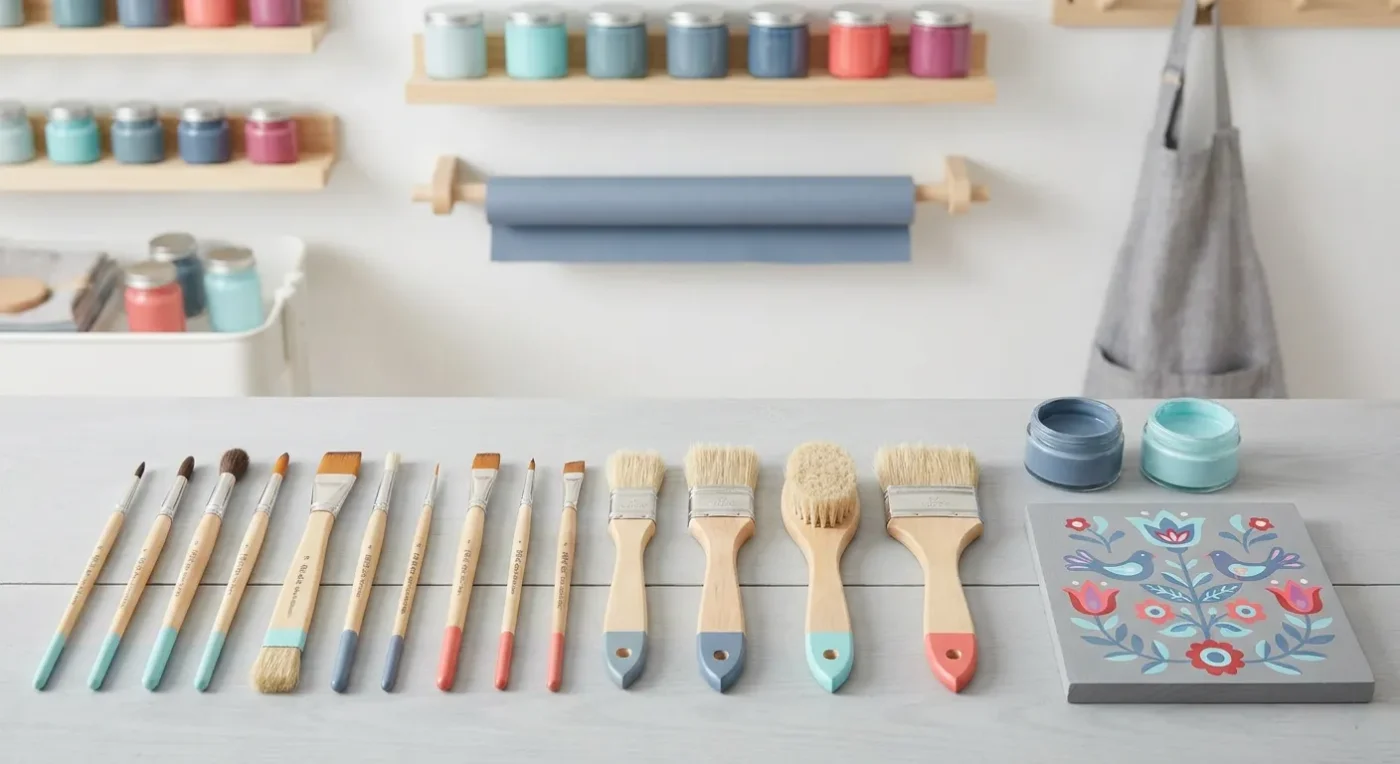

Every stroke of a decorative painting project tells a story. The quality of that story often hinges on the tools you choose. For hobbyist decorative painters and folk art enthusiasts, understanding the synergy between your brushes and your chosen surface is paramount. This article from Paint Works Mag will guide you through selecting the ideal folk art painting brushes and surfaces. Consequently, you will be empowered to create pieces that truly reflect your artistic vision.
Demystifying Folk Art Painting Brushes: Shapes and Uses
The world of painting brushes can seem vast. However, for folk art, a few key types will become your trusted companions. Each brush shape is designed for specific tasks. This allows for precision, coverage, and unique textures.
Essential Brush Shapes for Folk Art
- Flat Brushes: With their straight edge, flats are excellent for broad strokes, sharp lines, and blocking in larger areas of color. They are versatile for many folk art motifs, from floral elements to geometric patterns.
- Round Brushes: Tapering to a fine point, round brushes are perfect for detailed work, fine lines, and creating delicate curves. They are indispensable for adding intricate details to faces, leaves, or scrollwork.
- Liner Brushes: Featuring long, thin bristles, liner brushes excel at creating extremely fine lines, lettering, and continuous flowing strokes. Think delicate tendrils or precise outlines.
- Filbert Brushes: A flattened oval shape, filberts offer a soft, rounded edge. This is ideal for blending, shading, and creating petal-like strokes without harsh lines.
- Fan Brushes: These unique brushes spread out like a fan. Therefore, they are superb for creating textured effects like grass, foliage, or subtle blending.
Natural vs. Synthetic Bristles
Natural bristles are often made from animal hair, such as sable or hog. These brushes are known for their ability to hold a lot of paint and create soft, organic strokes. They work wonderfully with oil paints, offering a traditional feel.
Synthetic bristles, conversely, are made from nylon or polyester. These brushes are durable and maintain their shape well. They are excellent for use with acrylics due to their resilience and easy cleanup. In line with the growing emphasis on eco-friendly products, many modern synthetic brushes are designed for longevity and performance. This aligns with the industry trend towards sustainable tools. Furthermore, synthetic brushes are generally more affordable and easier to maintain.
Choosing the Right Surface for Your Masterpiece
The surface you choose acts as the foundation for your folk art. It influences how your paint behaves and the overall look of your finished piece.
Wooden Surfaces: Traditional Charm
Wood is a classic choice for folk art. It offers a sturdy, natural base. From small plaques to furniture, wood can be sanded, primed, and painted to achieve a smooth or rustic finish. Always ensure your wooden surface is clean and properly sealed or primed to prevent paint absorption. This preparation step is crucial for paint adhesion and durability. Moreover, different wood types can offer unique grains and textures that add character to your piece.
Canvas: Versatility for Folk Art
While often associated with fine art, canvas is also a fantastic option for folk art. Stretched canvas provides a flexible, lightweight surface. Canvas boards, on the other hand, offer a rigid alternative. Both are readily available and come pre-primed, making them convenient for immediate use. Canvas is particularly good for larger pieces or when you want a lighter final product. Many artists appreciate the slight texture of canvas, which can add depth to their folk art painting.
Other Popular Surfaces
- Tin and Metal: These surfaces offer a unique, smooth, and often reflective base. They require specific primers to ensure paint adhesion. Painting on tin can create a charming, antique look.
- Glass: Painting on glass allows for translucent effects and can be used for decorative windows, bottles, or ornaments. Special glass paints are often required.
- Fabric: Textile painting is another folk art tradition. Fabric paints transform clothing, bags, or home decor items into personalized art pieces.
- Ceramics and Pottery: These surfaces are excellent for functional art. They can be painted with acrylics or special ceramic paints.
Preparing Your Surfaces for Folk Art Painting
Proper surface preparation is key to a successful folk art project. It ensures paint adheres well and lasts longer. Neglecting this step can lead to chipping or peeling paint.
Sanding and Cleaning
For wooden surfaces, begin by sanding with fine-grit sandpaper. This creates a smooth, even surface for painting. After sanding, wipe the surface thoroughly with a damp cloth to remove any dust. Allow it to dry completely. For other surfaces like metal or glass, a thorough cleaning with soap and water, followed by an alcohol wipe, removes oils and grime. This is a critical step for good adhesion.
Priming Your Surface
Priming is essential, especially for porous surfaces like wood or unprimed canvas. A good primer seals the surface. It also provides an even base for your paint. Use a gesso for canvas or wood. For metal or glass, specialized primers are available. Apply thin, even coats of primer. Let each coat dry completely before applying the next. This creates an optimal surface for your folk art painting brushes to glide over.
Mastering Brush Strokes and Techniques in Folk Art
Knowing your tools is one thing. However, mastering how to use them is another. Folk art painting often involves specific strokes and techniques. These give it its distinctive charm.
Basic Brush Strokes
- Comma Strokes: Created with a round or filbert brush, these strokes start with pressure and lift off to a fine point. They are perfect for leaves and petals.
-
Explore more: More from Paint Works Mag