
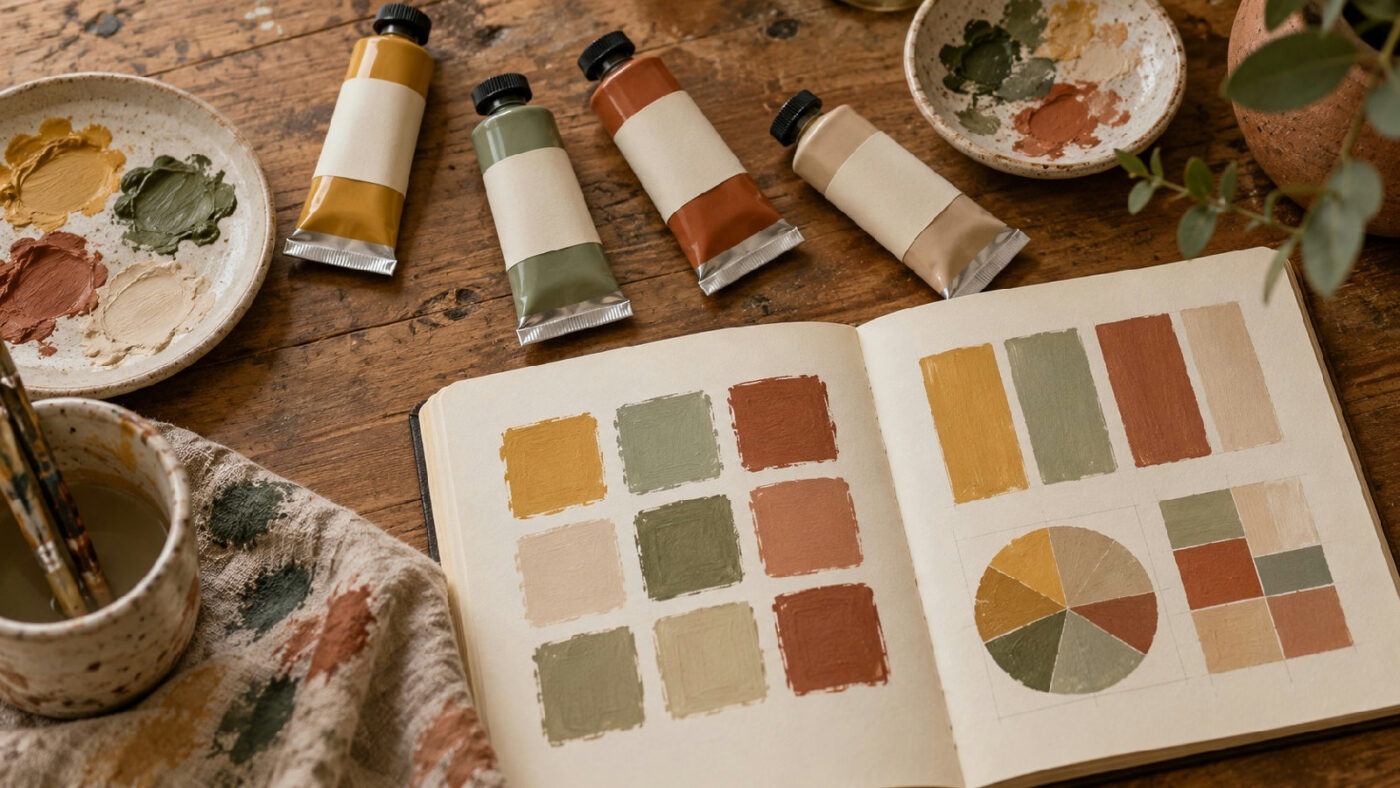

Let’s connect a color on your shelf with the exact product in your project notes. “Blue acrylic” is fine while you’re looking at one open bottle, but it gets shaky once you return to a project or try to compare two similar colors. Here’s a small reference built from the labels you already have, without turning your painting table into a stockroom.
The aim is accurate identification, not ranking brands or predicting every paint mixture. Work with a few products you use regularly and keep their original labels. Browse our materials section for broader guidance; here we’ll build a usable bridge between the container, a practice swatch and your written project record.
Choose a small working group
Start with the colors for one planned decorative piece. That might be a background, two motif colors and a detail color. Keeping the first inventory small lets you finish it before you lose the afternoon to rearranging every supply you own.
Gather the actual containers rather than copying a shopping list. A saved order can describe something you intended to buy, while the tube on your table is what you will use. If you have transferred paint into another container, retain the original identifying information and applicable directions.
Place the products where you can read their labels. Do not clean them with a solvent or scrape them merely to make this exercise tidier. If paint obscures a field, record what is readable and identify the uncertainty. A partial honest entry is better than a confident guess.
Record the name as it appears
Make a row for each product with the manufacturer, product line and color name. Write the full line name where it matters. A color name can occur in more than one formulation, so a name alone may not reconnect you with the same material later.
Keep your own nickname in a separate field. “Leaf green” may describe its role in the design, but it should not replace the manufacturer’s name. When the project note uses the nickname, the inventory can show which container it means.
Copy the text carefully, including a word such as hue if it is part of the name. Do not silently simplify the label because you think two names mean the same thing. The goal is to preserve identification, not to create a new naming system that hides the original.
Distinguish label facts from your observations
Create separate spaces for label information and practice observations. In the first, copy what the container or official product information says. In the second, write what you saw in a particular sample. Keeping these apart prevents one thin application from becoming a sweeping claim about the paint.
GOLDEN’s label explanation identifies opacity, lightfastness and pigment Color Index information on its updated acrylic labels. Use that manufacturer’s explanation when reading those products. A symbol on another brand should be checked against that brand’s own guidance.
Leave a field blank when the information is not available. If you cannot interpret a symbol, write “check manufacturer” rather than assigning a meaning from memory. An inventory remains useful when it makes a missing answer visible.
Add a source to your paint label inventory
Record the official product page or label guide for an entry that needs interpretation. Include the date you consulted it. This is particularly useful when the container is older than the guide or its design differs from the current example.
Compare the page with your container before copying details. Check the product line, color name and other available identifiers. If the page concerns a different formulation, keep searching or mark the entry as unresolved. A plausible result is not automatically the right one.
Do not turn the reference column into a collection of promotional descriptions. One useful official page is enough for an identification question. Your inventory should help you find the relevant information quickly, not repeat a catalog paragraph beside every bottle.
Make a swatch that belongs to the entry
Use an appropriate spare surface and apply the paint according to its directions. Label the swatch with a small identifier that matches the inventory. Keep the readable record on the back or beside the sample so it does not cover the area you want to examine.
Write down the surface and preparation used for that swatch. Include any deliberate mixture or medium. If you intend to record the unmixed product, avoid using a leftover blend and calling it the tube color.
Inspect the dried sample under a consistent viewing setup and add a modest description. “Looks muted beside the selected background” describes the comparison you made. “Always dries dull” claims much more than this exercise can establish. Your own observation is valuable when its context stays attached.
Build the paint label inventory around real decisions
Add a project-role column if it helps: background, flower center, leaf shadow or fine detail. This makes the inventory useful while painting. It also separates your design choice from the material’s identity, so one paint can serve another role in a later project.
For similar-looking colors, place their labeled samples together and decide which one serves the present plan. Record the decision in the project notes, not as a permanent rating in the inventory. The choice may depend on neighboring colors and the amount of painted area.
If you replace a color, preserve the earlier entry and mark which project uses the replacement. Do not overwrite the original name as though you had used the new product all along. A clear revision helps explain why two practice pieces differ.
Track mixtures without confusing them with products
Give a mixture its own sample identifier and link it to the products involved. The inventory identifies the materials; a recipe note records the combination. Those records work together, but a mix called soft rose should not appear as though it were a manufacturer’s bottled color.
Write the method you actually used to measure the mixture if you want to repeat it. A casual dab and a measured quantity are different levels of precision. You can record either honestly without promising that an approximate note will produce an exact match.
Keep the mixture sample with its recipe rather than filing it under just one of its ingredients. This small distinction prevents a later session from sending you to the wrong tube when you are trying to rebuild a background or a motif shade.
Check an entry before buying a replacement
When a container is running low, consult the inventory and the current official product listing. Compare the identity fields and read any relevant change notice. Do not assume a similar name or thumbnail means the formulation and packaging are identical to your older product.
Record a substitution as a new entry, then make a comparison sample if the project depends on the previous result. You may decide it is suitable, but keep that decision connected to the sample rather than describing every replacement as interchangeable.
This exercise does not require buying duplicates or expanding your palette. Its value may be noticing that you already own the color you were about to purchase, or that the product you need is different from the one in your basket.
Keep the reference easy to maintain
Choose paper cards, a notebook or a simple digital table that you will actually reopen. Store physical samples with matching identifiers and keep the containers in a practical arrangement. A beautiful filing system that is too awkward to update will soon stop reflecting your supplies.
Review the entries when a material changes or when you begin a project that needs them. You do not need a daily inventory ritual. Add the new information at the moment it becomes useful, and preserve the previous record where it explains an existing piece.
A paint label inventory is finished enough when it lets you identify the material, find its source information and connect it with your sample. That gives the next painting session a dependable starting point while leaving your attention free for the design you want to make. What’s one tube on your shelf you’ve lost track of? Happy painting.