
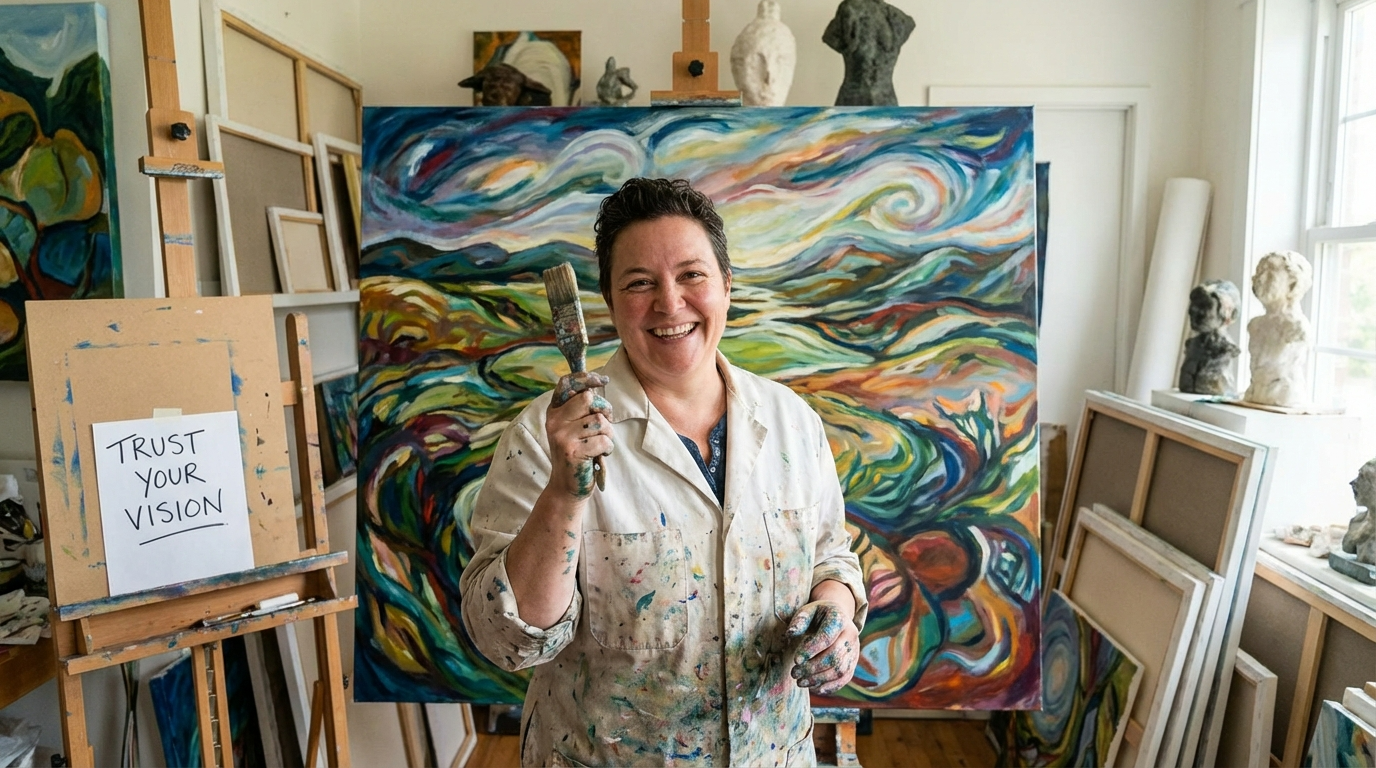

Developing confidence in your artistic skills is one of the most important steps in your journey as a painter. Many artists struggle with doubt, comparison, and fear of criticism. However, real growth begins when you build confidence in your artistic skills through deliberate action and reflection.
Talent alone does not create assurance. Instead, steady practice, honest evaluation, and supportive habits strengthen belief in your abilities. Therefore, confidence becomes a result of consistency rather than luck.
When you cultivate confidence in your artistic skills, you approach each canvas with clarity and purpose. As a result, your work improves and your creative process feels more fulfilling.
Understand the Root of Artistic Insecurity
Before building belief, identify what weakens it. Many painters compare themselves to professionals with years of experience. Consequently, unrealistic expectations create frustration.
Additionally, perfectionism often blocks progress. Artists expect flawless results and feel discouraged when mistakes appear.
Past criticism may also shape negative self-perception. However, one opinion does not define your potential.
By recognizing these triggers, you gain control. Awareness reduces emotional reactions and encourages rational thinking.
When you analyze doubt objectively, you begin strengthening confidence in your artistic skills from within rather than relying on external approval.
Shift From Perfection to Progress
Perfection is unrealistic. Progress, however, is measurable.
Instead of focusing on whether a painting is flawless, ask what improved compared to your last piece. Small gains accumulate over time.
Additionally, embrace experimentation. Trying new techniques expands knowledge and reduces fear of mistakes.
When you prioritize learning, pressure decreases. You begin viewing challenges as opportunities rather than threats.
This mindset shift supports long-term growth. As you acknowledge steady improvement, confidence in your artistic skills grows naturally and sustainably.
Set Clear and Achievable Goals
Clear goals provide direction. Without them, progress feels uncertain.
Break large ambitions into manageable steps. For example, dedicate one week to improving brush control. Then focus on color blending techniques the next week.
Short-term achievements reinforce belief. Each milestone demonstrates capability.
Moreover, tracking progress visually highlights improvement. Compare older works to recent pieces to see tangible growth.
As evidence accumulates, confidence in your artistic skills strengthens through visible proof rather than vague hope.
Build Consistency Through Daily Practice
Consistency builds mastery. When you paint regularly, skills improve steadily.
Even short daily sessions maintain momentum. Regular repetition strengthens muscle memory and decision-making speed.
Additionally, routine reduces anxiety. Familiar processes feel less intimidating.
Over time, repetition turns uncertainty into familiarity. Familiarity reduces hesitation and builds trust in your abilities.
Therefore, structured practice becomes one of the most powerful tools for developing confidence in your artistic skills.
Embrace Constructive Feedback
Feedback accelerates improvement when approached positively.
Seek critique from supportive mentors or peers. Ask for specific suggestions rather than general praise.
Constructive input identifies blind spots and clarifies next steps. Instead of feeling discouraged, use feedback as guidance.
However, filter opinions carefully. Not all criticism reflects expertise or understanding of your vision.
Balanced evaluation strengthens confidence in your artistic skills because growth becomes intentional rather than accidental.
Celebrate Small Creative Wins
Acknowledgment fuels motivation. Celebrate completing a challenging background. Recognize improvement in shading or composition.
Document achievements in a portfolio or journal. Reviewing progress reinforces belief during moments of doubt.
Additionally, reward yourself for consistency. Finishing a practice series deserves recognition.
When you celebrate small wins regularly, confidence in your artistic skills becomes rooted in accomplishment rather than comparison.
Limit Harmful Comparison
Comparison often undermines belief. Social media showcases polished highlights rather than struggles.
Instead of measuring yourself against others, focus on personal benchmarks. Track your own development over time.
Moreover, curate inspiration thoughtfully. Follow artists who motivate growth rather than trigger insecurity.
Reducing unnecessary comparison protects your mindset.
As you concentrate on your journey, confidence in your artistic skills increases without external pressure.
Strengthen Technical Foundations
Skill mastery builds natural confidence. Therefore, invest time in foundational techniques.
Practice color theory, value control, and composition basics. Solid fundamentals reduce uncertainty during complex projects.
Additionally, study materials and tools thoroughly. Understanding brush types and pigment behavior improves control.
When you trust your technical foundation, you approach creative challenges calmly.
Technical competence directly enhances confidence in your artistic skills because you rely on knowledge rather than guesswork.
Develop a Growth-Oriented Mindset
Belief expands when you accept that ability develops through effort.
Replace negative statements like “I am not talented” with “I am still learning.” Language shapes perception and motivation.
Furthermore, view mistakes as feedback rather than failure. Every correction refines your understanding.
A growth mindset encourages persistence. Persistence builds skill. Skill builds assurance.
Over time, this mental shift strengthens confidence in your artistic skills from the inside out.
Create a Supportive Creative Environment
Environment influences mindset. Work in a space that encourages focus and inspiration.
Keep tools organized and accessible. Reduce clutter that distracts from creative flow.
Additionally, engage with communities that support experimentation and growth. Workshops or online groups provide encouragement and accountability.
Positive surroundings reinforce belief. When you feel supported, it becomes easier to nurture confidence in your artistic skills.
Reflect on Your Artistic Journey
Reflection strengthens awareness of progress.
Set aside time monthly to review completed works. Identify improvements and lessons learned.
Write down challenges you overcame. Recognize persistence during difficult projects.
This reflection highlights resilience and dedication.
By acknowledging growth consciously, you solidify confidence in your artistic skills and reinforce long-term motivation.
Visualize Success Before You Paint
Mental rehearsal improves performance.
Before starting a project, imagine executing confident brushstrokes and clear color decisions.
Visualization reduces anxiety and prepares your mind for focused action.
Additionally, positive self-talk reinforces belief. Speak to yourself as you would encourage a fellow artist.
When mental preparation aligns with practice, confidence in your artistic skills strengthens even before the first stroke.
Accept That Doubt Is Part of Growth
Even experienced painters experience insecurity. Doubt often appears when you push beyond comfort zones.
Instead of resisting it, acknowledge its presence calmly.
Recognize that uncertainty signals expansion rather than inadequacy.
When you continue creating despite doubt, resilience develops. Resilience forms the backbone of lasting confidence.
Ultimately, understanding this cycle helps maintain confidence in your artistic skills through every stage of development.
Conclusion: Confidence Is Built, Not Given
Building confidence in your artistic skills requires patience and consistent effort. By shifting focus from perfection to progress, you reduce pressure and embrace growth.
Set achievable goals, practice regularly, and celebrate small victories. Seek constructive feedback while limiting harmful comparison.
Strengthen your technical foundation and cultivate a growth mindset. Create supportive environments and reflect on your journey.
Over time, repeated action transforms uncertainty into assurance. Ultimately, confidence in your artistic skills becomes a natural outcome of dedication, resilience, and purposeful practice.
FAQ
- Why do many painters struggle with self-confidence?
Comparison, perfectionism, and unrealistic expectations often contribute to artistic insecurity. - Can confidence grow without formal training?
Yes. Consistent practice and focused learning build belief over time. - How long does it take to feel assured in painting?
Confidence develops gradually through repeated effort and visible improvement. - Should beginners seek critique early?
Constructive feedback can guide growth, but choose supportive and knowledgeable sources. - What helps during moments of strong doubt?
Review past progress, practice simple exercises, and remind yourself that growth takes time.
Leave a Comment