
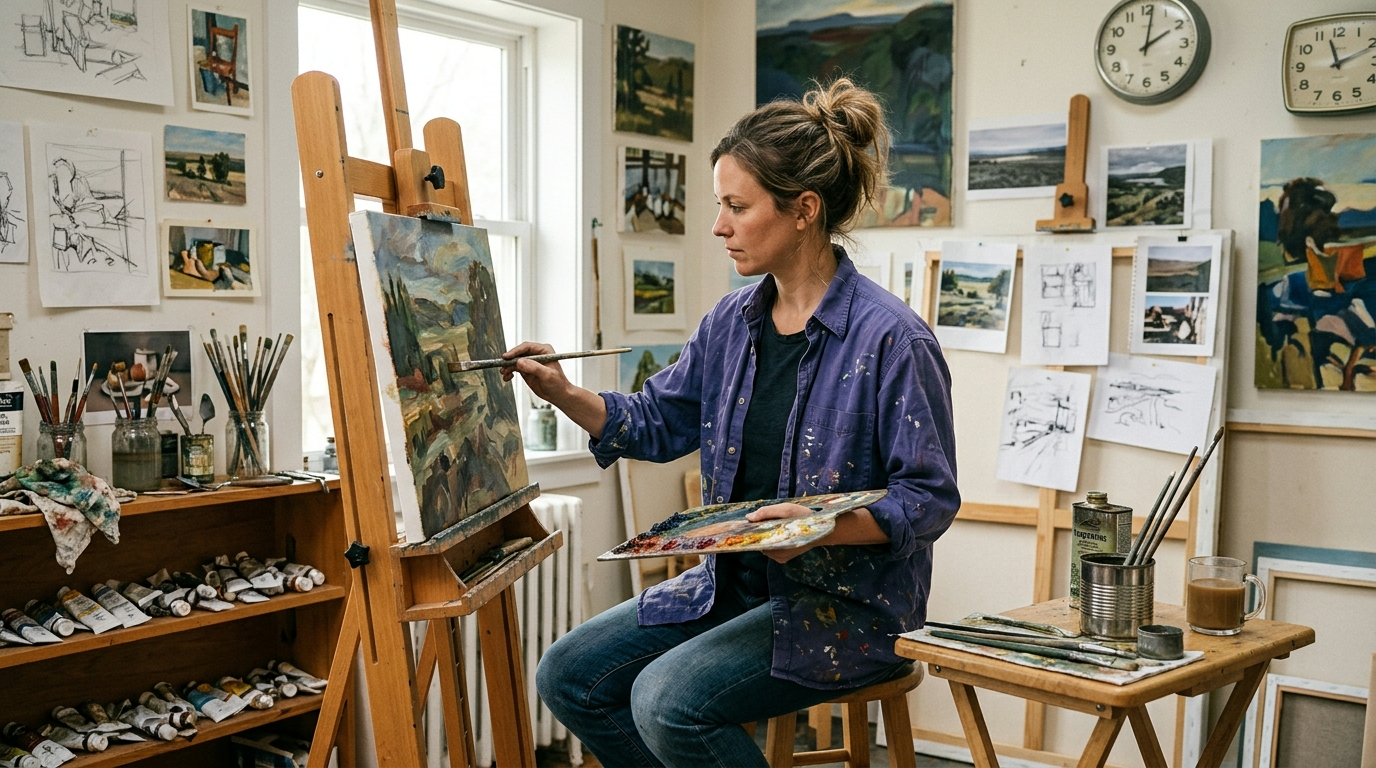

Many artists struggle with self-doubt while developing their skills. However, confidence rarely comes from inspiration alone. Instead, it grows through consistent practice and experience. A structured daily painting routine helps artists improve steadily while strengthening creative confidence.
Regular practice removes the fear of the blank canvas. When painting becomes part of a daily habit, artists focus more on exploration and less on perfection. Over time, this shift encourages creativity and skill development.
A well-designed daily painting routine does not require long hours or expensive materials. Even short sessions can produce meaningful progress.
This guide explores simple routines and strategies that help artists build discipline, improve technique, and gain confidence through consistent painting habits.
Why Consistency Matters for Artistic Growth
Consistency is one of the most powerful tools for artistic development. Artists who paint regularly develop stronger technical skills and creative instincts.
When practice becomes routine, painters gain familiarity with tools, colors, and brush techniques. As a result, they make decisions more confidently.
A structured daily painting routine also helps artists overcome creative blocks. Instead of waiting for inspiration, they create momentum through regular action.
Additionally, daily practice allows artists to track their improvement over time. Small improvements become noticeable after weeks or months of steady effort.
Therefore, consistency often matters more than talent. Artists who maintain regular practice sessions usually progress faster than those who paint occasionally.
Start with Short, Manageable Painting Sessions
Many beginners believe they must spend hours painting every day. However, long sessions can feel overwhelming.
Instead, artists should begin with shorter sessions that feel manageable.
Set a realistic time goal
Even 20 to 30 minutes per day can produce strong results. Short sessions reduce pressure while building consistency.
Focus on one small task
Rather than completing an entire painting, concentrate on one technique or subject.
Build momentum gradually
As the habit strengthens, artists may naturally extend their practice sessions.
A manageable daily painting routine helps artists remain consistent without feeling burned out.
Small steps often lead to long-term improvement.
Warm Up with Quick Sketches
Warm-up exercises prepare the mind and hand for creative work.
Professional artists often begin their sessions with quick sketches or studies.
Gesture sketches
Fast drawings of simple shapes help loosen hand movement and improve observation skills.
Brush stroke practice
Artists can experiment with different brush movements to explore texture and flow.
Color mixing drills
Mixing colors quickly helps artists understand how pigments interact.
These warm-up activities support a productive daily painting routine by easing artists into the creative process.
Starting with simple exercises reduces pressure and encourages experimentation.
Practice One Technique Each Day
Focusing on a single skill per session helps artists improve faster.
Instead of trying to master everything at once, painters can break their learning into smaller steps.
Brush control practice
Experiment with line thickness, pressure, and movement.
Color blending
Practice creating smooth transitions between colors.
Texture techniques
Explore dry brush, glazing, or layered painting methods.
This focused approach allows artists to gradually strengthen their daily painting routine while building confidence in individual skills.
Over time, these small improvements combine into stronger overall ability.
Create Small Daily Studies
Large paintings may feel intimidating for beginners. Small studies provide a more comfortable way to practice.
Mini paintings allow artists to complete work quickly and review results.
Postcard-sized paintings
Tiny canvases or sketchbook pages encourage experimentation.
Simple still-life studies
Painting everyday objects helps artists observe shapes, light, and color relationships.
Nature observations
Leaves, flowers, and rocks provide excellent practice subjects.
Creating small studies as part of a daily painting routine helps artists build experience without feeling overwhelmed.
Frequent completion of small works also boosts motivation.
Use Reference Images for Learning
Reference images help artists understand complex subjects more clearly.
Photographs or real-life objects provide visual guidance during practice sessions.
Study lighting and shadow
References reveal how light shapes objects.
Analyze color relationships
Observing real subjects improves color accuracy.
Simplify complex scenes
Artists can focus on basic shapes and values before adding detail.
Using references within a daily painting routine supports observational skills while improving realism.
Over time, artists rely less on references as their visual memory improves.
Keep a Painting Journal
Tracking progress encourages motivation and reflection.
A painting journal allows artists to document experiments, techniques, and lessons learned.
Record daily exercises
Writing notes about practice sessions helps identify successful techniques.
Track creative ideas
Artists can sketch future painting concepts in their journal.
Review past work
Looking back at earlier entries reveals artistic improvement.
Maintaining a journal strengthens a daily painting routine by encouraging reflection and learning.
The journal becomes a valuable record of artistic growth.
Experiment with New Ideas Regularly
Creativity thrives when artists remain curious and open to experimentation.
A daily practice routine should include time for exploring new ideas.
Try different color palettes
Limited palettes encourage creative color mixing.
Test unusual tools
Sponges, palette knives, or textured brushes produce unique effects.
Explore different subjects
Switching subjects keeps practice sessions interesting.
Experimentation within a daily painting routine helps artists discover techniques that feel natural and exciting.
Creative exploration often leads to unexpected breakthroughs.
Limit Distractions During Painting Time
Focused practice leads to better results.
Artists should create an environment that supports concentration.
Organize your workspace
Keeping supplies within reach prevents interruptions.
Turn off unnecessary devices
Reducing distractions helps artists stay fully engaged.
Create a comfortable setup
Proper lighting and seating improve concentration.
A distraction-free environment strengthens a daily painting routine by allowing artists to focus fully on their creative work.
Better focus leads to more productive sessions.
Celebrate Small Improvements
Artistic progress often happens gradually. Recognizing improvement helps maintain motivation.
Artists should celebrate small victories along the way.
Notice technique improvements
Even subtle changes in brush control or color mixing represent progress.
Compare old and new work
Reviewing past paintings highlights growth over time.
Share progress with others
Support from friends or art communities can boost confidence.
Acknowledging progress reinforces the value of a daily painting routine and encourages continued effort.
Confidence grows naturally as artists see their skills improving.
Build Discipline Through Creative Habits
Creative discipline is essential for long-term artistic growth.
Artists who maintain regular habits develop stronger creative instincts.
Set a regular painting time
Painting at the same time each day strengthens the habit.
Prepare supplies in advance
Having materials ready makes it easier to begin quickly.
Stay flexible when needed
Some days may involve shorter sessions, and that is perfectly acceptable.
A consistent daily painting routine creates structure that supports artistic growth.
Over time, painting becomes a natural and rewarding part of daily life.
Conclusion
Artistic confidence does not appear instantly. Instead, it develops through steady practice, experimentation, and reflection. A structured routine helps artists maintain consistent progress while strengthening creative discipline.
Short daily sessions, warm-up exercises, and small studies build technical skills gradually. At the same time, experimentation keeps painting exciting and inspiring.
Tracking progress in journals and celebrating improvements reinforces motivation. As artists continue practicing, their skills and confidence grow naturally.
By committing to a daily painting routine, painters create a powerful foundation for long-term artistic development.
Consistency transforms small daily efforts into lasting creative success.
FAQ
1. How long should a daily painting session last?
Even 20 to 30 minutes can be effective. Short sessions build consistency and gradually strengthen painting skills.
2. What should beginners focus on during daily practice?
Beginners should focus on basic skills such as brush control, color mixing, and simple subject studies.
3. Can daily painting help overcome creative blocks?
Yes. Regular practice removes pressure and helps artists maintain creative momentum.
4. Should artists complete a finished painting every day?
Not necessarily. Daily sessions may include sketches, studies, or technique exercises instead of finished artwork.
5. How does consistent practice improve artistic confidence?
Regular practice builds familiarity with tools and techniques. As skills improve, artists naturally feel more confident creating new work.
Leave a Comment