
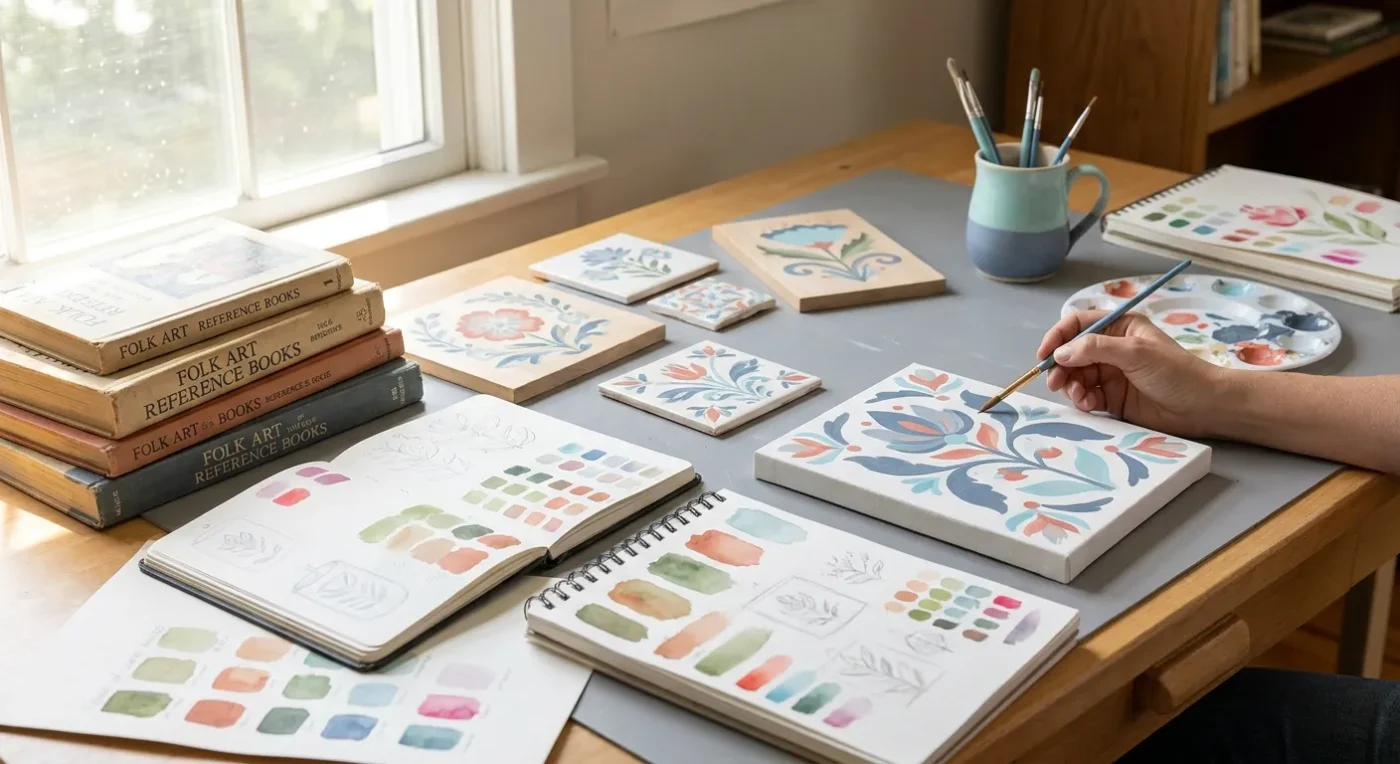

Developing Unique Art Style: Beyond the Copycat Phase
Every artist, from beginner to seasoned professional, eventually grapples with the desire to move beyond replication and create something distinctly their own. For decorative painters and folk art enthusiasts, developing unique art style is a journey of self-discovery that deepens your connection to your craft. It’s about infusing your personality, experiences, and vision into every brushstroke, transforming projects from mere reproductions into heartfelt expressions.
This isn’t just about painting differently; it’s about thinking differently about your art. This article will explore practical strategies for cultivating your artistic voice, overcoming common creative blocks, and finding ongoing inspiration that fuels your long-term artistic development. Let’s move from ‘what to paint’ to ‘how you paint it.’
The Quest for Your Artistic Voice
Many decorative painters start by learning techniques and replicating projects from books or classes, which is an invaluable foundation. However, true artistic growth blossoms when you begin to question, experiment, and deviate from the established path. Your artistic voice isn’t something you ‘find’ overnight; it’s something you build through consistent practice, reflection, and a willingness to explore.
Think of your favorite folk artists – their work is instantly recognizable. That’s a testament to their unique style. You, too, have a unique perspective waiting to be expressed. The goal is not to be ‘better’ than anyone else, but to be authentically you in your art, creating your personal painting style.
Strategies for Cultivating Your Signature Look
1. Reflect and Deconstruct:
Take a moment to look at the decorative art that truly resonates with you, both historical and contemporary. What elements consistently draw your eye? Is it a particular color palette, a certain type of brushwork, specific themes, or a particular texture? Identify these elements and consider how they make you feel. Then, ask yourself: How can I incorporate the essence of these elements into my own work, filtered through my unique lens, rather than just copying them?
2. Experiment with Color Palettes:
Move beyond standard color choices. Try working with a limited palette for a few projects (e.g., only warm tones, or only cool tones plus a neutral). Explore unconventional color combinations. What happens if you introduce a vibrant lime green into a traditional muted folk art piece? Or use deep plums and warm golds instead of classic reds and blues? Color experimentation is a powerful way to start finding your artistic voice.
3. Play with Brushwork and Mark-Making:
Don’t just apply paint smoothly. Experiment with different brush types and how they create textures. Try dry brushing, impasto, stippling, or even using non-traditional tools like sponges or palette knives. How can your brushstrokes become part of your signature? Do you prefer bold, visible strokes, or a seamless, blended finish? Varying your mark-making is key to evolving artistic identity.
4. Embrace Imperfection and Personal Touches:
True folk art often has a charming, handmade quality. Don’t strive for sterile perfection. Allow your hand to show in your work. Perhaps you have a unique way of drawing a certain flower, or a particular whimsical detail you love to add. These ‘quirks’ are what make your art unique. They contribute to your signature painting look.
5. Seek Inspiration Beyond Art:
Inspiration isn’t limited to other paintings. Look at textiles, nature, architecture, historical patterns, even poetry or music. How can the rhythm of a song translate into the flow of your brushwork? How can the texture of an antique quilt inspire a painted background? Broadening your sources of inspiration will naturally lead to more original ideas.
Overcoming Creative Blocks and Staying Inspired
Creative blocks are a natural part of any artistic journey, but they don’t have to derail your progress. When you’re struggling with overcoming creative block:
- Take a Break: Sometimes the best solution is to step away. Go for a walk, visit a museum, or engage in a completely different activity. Fresh eyes often bring fresh perspectives.
- Practice Mindless Doodling: Grab a pen and paper and just draw lines, shapes, or patterns without any specific goal. This can loosen up your hand and mind, often leading to unexpected ideas.
- Revisit Old Work: Look at pieces you’ve enjoyed creating in the past. What aspects brought you joy? Can you expand on those elements in a new way?
- Join a Community: Engage with other artists. Share your struggles and successes. The support and feedback from a like-minded community can be incredibly invigorating. PaintWorksMag’s forums are a great place to start!
- Learn a New Technique: Sometimes, a creative block is a sign that you need a new challenge. Learning a novel technique, even if it’s outside your usual comfort zone, can spark new ideas for your existing style.
Developing unique art style is an ongoing process of learning, experimenting, and embracing your individual perspective. It’s about having the confidence to trust your instincts and let your personality shine through your decorative painting. Enjoy the journey of discovery, and watch as your art becomes a true reflection of you.