
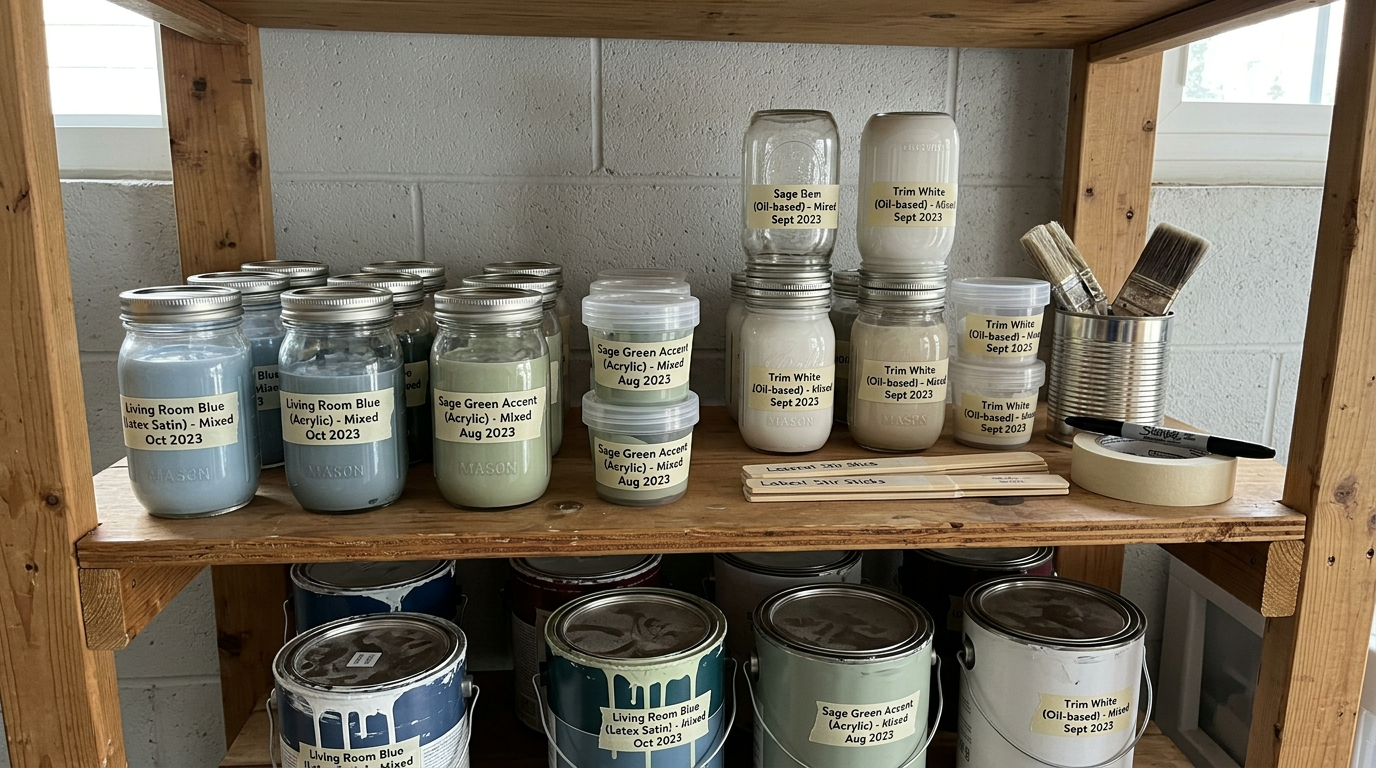

Paint rarely gets used up completely during a project. After finishing a room, fence, or piece of furniture, you often end up with leftover custom colors. Knowing how to store mixed paints correctly ensures those colors remain usable later. Proper storage prevents separation, spoilage, and color shifts.
Fortunately, preserving paint is easier than most people think. With the right containers, labeling methods, and storage environment, mixed paint can stay fresh for years. This guide explains how to protect leftover paint so you can maintain consistent color in future touch-ups and repairs.
Why Proper Paint Storage Matters
Many DIYers underestimate the importance of good storage practices. However, improper handling often ruins leftover paint quickly.
First, paint exposed to air begins to dry and form a skin. That skin contaminates the remaining liquid and causes clumps. Over time, the color may also shift slightly if pigments settle unevenly.
Second, temperature changes damage paint quality. Extreme heat thickens the mixture, while freezing breaks down the chemical structure.
Finally, unlabeled containers cause confusion. Without notes about the original project or color formula, it becomes difficult to match paint later.
Therefore, when you store mixed paints carefully, you protect the exact shade used in your project. This preparation saves time, money, and frustration during future repairs.
Understand How Mixed Paint Behaves Over Time
Paint changes gradually after it is opened. Even high-quality products require proper storage to remain stable.
Pigment separation
Over time, pigments settle at the bottom of the container. This process occurs naturally, but it becomes more severe if paint sits for long periods.
Fortunately, gentle stirring usually restores the mixture.
Air exposure
Air causes the liquid components of paint to evaporate slowly. As a result, the paint thickens and forms a rubbery surface layer.
Minimizing air space inside the container helps prevent this issue.
Temperature sensitivity
Paint reacts strongly to environmental changes. Repeated heating and cooling cycles accelerate degradation.
Consequently, a stable storage location greatly extends paint life.
Because of these factors, anyone who wants to store mixed paints successfully must control air, temperature, and container conditions.
Choose the Right Containers for Leftover Paint
The original paint can is not always the best storage option. Although manufacturers design these cans for shipping and shelf display, they may allow excess air once partially emptied.
Therefore, transferring paint to a smaller container can help.
Use airtight containers
Glass jars with tight lids work very well. Mason jars, for example, reduce air exposure and prevent leaks.
Plastic paint storage containers are also effective if they seal tightly.
Select the right size
Ideally, choose a container that holds the paint with minimal empty space above the surface. Less air inside means slower drying.
Clean containers thoroughly
Before transferring paint, wash containers carefully and allow them to dry completely. Even small contaminants can affect paint quality.
Once prepared, you can safely store mixed paints for long periods without risking contamination.
Label Everything Clearly
Labeling is one of the most overlooked steps in paint storage. However, proper labeling makes future projects much easier.
Include key details
Write important information on the container:
- Project location (living room wall, kitchen cabinets, etc.)
- Date the paint was mixed
- Brand and paint type
- Sheen level (matte, eggshell, satin, or gloss)
Add mixing notes
If the paint was custom mixed, note the formula or color code. This record helps professionals recreate the same shade later.
Use waterproof labels
Paint containers often sit in garages or basements. Therefore, waterproof markers or labels ensure the information stays readable.
Accurate labeling ensures you can quickly identify stored paint when needed. As a result, your efforts to store mixed paints remain organized and practical.
Reduce Air Exposure Before Sealing
Air is the main enemy of leftover paint. Fortunately, a few simple steps minimize exposure.
Use plastic wrap
Place a layer of plastic wrap directly on the paint surface before closing the lid. This barrier slows oxidation.
Seal lids tightly
After placing the lid, tap it down gently with a rubber mallet. Avoid hammering too hard, which may warp the lid.
Store containers upside down
Some professionals recommend briefly storing sealed cans upside down. This technique creates an airtight seal as paint settles against the lid.
These small adjustments significantly improve results when you store mixed paints for later use.
Maintain Ideal Storage Conditions
Even perfectly sealed containers can fail if stored in the wrong location.
Keep paint in a climate-controlled space
Garages and sheds often experience extreme temperature swings. Instead, choose indoor areas such as utility rooms, closets, or basements with stable conditions.
Avoid freezing temperatures
Freezing damages paint structure permanently. Once frozen, most paints cannot be restored.
Protect from excessive heat
Heat speeds up chemical breakdown. Temperatures above 90°F can shorten paint lifespan dramatically.
By maintaining stable conditions, homeowners can reliably store mixed paints for several years.
Check Stored Paint Periodically
Even properly stored paint benefits from occasional inspection.
First, open containers once or twice per year. Look for signs of drying or contamination.
Second, stir the paint slowly. If pigments have settled, mixing redistributes them evenly.
Third, smell the paint. A sour or rotten odor usually indicates bacterial growth.
Regular checks ensure that paint remains usable. As a result, the effort to store mixed paints continues to pay off long after the original project.
Know When Paint Is No Longer Usable
Not all leftover paint can be saved indefinitely. Eventually, paint reaches a point where it should be discarded.
Common signs of spoiled paint
- Strong sour or moldy smell
- Thick rubbery texture
- Hardened chunks that will not dissolve
- Extreme separation that stirring cannot fix
If you notice these issues, the paint may not apply smoothly or match the original color.
However, when people store mixed paints properly, many products remain usable for five years or longer.
Use Stored Paint for Perfect Touch-Ups
The biggest advantage of saving paint correctly is effortless touch-ups.
Over time, walls develop scuffs, scratches, and small chips. Matching the exact color later can be surprisingly difficult. Even slight shade differences become obvious on large surfaces.
Fortunately, properly preserved paint solves this problem.
Before applying stored paint:
- Stir the mixture thoroughly.
- Test a small section on the wall.
- Allow it to dry fully before evaluating the color.
Because the paint was preserved carefully, the touch-up should blend seamlessly with the original surface.
Therefore, taking the time to store mixed paints helps maintain consistent color across future repairs.
Helpful Tools for Paint Storage
A few inexpensive tools make paint storage much easier.
Paint strainers
Strainers remove dried fragments or debris from stored paint. This step improves smoothness before reuse.
Stir sticks or mixing paddles
Proper mixing restores pigment balance after long storage periods.
Label makers
Printed labels remain readable longer than handwritten ones.
Small storage containers
Quart or pint containers work well for leftover amounts.
With these simple tools, anyone can effectively store mixed paints while maintaining professional-quality results.
Best Practices for Long-Term Paint Preservation
Professional painters often follow a simple routine after completing a project.
First, they strain leftover paint to remove debris. Next, they transfer the paint to smaller airtight containers. Then, they label each container clearly.
After sealing the lid tightly, they place containers in a temperature-controlled storage area.
Finally, they record the project details in a notebook or digital log.
This organized approach ensures they can quickly find the correct color months or years later. As a result, professionals consistently store mixed paints in ways that maintain color accuracy.
Conclusion
Leftover paint is far too valuable to waste. When preserved correctly, it provides an exact color match for touch-ups, repairs, and future updates.
The key steps are simple. Use airtight containers, minimize air exposure, label everything clearly, and maintain stable storage temperatures. Periodic checks also help ensure paint remains usable.
Although these steps take only a few minutes, they significantly extend paint lifespan. More importantly, they protect the precise color created for your project.
By learning how to store mixed paints properly, homeowners and DIY enthusiasts can maintain consistent results for years to come.
FAQ
1. How long can leftover mixed paint remain usable?
Most interior paints can last three to five years if stored properly. Airtight containers and stable temperatures help extend their lifespan significantly.
2. Is it better to keep paint in the original can?
The original can works for short-term storage. However, smaller airtight containers often preserve leftover paint more effectively.
3. Can stored paint be reused for touch-ups later?
Yes. If the paint still smells normal and mixes smoothly, it should work well for repairs and small touch-ups.
4. What temperature is best for storing leftover paint?
Paint stores best between 60°F and 80°F. Avoid freezing conditions and extreme heat.
5. How can you tell if stored paint has gone bad?
Spoiled paint usually smells sour, contains hardened lumps, or separates permanently. When these signs appear, it should be discarded.
Leave a Comment