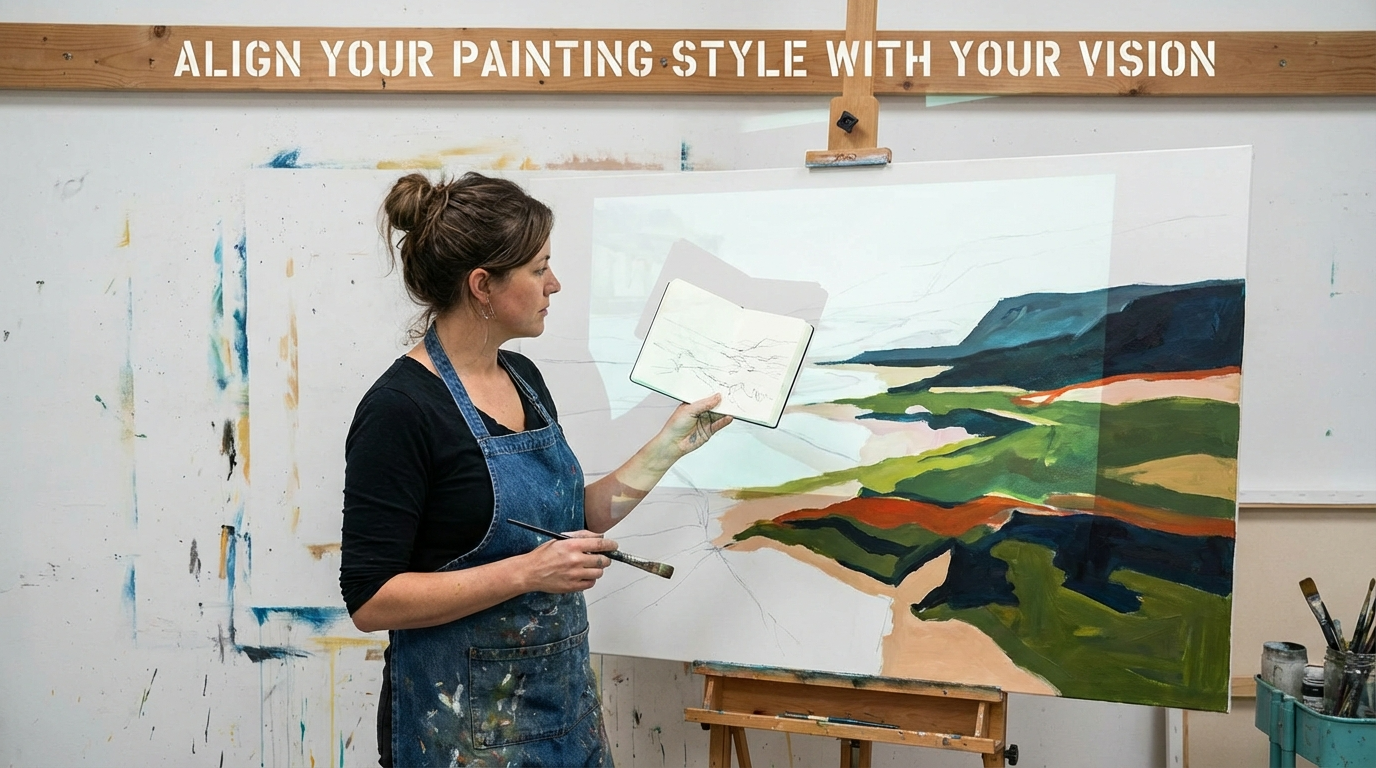

To grow as an artist, you must learn to align your painting style with your deeper creative goals. Many painters develop technical skills yet struggle with direction. As a result, their work feels inconsistent or disconnected. When you intentionally align your painting style with your artistic vision, clarity replaces confusion.
Your vision represents what you want to communicate. Meanwhile, your style reflects how you communicate it. Therefore, harmony between the two creates powerful, cohesive art.
Although trends and influences can inspire growth, your long-term success depends on authenticity. When you align your painting style with your inner purpose, your work becomes meaningful and recognizable.
Understand Your Core Artistic Vision
Before making adjustments, define your vision clearly. Ask yourself what themes, emotions, or stories matter most to you.
Do you aim to capture tranquility in nature? Perhaps you want to express social commentary. Maybe you prefer abstract explorations of color and movement.
Clarity begins with reflection. Therefore, write down your intentions. Identify patterns in your past work. Notice recurring subjects or moods.
Additionally, evaluate your motivations. Are you painting for self-expression, storytelling, or technical mastery?
When you understand your purpose, it becomes easier to align your painting style with that direction. Without clarity, stylistic decisions feel random.
Identify the Strengths Within Your Current Style
Once your vision feels clear, examine your existing strengths. Every artist has natural tendencies.
You may excel at bold brushwork. Alternatively, you might favor delicate detail. Some painters thrive in vibrant palettes, while others prefer muted tones.
Instead of discarding your current approach, refine it. The goal is not reinvention but alignment.
For example, if your vision emphasizes calm atmospheres, strong color contrast may require softening. Conversely, if you seek drama, subtle blends may need sharpening.
When you align your painting style thoughtfully, you amplify strengths that support your message.
Evaluate Where Style and Vision Conflict
Sometimes style and vision do not match perfectly. For instance, you might desire emotional depth but rely heavily on decorative techniques.
Therefore, identify specific gaps. Does your composition reflect your intended story? Do your colors reinforce the mood you want to convey?
Honest assessment promotes growth. However, avoid harsh self-criticism. Instead, treat inconsistencies as opportunities.
By acknowledging mismatches, you gain control over improvement. Gradual adjustments help align your painting style more effectively over time.
Refine Your Color Choices Intentionally
Color communicates emotion immediately. Therefore, evaluate whether your palette supports your vision.
If your work aims to feel serene, cool hues and soft transitions may work best. For energetic themes, bold contrasts can add impact.
Additionally, limit unnecessary variation. A cohesive palette strengthens identity.
When you align your painting style through intentional color decisions, viewers perceive consistency instantly. Over time, tonal harmony becomes part of your signature.
Adjust Composition to Reflect Purpose
Composition guides the viewer’s eye. Therefore, structure must reinforce your message.
If your vision emphasizes intimacy, consider closer framing and focused subjects. For expansive themes, wide compositions may feel more appropriate.
Moreover, use visual hierarchy strategically. Direct attention to the most meaningful elements first.
Strong composition enhances storytelling. When layout supports intention, your work feels unified.
Through careful structural refinement, you align your painting style with your artistic goals more effectively.
Balance Technique with Expression
Technical mastery matters. However, technique should serve vision rather than dominate it.
For example, hyper-detailed realism may not suit expressive abstraction. Likewise, loose brushwork may conflict with highly conceptual storytelling.
Therefore, evaluate whether your technical habits enhance or distract from your message.
When you align your painting style with emotional intent, technique becomes a supportive tool rather than a distraction.
Limit External Noise and Comparison
Outside influences can inspire growth. However, excessive comparison often creates confusion.
If you constantly shift styles to match popular artists, coherence disappears.
Instead, filter inspiration carefully. Adopt techniques that reinforce your direction while discarding those that conflict with it.
By protecting your focus, you strengthen consistency.
Over time, you naturally align your painting style with your authentic creative voice rather than external pressure.
Create a Cohesive Body of Work
Alignment becomes visible through repetition. Therefore, develop a series based on your clarified vision.
Choose consistent themes, palettes, and techniques. Revisit similar subjects to deepen exploration.
As patterns emerge, identity strengthens. Viewers recognize your artistic language.
Additionally, review completed works collectively. Do they communicate a unified message? If not, refine accordingly.
Through sustained focus, you align your painting style with your broader purpose.
Allow Gradual Evolution
Artistic growth rarely happens instantly. Therefore, accept gradual refinement.
Introduce changes slowly. Experiment within boundaries rather than making drastic shifts.
As experience accumulates, your style naturally evolves. However, core elements should remain stable.
When evolution feels intentional rather than reactive, authenticity remains intact.
Build Confidence Through Clarity
Confidence increases when direction feels clear. Doubt often arises from inconsistency.
Therefore, once you align your painting style with your vision, decision-making becomes easier.
You select colors, compositions, and techniques with purpose. As a result, your workflow improves.
Clarity eliminates unnecessary hesitation. Instead of guessing, you act with intention.
Over time, consistent alignment builds professional credibility and personal satisfaction.
Revisit and Refine Your Vision Regularly
Vision may evolve as life experiences change. Therefore, schedule periodic reflection.
Ask whether your current work still reflects your goals. Adjust thoughtfully when necessary.
However, maintain core themes to preserve cohesion.
When reflection becomes part of your routine, you continuously align your painting style with deeper meaning.
Conclusion: Create With Purpose and Authenticity
To align your painting style with your artistic vision, begin with clarity. Define your purpose, identify strengths, and refine techniques intentionally.
Evaluate where inconsistencies exist and adjust gradually. Use color, composition, and brushwork to support your message.
Limit external distractions and cultivate a cohesive body of work. Over time, alignment strengthens recognition and confidence.
Ultimately, when you align your painting style with authentic vision, your artwork gains depth, coherence, and lasting impact. Purpose-driven art resonates more deeply and stands apart in a crowded creative landscape.
FAQ
- Why does my work feel inconsistent?
Inconsistency often occurs when technique and vision do not align clearly. Reflect on your core message. - Can I change my style completely?
Yes, but gradual refinement preserves cohesion and strengthens long-term recognition. - How do I discover my artistic vision?
Analyze recurring themes, emotional goals, and personal motivations behind your work. - Should I follow popular trends?
Trends can inspire, but your core direction should guide stylistic decisions. - How often should I reassess my creative direction?
Periodic reflection every few months helps maintain clarity and purposeful growth.
Leave a Comment