
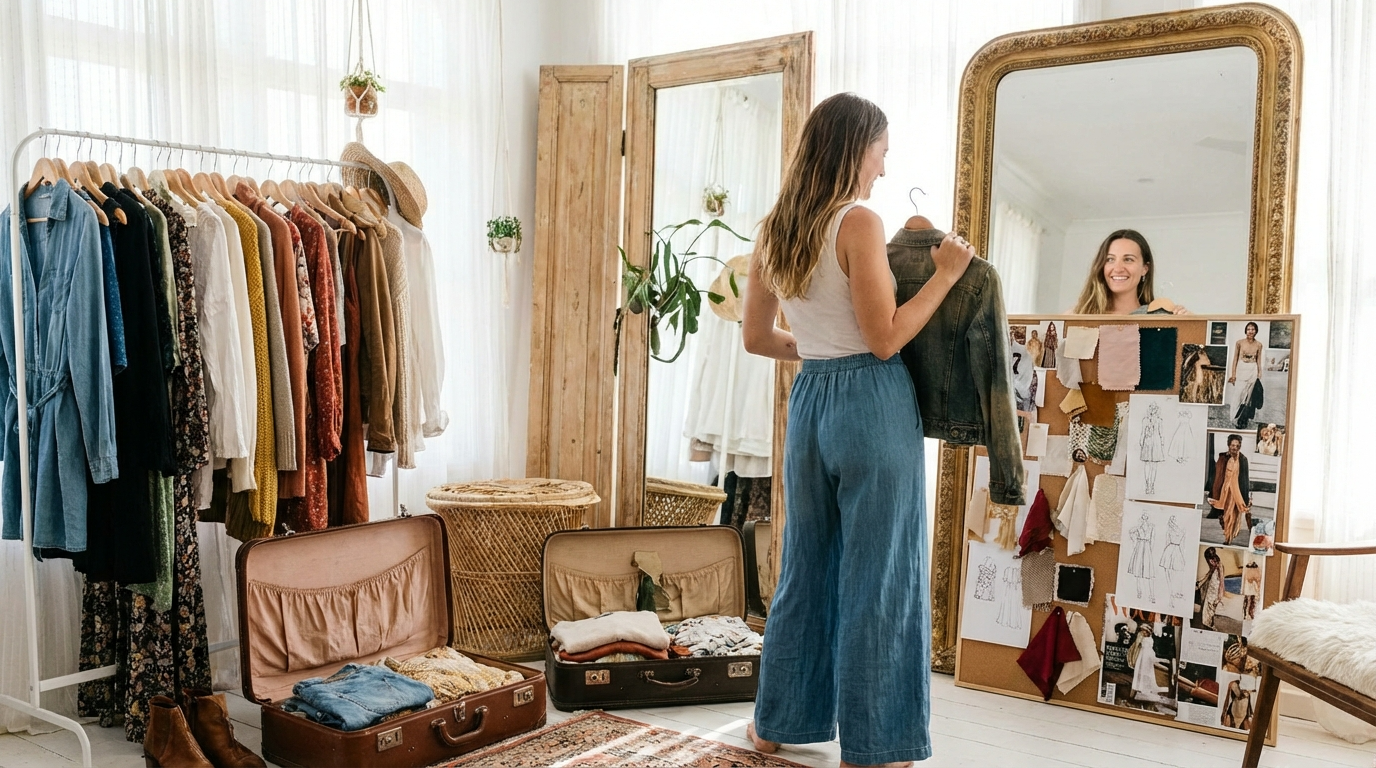

Finding personal style can feel overwhelming at first. However, it becomes easier when you focus on clarity instead of trends. Your wardrobe should reflect your personality, lifestyle, and confidence. Instead of copying influencers, you can build a look that genuinely feels like you.
Style is not about having more clothes. Rather, it is about wearing pieces that align with your identity. Once you understand that, the process becomes empowering instead of confusing.
Why Personal Style Matters More Than Trends
Trends change every season. Yet your identity does not shift that quickly. Therefore, building your look around fast fashion often leads to frustration and wasted money.
When you focus on finding personal style, you create consistency. As a result, getting dressed becomes easier. You spend less time deciding and more time feeling confident.
Additionally, a defined wardrobe improves self-image. Clothes communicate before you speak. If your outfits reflect your authentic taste, you naturally appear more confident and put together.
Instead of chasing trends, evaluate what actually fits your daily life. For example, someone working remotely needs different essentials than someone in a corporate office. Lifestyle clarity simplifies fashion choices immediately.
Step 1: Audit Your Current Wardrobe
Before buying anything new, look at what you already own. This step is essential for finding personal style because it reveals patterns.
Start by removing everything from your closet. Then separate items into three categories:
- Pieces you wear often
- Items you rarely touch
- Clothes you avoid completely
Next, examine why certain pieces work. Do they fit well? Are they comfortable? Do they match your daily activities? Identifying these factors helps you understand your preferences.
On the other hand, analyze what you avoid wearing. Sometimes poor fit causes the issue. Other times, the color or fabric does not feel right. Recognizing these details prevents future buying mistakes.
This wardrobe audit creates awareness. Awareness builds direction.
Step 2: Define How You Want to Feel
Many people focus on how they want to look. However, emotions drive confidence more than appearance.
Ask yourself:
- Do I want to feel polished?
- Do I prefer relaxed and effortless?
- Do I lean toward bold and expressive?
Finding personal style becomes easier when you define your desired feeling. For instance, if you want to feel calm and refined, neutral tones and structured silhouettes may work best.
Conversely, if you want to feel creative, playful colors and unique textures might suit you better.
Write down three to five descriptive words. These words become your style compass. Whenever you shop or plan outfits, compare choices against that list.
Step 3: Identify Repeating Patterns in Your Favorites
Look at the items you love most. You will likely notice similarities.
Perhaps you gravitate toward:
- High-waisted pants
- Soft fabrics
- Earth tones
- Minimalist designs
These patterns reveal your natural preferences. Instead of fighting them, embrace them. Finding personal style is not about reinventing yourself completely. Rather, it is about refining what already feels authentic.
If you consistently choose structured blazers, that signals a preference for tailored shapes. If you prefer oversized sweaters, comfort may be your priority.
The goal is clarity, not perfection.
Step 4: Build a Foundation Wardrobe
A strong wardrobe foundation reduces decision fatigue. Therefore, focus first on versatile basics that align with your identity.
Start with:
- Well-fitting jeans or trousers
- Neutral tops
- A jacket or blazer
- Comfortable shoes
- One statement piece
Each item should mix easily with others. When pieces coordinate naturally, outfit building becomes simple.
While finding personal style, avoid buying items that only match one look. Instead, choose flexible pieces that support multiple combinations.
Quality matters more than quantity. Investing in fewer, better pieces creates a cohesive wardrobe over time.
Step 5: Explore Inspiration With Intention
Inspiration is helpful. However, comparison can derail progress.
When scrolling social media or browsing magazines, save outfits that truly resonate. Then analyze why they appeal to you.
Is it the color palette?
Is it the layering?
Is it the silhouette?
Instead of copying entire outfits, extract themes. For example, you may notice you like monochrome outfits or relaxed tailoring.
Finding personal style involves adapting inspiration, not duplicating it. Personal interpretation makes the difference.
Step 6: Experiment Without Pressure
Style evolves through experimentation. Yet many people fear making mistakes.
Start small. Try a new accessory. Test a different color combination. Add texture through layering.
Because fashion is flexible, experimentation does not require a full wardrobe overhaul. Small adjustments build confidence gradually.
If something feels wrong, adjust it. If it feels empowering, keep refining that direction.
Finding personal style is a process. Growth happens through trying, observing, and adjusting.
Understanding Color and Fit
Color and fit influence how clothes feel on your body. Therefore, pay close attention to both.
Certain colors brighten your complexion. Others may dull it. Stand in natural light and compare shades. Notice which tones make you look energized.
Fit is equally important. Even the most beautiful garment fails if it does not suit your proportions. Tailoring can transform average pieces into favorites.
When finding personal style, prioritize comfort alongside appearance. If you constantly adjust an outfit, confidence decreases. Proper fit prevents that distraction.
Developing a Signature Element
Many stylish individuals share one defining element. It could be bold earrings, structured jackets, or minimalist sneakers.
A signature detail creates recognition. Moreover, it simplifies outfit planning.
For instance, if statement jewelry becomes your trademark, you can keep outfits simple and let accessories shine. If sharp blazers define your look, build around that structure.
Finding personal style often becomes clearer when you focus on one consistent anchor.
Editing Your Wardrobe Regularly
Clutter clouds clarity. Therefore, review your closet every season.
Remove items that no longer align with your vision. Donate pieces that feel outdated or uncomfortable.
As you refine your taste, your wardrobe should reflect that evolution. Regular editing ensures cohesion.
Additionally, this habit prevents impulse shopping. When you understand what you own, you shop strategically.
Finding personal style becomes sustainable when you maintain awareness.
Avoiding Common Style Mistakes
Several habits delay wardrobe clarity.
First, buying clothes for a fantasy life creates imbalance. If you rarely attend formal events, avoid purchasing multiple evening dresses.
Second, ignoring fit leads to dissatisfaction. Tailoring solves many problems.
Third, chasing every trend disrupts consistency. Instead, integrate trends selectively if they align with your aesthetic.
Finally, comparing yourself to others weakens confidence. Style is personal. What works for someone else may not suit you.
Staying mindful prevents these common errors.
Building Confidence Through Consistency
Consistency strengthens identity. When your outfits align with your preferences, decision-making becomes effortless.
Over time, others recognize your style. This recognition reinforces confidence.
Finding personal style is not about strict rules. Instead, it involves understanding your preferences deeply enough to make intentional choices.
Confidence grows when your clothing reflects who you are.
How Lifestyle Shapes Wardrobe Choices
Your daily routine should guide clothing decisions. For example, an active schedule requires comfortable fabrics and practical footwear.
Meanwhile, a corporate environment may demand structured silhouettes and refined accessories.
Finding personal style means aligning fashion with function. If clothes support your routine, you feel more at ease.
Evaluate your weekly activities. Then build a wardrobe that serves those tasks efficiently.
Shopping With Purpose
Impulse purchases create clutter. Purposeful shopping creates harmony.
Before buying anything, ask:
- Does this match my style words?
- Can I wear it three different ways?
- Does it fit comfortably?
If the answer is yes, it likely deserves space in your closet.
Finding personal style improves when purchases support a clear vision.
Evolving Without Losing Identity
Style changes as life changes. However, core preferences often remain stable.
Perhaps you shift from student life to professional work. Your wardrobe will adjust. Still, your love for minimalism or bold color may remain consistent.
Allow flexibility while protecting your foundation. That balance keeps your look fresh yet authentic.
Growth enhances style rather than erasing it.
Creating Outfit Formulas
Outfit formulas simplify daily dressing. For example:
Blazer + fitted top + tailored trousers
Oversized sweater + slim jeans + boots
Midi skirt + simple tee + structured bag
Once you identify combinations that work, repeat them with variations. This approach reduces stress while maintaining variety.
Finding personal style becomes practical when you rely on proven formulas.
The Role of Accessories
Accessories elevate simple outfits. Even minimal wardrobes benefit from thoughtful details.
Belts define shape. Jewelry adds personality. Bags signal mood.
Instead of overloading outfits, choose pieces intentionally. Subtle additions often make the strongest impact.
When exploring finding personal style, accessories offer low-risk experimentation.
Staying Authentic in a Trend-Driven World
Social media promotes constant change. Yet authenticity requires stability.
While trends can inspire, they should not dictate your entire wardrobe. Integrate only those that complement your identity.
Balance inspiration with discernment. That discipline preserves clarity.
Finding personal style ultimately depends on self-awareness more than external validation.
Conclusion: Your Style, Your Story
Finding personal style is a journey of awareness, experimentation, and refinement. Although trends shift, your identity remains the foundation.
Start with a wardrobe audit. Define how you want to feel. Build around versatile essentials. Experiment carefully. Edit consistently.
Over time, clarity replaces confusion. Confidence replaces doubt.
Your wardrobe should support your life, not complicate it. When clothes reflect who you are, getting dressed becomes an act of self-expression rather than stress.
Style is not about perfection. It is about alignment. And once you find that alignment, everything else becomes easier.
FAQ
1. How long does it take to develop a personal wardrobe identity?
It varies. However, consistent reflection and experimentation often bring clarity within a few months.
2. Should I follow fashion trends while building my look?
You can, but use them selectively. Only adopt trends that match your aesthetic and lifestyle.
3. What if my taste keeps changing?
Style naturally evolves. Focus on core preferences while allowing gradual updates.
4. Do I need expensive clothes to look stylish?
Not at all. Fit, coordination, and confidence matter more than price.
5. How often should I clean out my closet?
Review your wardrobe at least twice a year to maintain clarity and cohesion.
Leave a Comment