
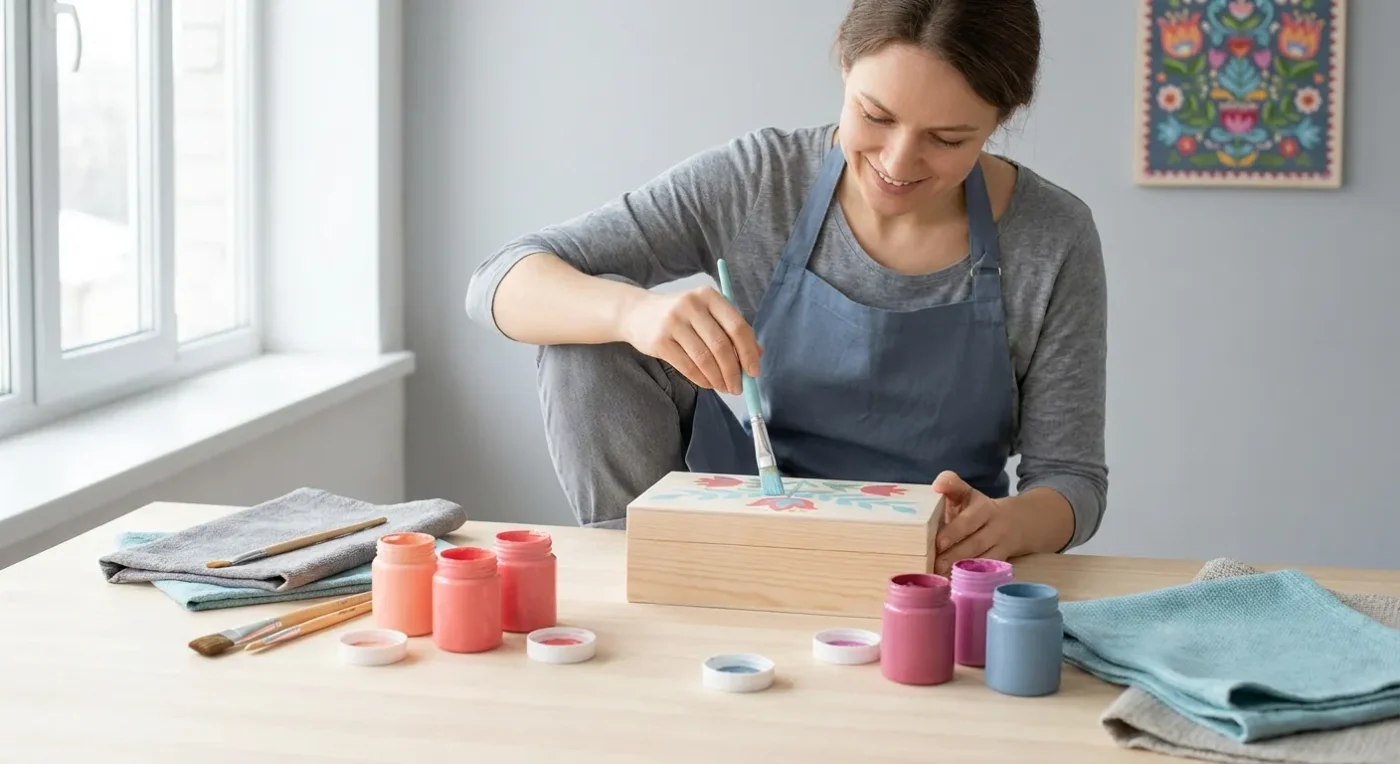

Many aspiring artists face the challenge of overcoming art creation fear before they even pick up a brush. The blank canvas can feel intimidating, a stark white expanse demanding perfection. However, at Paint Works Mag, we know that true artistry isn’t about flawlessness; it’s about the joy of making, the story told by your hands, and the unique perspective you bring. If you’ve been hesitant to start your folk art journey, this piece offers practical strategies to help you move past doubts and embrace your creative spirit.
The Common Ghosts in the Studio
What makes us freeze when faced with a creative opportunity? It often boils down to a few common fears. For example, many worry about their skill level. Furthermore, the idea of making mistakes can be paralyzing. There’s also the concern about what others might think of their work. Finally, some artists feel that materials are too precious for experimentation. These feelings are universal, but they don’t have to define your creative path. The burgeoning creative economy and the emphasis on “human-centric art”—which values emotion and imperfection over AI perfection—serve as a powerful reminder that your authentic touch is precisely what makes art valuable. Indeed, your unique style is a gift.
Reframing Mistakes: They’re Not Failures, They’re Features
In folk art, “mistakes” are often happy accidents that add character and charm. A slightly uneven line, a color blend that wasn’t planned, or an unexpected texture can become the most interesting part of your piece. Think of them as learning opportunities, not setbacks. Each attempt, whether it turns out exactly as you envisioned or not, builds your skill set and refines your personal style. Consequently, you grow with every brushstroke.
Practical Strategies for Overcoming Art Creation Fear
1. Start Small and Simple
Don’t aim for a masterpiece on your first try. Instead, begin with small, manageable projects. Paint a single leaf, a simple dot pattern, or a small whimsical bird on a practice board or a piece of scrap paper. The goal is to build muscle memory and familiarity with your tools without the pressure of a grand vision. This approach reduces initial intimidation.
2. Embrace the Imperfect
Actively lean into the “human hand” aspect that is so valued in contemporary art. Allow your brushstrokes to show, celebrate the raw texture, and don’t obsess over symmetry or exact replication. Folk art thrives on an authentic, often naive, charm. Your unique style will emerge from this freedom. In fact, imperfection can be beautiful.
3. Practice Regularly, Not Just Perfectly
Consistency beats intensity. Short, regular painting sessions are more effective than infrequent, long, pressure-filled ones. Dedicate 15-30 minutes a few times a week just to play with paint and brushes, without any specific outcome in mind. This builds comfort and confidence naturally. You will see progress over time.
4. Find Your Tribe: The Power of Community
Connecting with other artists can be incredibly empowering. Join an online forum, a local art class, or a painting group. Sharing your work, asking questions, and receiving constructive feedback from a supportive community can significantly reduce feelings of isolation and judgment. Moreover, seeing others’ creative processes can inspire your own. Paint Works Mag offers various community features to help you connect, fostering a sense of belonging and shared passion. Indeed, collaboration can be a strong motivator.
5. Set Up a Dedicated Creative Space
Even a small corner of a room can become your creative sanctuary. Having a dedicated space signals to your brain that it’s time to create. Keep your tools organized and easily accessible. This reduces friction when you want to start painting, making it easier to overcome initial hesitation. Consequently, you’ll find yourself painting more often.
6. Learn from the Masters (and Then Make It Your Own)
Study folk art traditions and the works of artists you admire. Notice how they use color, line, and composition. Don’t copy directly, but use their techniques as a springboard for your own ideas. Understanding different styles can broaden your artistic vocabulary and help you develop your unique voice. Furthermore, it provides valuable learning.
7. Document Your Progress
Take photos of your artwork, even the pieces you’re not entirely happy with. Looking back at your journey can be incredibly motivating. You’ll see how far you’ve come, recognize improvements, and appreciate the evolution of your style. This visual record reinforces your growth and builds self-assurance. It’s a tangible testament to your efforts.
8. Use Affirmations and Positive Self-Talk
Challenge negative thoughts with positive affirmations. Instead of thinking, “I can’t do this,” try, “I am learning and growing with every stroke.” Your mindset plays a crucial role in your creative output. Nurturing a positive inner dialogue can significantly impact your willingness to experiment and create. Therefore, be kind to yourself.
9. Experiment with Different Mediums and Surfaces
Sometimes, a change of scenery (or materials) is all you need. If you’re stuck with acrylics on canvas, try painting with watercolors on paper, or even using unconventional materials like wood scraps or fabric. New textures and tools can spark fresh ideas and reduce the pressure associated with your usual setup. This helps in overcoming art creation fear by introducing novelty.
10. Understand the Joy of the Process
Shift your focus from the final product to the act of creation itself. The feeling of the brush on the surface, the mixing of colors, the flow of your hand—these are the moments to savor. When you enjoy the process, the outcome becomes less daunting, and you’re more likely to keep creating. This perspective is vital for sustained artistic practice.
The Unique Charm of Folk Art and Why It’s Perfect for Overcoming Art Creation Fear
Folk art, by its very nature, celebrates authenticity and individual expression. It’s often characterized by vibrant colors, simplified forms, and storytelling. It doesn’t adhere to rigid academic rules, making it an incredibly forgiving and accessible genre for beginners. This freedom from strict conventions is precisely why folk art is an excellent pathway for those struggling with creative apprehension. There’s no “wrong” way to create folk art; only your way. Moreover, its historical roots in everyday life mean it’s inherently about connection and personal narrative.
Consider the historical context: folk art emerged from communities, often created by individuals without formal training, simply expressing their lives and beliefs. This rich tradition underscores that art is a human endeavor, not solely the domain of trained elites. Therefore, your personal stories and unique touch are not just accepted but celebrated within this vibrant tradition. It truly empowers artists to embrace their individual journey.
Building a Habit of Creation
Consistency is key to transforming your approach to art. Think of your creative practice as a muscle. The more you use it, the stronger it becomes. Setting aside a specific time each day or week, even for a short period, can establish a routine that makes creating feel natural rather than like a monumental task. This routine helps in establishing a comfortable rhythm. Furthermore, it reinforces your commitment to your artistic self.
Many artists find that having a dedicated sketchbook or a series of small projects helps maintain momentum. These smaller endeavors remove the pressure of a large, intimidating project. They allow for playful exploration and quick wins, which in turn build confidence. Consequently, the act of creation becomes more enjoyable. This is a powerful step in overcoming art creation fear.
Finding Inspiration in Everyday Life
Folk art often draws inspiration from daily life, nature, and cultural traditions. Look around you: what stories do your surroundings tell? A quirky bird in your backyard, a pattern on a ceramic dish, or a memory from your childhood can all be starting points for a folk art piece. Keeping an inspiration journal can be a wonderful way to capture these fleeting ideas. This practice ensures a constant flow of creative prompts. Additionally, it helps to see the art in the ordinary.
Don’t feel pressured to create something profoundly meaningful every time. Sometimes, simply painting a decorative motif or a whimsical scene is enough. The act of making, the engagement with colors and forms, is valuable in itself. This intrinsic value helps in overcoming art creation fear by shifting focus from external validation to internal satisfaction. Ultimately, it is about your personal connection to the art.
When to Seek Further Guidance
While self-exploration is vital, sometimes a little guidance can accelerate your progress. Consider taking an online course or workshop specifically designed for folk art. These resources can provide structured learning, introduce new techniques, and offer feedback in a supportive environment. Paint Works Mag offers many such resources, tailored for various skill levels. For further inspiration on overcoming creative blocks, resources like Creativity at Work provide excellent insights. Similarly, articles on Psychology Today often discuss the psychological aspects of creativity and fear.
Remember, every artist, no matter how accomplished, has faced moments of doubt. What distinguishes those who continue to create is their resilience and their willingness to push past these fears. Your folk art journey is uniquely yours, and every stroke contributes to its rich tapestry. Embrace the process, celebrate your individuality, and let your creativity flourish. Truly, the journey is the reward.
Conclusion: Your Unique Folk Art Path Awaits
Overcoming art creation fear is a journey, not a destination. It involves reframing your perspective on mistakes, cultivating consistent practice, and finding strength in community. Your unique perspective and hand are precisely what make folk art so special. At Paint Works Mag, we encourage you to embrace the imperfections, savor the process, and let your authentic artistic voice shine through. Don’t let fear hold you back from the joy of creating. Pick up that brush, make that first mark, and start telling your story. Your folk art journey begins now, filled with endless possibilities and personal expression.
FAQ
How can I start creating art without feeling overwhelmed?
Begin with small, simple projects that don’t require perfection. Focus on short, regular practice sessions rather than aiming for a masterpiece immediately. This low-pressure approach helps build confidence gradually.
What if my art doesn’t look
Explore more: More from Paint Works Mag