
Welcome, fellow artists, to a vibrant exploration of folk art painting styles! At Paint Works Mag, we believe that understanding the rich tapestry of decorative art history can profoundly inspire your contemporary projects. Whether you’re drawn to the rustic charm of traditional patterns or the clean lines of modern interpretations, there’s a style waiting to ignite your brush. This article will guide you through various captivating styles, showing you how to adapt design trends and cultivate your unique artistic voice, empowering you to create pieces that tell a story.
The Enduring Appeal of Traditional Folk Art
Traditional folk art painting styles are steeped in cultural heritage, reflecting the daily lives, beliefs, and natural surroundings of communities. These styles often feature bold colors, symbolic motifs, and a charming, often naive, aesthetic. Furthermore, they weren’t just decorative; they were a visual language. Exploring these historical forms provides a strong foundation for any decorative artist.
Pennsylvania Dutch Folk Art
Originating from German immigrants in Pennsylvania, this style is famous for its “hex signs” and “fraktur” lettering. Characteristic motifs include tulips, distelfinks (stylized birds), hearts, and stars, often painted in warm gold, deep navy, rich crimson, and forest green. The designs are typically symmetrical and highly stylized, bringing a sense of order and beauty to everyday objects like furniture and barn doors. Learning these foundational patterns can offer a strong base for understanding decorative composition. Moreover, these designs are deeply symbolic. For a deeper understanding of the meanings behind these beautiful elements, consider exploring Beyond Aesthetics: Uncovering the Meaning of Decorative Motifs.
Scandinavian Folk Painting (Rosemaling)
Rosemaling, meaning “rose painting,” is a decorative art form from Norway characterized by flowing scrollwork, stylized flowers, and geometric elements. It typically uses earthy tones like burnt umber, deep ochre, and muted blues, often accented with bright highlights. The technique involves delicate brushwork, often with a wet-on-wet approach, to create soft transitions and intricate details. Exploring Rosemaling can significantly enhance your brush control and understanding of organic forms. Additionally, the intricate details found in Rosemaling provide excellent practice for precision work.
Tole Painting
Tole painting, a broad term for decorative painting on metal, wood, or tin, became popular in the 18th and 19th centuries. It often features floral sprays, fruit arrangements, landscapes, and scenes, rendered in a realistic yet decorative manner. Colors range from muted sage and antique white to vibrant berry reds and sunny yellows. Tole painting encourages precision and the development of layered color application, making it an excellent practice for detailed work. In fact, many artists find this style a great way to learn to paint on various surfaces, a topic further explored in Beyond Canvas: How to Paint Different Surfaces for Decorative Art.
Embracing Modern Interpretations and Trends in Folk Art Painting Styles
While traditional styles provide a solid foundation, decorative painting is a living art form that constantly evolves. Modern interpretations often blend historical motifs with contemporary aesthetics, color palettes, and applications, making them relevant to today’s homes and tastes. Therefore, understanding current trends is just as important as appreciating history. Many contemporary artists find inspiration in these varied folk art painting styles, adapting them to new contexts.
Simplified Motifs & Clean Lines
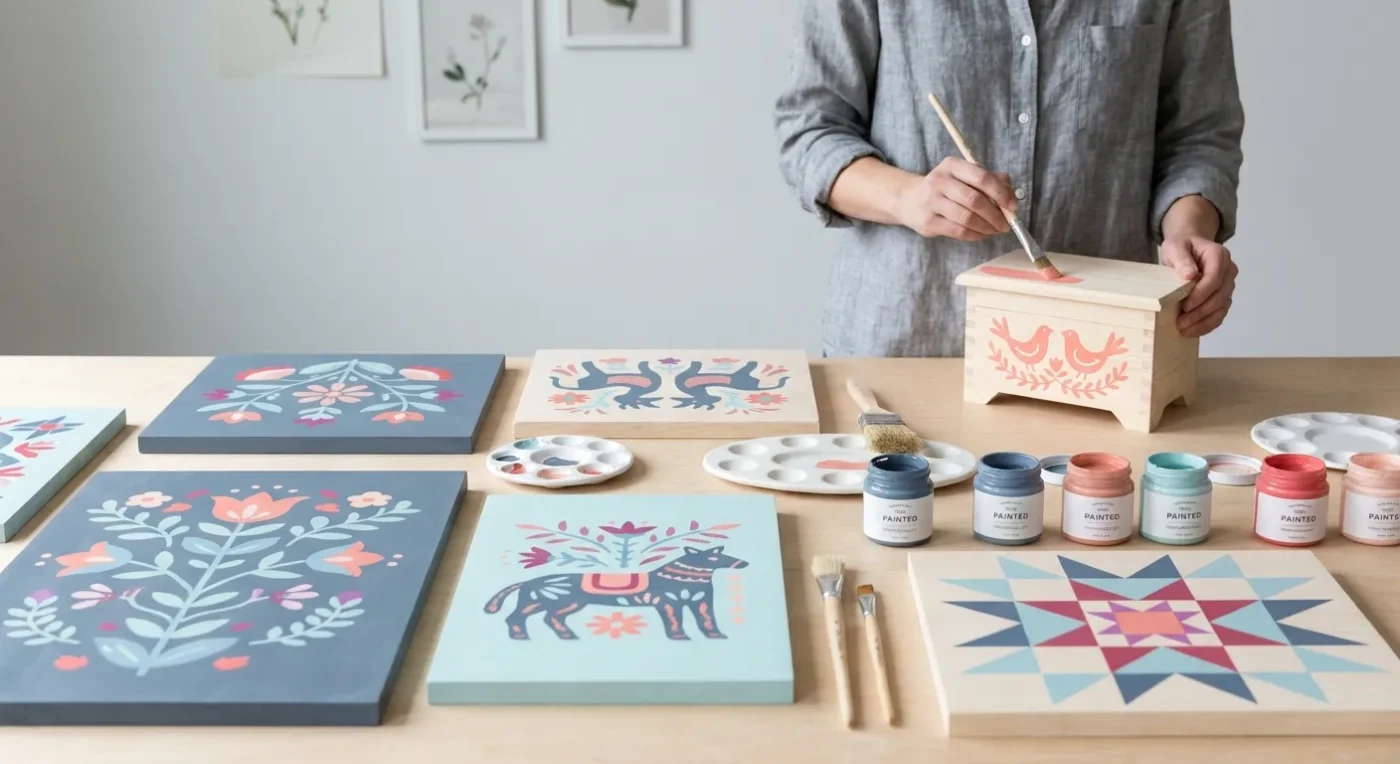
Today’s trends often lean towards simplified motifs, offering a fresh take on classic folk art elements. This approach typically involves reducing complex designs to their essential shapes, using fewer colors, and emphasizing clean, crisp lines. For example, a traditional Rosemaling scroll might be reimagined with bolder outlines and a limited palette of two or three complementary colors. This modern aesthetic fits well into contemporary home decor, providing a subtle nod to heritage without feeling overtly traditional. Furthermore, this simplification can make these styles more approachable for beginners.
Bold Colors & Geometric Patterns
In contrast to muted palettes, another trending direction in decorative art embraces bold, saturated colors and strong geometric patterns. Artists are reinterpreting traditional symbols, like the hex signs of Pennsylvania Dutch art, with vibrant hues and sharper angles. Think electric blues, hot pinks, and lime greens paired with interlocking shapes or tessellations. This energetic approach to folk art painting styles creates dynamic pieces that act as focal points in any space. Indeed, this trend is a wonderful way to experiment with advanced color mixing, as discussed in Unlock Vibrant Hues: Advanced Color Mixing for Folk Art.
Textural Elements & Mixed Media
Contemporary decorative art also frequently incorporates textural elements and mixed media. This might involve using impasto techniques to add dimension to painted surfaces, integrating stenciling for crisp patterns, or even combining paint with other materials like fabric, paper, or found objects. The goal is to create visual interest and a tactile experience. For instance, a folk art-inspired piece might feature painted flowers with raised textures or incorporate stenciled borders alongside freehand work. This combination offers a rich, layered aesthetic. Mastering layering techniques is crucial here, as detailed in Mastering Layering Techniques for Depth in Folk Art.
Global Influences & Fusion Styles
The interconnectedness of the modern world has led to a fascinating fusion of folk art painting styles from different cultures. Artists are drawing inspiration from global traditions, blending elements from diverse origins to create truly unique works. For example, you might see a piece that combines the intricate mandalas of Indian folk art with the rustic charm of American primitive painting. This cross-cultural dialogue enriches the decorative arts, offering endless possibilities for creative expression. It encourages artists to look beyond their immediate cultural context and embrace a broader artistic vocabulary.
Cultivating Your Unique Artistic Voice in Decorative Painting
While exploring established folk art painting styles is essential for skill development, the ultimate goal for many artists is to develop a distinctive personal style. Your artistic voice is what makes your work recognizable and uniquely yours. It’s a combination of your chosen techniques, color preferences, subject matter, and the emotional resonance you bring to your pieces.
Drawing Inspiration, Not Copying
When studying various decorative art forms, focus on understanding the underlying principles rather than merely replicating designs. Analyze why certain color combinations work, how motifs are stylized, and the cultural significance behind them. Then, consider how you can reinterpret these elements through your own lens. For example, if you admire the symmetrical balance of Pennsylvania Dutch art, think about how you might apply that principle to entirely new motifs or a contemporary color scheme. This approach fosters genuine creativity rather than simple imitation.
Experimentation with Color and Technique
Don’t be afraid to experiment! Try unexpected color palettes or combine techniques from different folk art painting styles. What happens if you apply Rosemaling brushstrokes to a Tole painting design? Or if you use bold, modern colors on a traditional fraktur pattern? Experimentation is a powerful tool for discovering new possibilities and pushing the boundaries of your creativity. Sometimes the most interesting results come from breaking the rules. You can learn more about current trends in Current Decorative Art Trends: Warm Minimalism to Bold Colors.
Embracing Imperfection
Folk art, by its very nature, often carries the charm of the handmade. Don’t strive for machine-like perfection. Instead, embrace the slight variations, the unique brushstrokes, and the individual character that makes your work authentic. These