
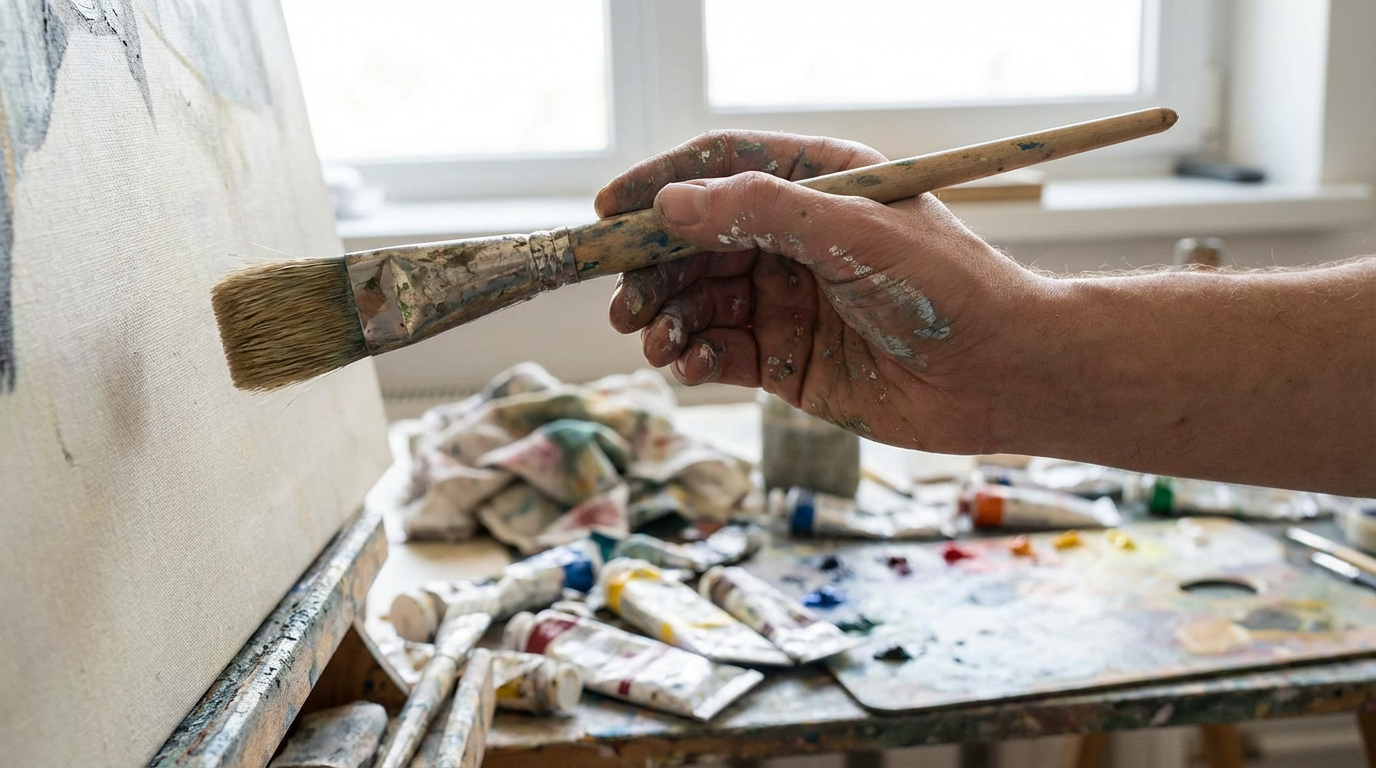

Every painter knows this moment. You have a clear idea. The colors feel right. Yet the brush seems to fight back. Lines wobble. Strokes feel stiff. Frustration creeps in quietly. Often, the issue has nothing to do with talent. Instead, it starts with how you hold a paintbrush.
Grip influences everything. It shapes movement. It even affects how long you can paint without fatigue. Small changes in how you hold a paintbrush can unlock smoother strokes, cleaner edges, and calmer confidence.
This guide breaks down practical ways to hold a paintbrush for maximum control and precision. No rigid rules. No one-size-fits-all grip. Just adaptable techniques that support different goals, styles, and moments in the painting process.
Why How You Hold a Paintbrush Matters So Much
The brush is an extension of your hand. When that connection feels tense, precision suffers. Control fades. Enjoyment disappears.
Holding a paintbrush incorrectly creates unnecessary strain. That tension travels from fingers to wrist, then up the arm. Eventually, shoulders tighten. Accuracy declines.
On the other hand, a relaxed and intentional grip encourages fluid motion. The brush responds instead of resists. Control improves naturally. Precision becomes easier rather than forced.
Understanding Control Versus Precision
Control and precision often get lumped together. However, they serve different purposes.
Control refers to smooth, predictable movement. Precision refers to exact placement and detail. One supports flow. The other supports accuracy.
Knowing when to emphasize each skill matters. How you hold a paintbrush determines which quality leads. A flexible grip allows you to switch easily as needs change.
The Pencil Grip and Its Limitations
Many artists instinctively hold a paintbrush like a pencil. Fingers pinch near the ferrule. The grip feels familiar.
This grip works well for small details. It offers short-range accuracy. However, it limits movement. Strokes can feel tight or mechanical.
When you always hold a paintbrush this way, paintings may lack energy. Wrist fatigue also increases over time. This grip has a place, but it should not be the only option.
Holding a Paintbrush for Loose, Expressive Work
Loose painting thrives on freedom. The grip must reflect that.
Hold the paintbrush farther back on the handle. Let the brush move from the elbow or shoulder. Allow gravity to assist motion.
This approach reduces pressure. Strokes become lighter and more fluid. Expression increases because movement comes from larger muscles rather than tense fingers.
How Grip Position Changes Stroke Character
Where you hold a paintbrush matters more than how hard you squeeze.
Holding close to the bristles increases control but reduces flow. Holding farther back reduces control but increases movement range.
Adjusting grip position intentionally allows quick shifts in stroke quality. Skilled painters change grip constantly without thinking about it.
Using the Overhand Grip for Broad Strokes
The overhand grip places the brush above the handle, palm facing down.
This grip suits blocking in shapes, painting backgrounds, and creating gestural marks. It encourages sweeping motion and discourages overworking.
Holding a paintbrush this way keeps energy fresh. It supports confidence early in the painting process.
Holding a Paintbrush for Fine Detail and Accuracy
Detail demands stability.
Hold the paintbrush closer to the ferrule. Use fingers and wrist for control. Rest part of your hand lightly if needed.
This grip supports clean edges and precise lines. Pressure stays minimal. Movement remains intentional.
Switching to this grip when needed prevents frustration.
The Role of Pressure When You Hold a Paintbrush
Grip pressure influences line quality.
Too much pressure creates jittery strokes. Too little pressure reduces accuracy.
Aim for balanced tension. Imagine holding something fragile but valuable. Secure, yet gentle.
When you hold a paintbrush with relaxed confidence, precision improves automatically.
Finger Placement and Balance
Thumb, index, and middle fingers guide most movement. The remaining fingers support balance and stability.
Avoid locking fingers into rigid positions. Let them adjust naturally as the brush moves.
Balanced finger placement improves responsiveness and reduces strain during long sessions.
Wrist, Elbow, and Shoulder Coordination
Different joints control different stroke sizes.
Fine details rely on fingers and wrist. Medium strokes come from the elbow. Large gestures originate from the shoulder.
Understanding this hierarchy prevents overuse injuries. It also improves consistency across different scales.
How you hold a paintbrush should support this coordination rather than restrict it.
Standing Versus Sitting and Brush Control
Body position influences grip effectiveness.
Standing allows greater range of motion. Sitting offers stability for detail work.
Adjust how you hold a paintbrush based on posture. A standing painter often benefits from looser grips. A seated painter may favor tighter control.
Neither position is superior. Flexibility matters more.
Holding a Paintbrush for Different Mediums
Medium affects grip choice.
Oil paint often benefits from looser grips due to longer working time. Acrylics may require faster, more controlled movements. Watercolor demands sensitivity and light pressure.
Adjust how you hold a paintbrush to suit paint behavior. Let the medium guide your approach.
Brush Size and Grip Relationship
Brush size influences grip distance.
Large brushes benefit from holding farther back. Small brushes require closer control.
Trying to use a tight grip on a large brush restricts movement. Holding a small brush too far back reduces accuracy.
Match grip to brush size for optimal control.
Avoiding Common Grip Mistakes
Many painters grip too tightly. Others never change grip at all.
Static grips create stiffness. Tension builds quietly. Fatigue follows.
Check in with your hand regularly. Loosen fingers. Adjust position.
Awareness prevents bad habits from forming.
Training Your Hand to Hold a Paintbrush Better
Improvement requires practice.
Try painting warm-ups focused only on grip changes. Use one brush. Change position every few minutes.
Notice how strokes change. Awareness builds quickly.
This practice trains flexibility rather than forcing habits.
Using Your Non-Painting Hand for Stability
The non-dominant hand often gets ignored.
Use it to steady the painting surface or support the painting hand lightly.
This added stability improves control during detailed work without increasing grip tension.
Resting Techniques for Long Painting Sessions
Long sessions strain hands if posture suffers.
Take short breaks. Stretch fingers. Shake out tension.
Changing how you hold a paintbrush periodically reduces fatigue and supports endurance.
Comfort sustains precision over time.
How Emotional State Affects Grip
Stress tightens hands. Calm loosens them.
If strokes feel rigid, pause. Breathe. Reset grip.
Painting reflects internal state. Softening your hold often softens your approach overall.
Holding a Paintbrush for Speed Versus Accuracy
Speed and accuracy rarely peak together.
When speed matters, loosen grip and trust movement. When accuracy matters, tighten slightly and slow down.
Knowing how to hold a paintbrush differently for each goal improves adaptability.
Adapting Grip for Different Surfaces
Vertical surfaces like easels encourage arm movement. Flat surfaces encourage wrist movement.
Adjust grip accordingly. Let surface orientation guide technique.
Flexibility keeps control consistent across setups.
Building Muscle Memory Through Repetition
Correct grip becomes automatic with repetition.
The more you practice mindful holding, the less you think about it.
Eventually, adjustments happen instinctively. Precision improves without conscious effort.
Using Grip Awareness to Improve Confidence
Confidence grows when tools respond predictably.
When you know how to hold a paintbrush for each task, hesitation disappears.
Decisions feel easier. Movement feels intentional.
Confidence follows control naturally.
Teaching Yourself Through Observation
Watch experienced painters. Notice how often their grip changes.
Observe without copying blindly. Adapt what feels natural.
Learning through observation sharpens awareness.
When Breaking the Rules Helps
Rules guide beginners. Masters bend them.
Once you understand grip fundamentals, experimentation becomes valuable.
Some effects require awkward holds. Embrace them intentionally.
Understanding rules allows you to break them creatively.
Integrating Grip Awareness Into Daily Practice
Make grip awareness part of routine.
Warm up consciously. Adjust during sessions. Reflect afterward.
Small attention shifts create lasting improvement.
Conclusion
Learning how to hold a paintbrush properly transforms painting quietly but powerfully. Control improves. Precision sharpens. Fatigue decreases. Confidence grows. These changes do not come from force. They come from awareness and flexibility.
There is no single correct way to hold a paintbrush. There is only the right grip for the moment. When you learn to adjust intentionally, the brush stops fighting you. It starts cooperating. Over time, that cooperation turns effort into flow. Painting becomes less about struggle and more about expression.
FAQ
1. Is there one correct way to hold a paintbrush?
No, different grips suit different techniques and moments.
2. Should beginners avoid loose grips?
No, learning both loose and tight grips builds versatility early.
3. Does grip affect brush lifespan?
Yes, excessive pressure can damage bristles over time.
4. How can I reduce hand fatigue while painting?
Use relaxed grips, take breaks, and vary movement sources.
5. Can changing grip really improve my painting quickly?
Yes, small grip adjustments often produce immediate improvement.
Leave a Comment