
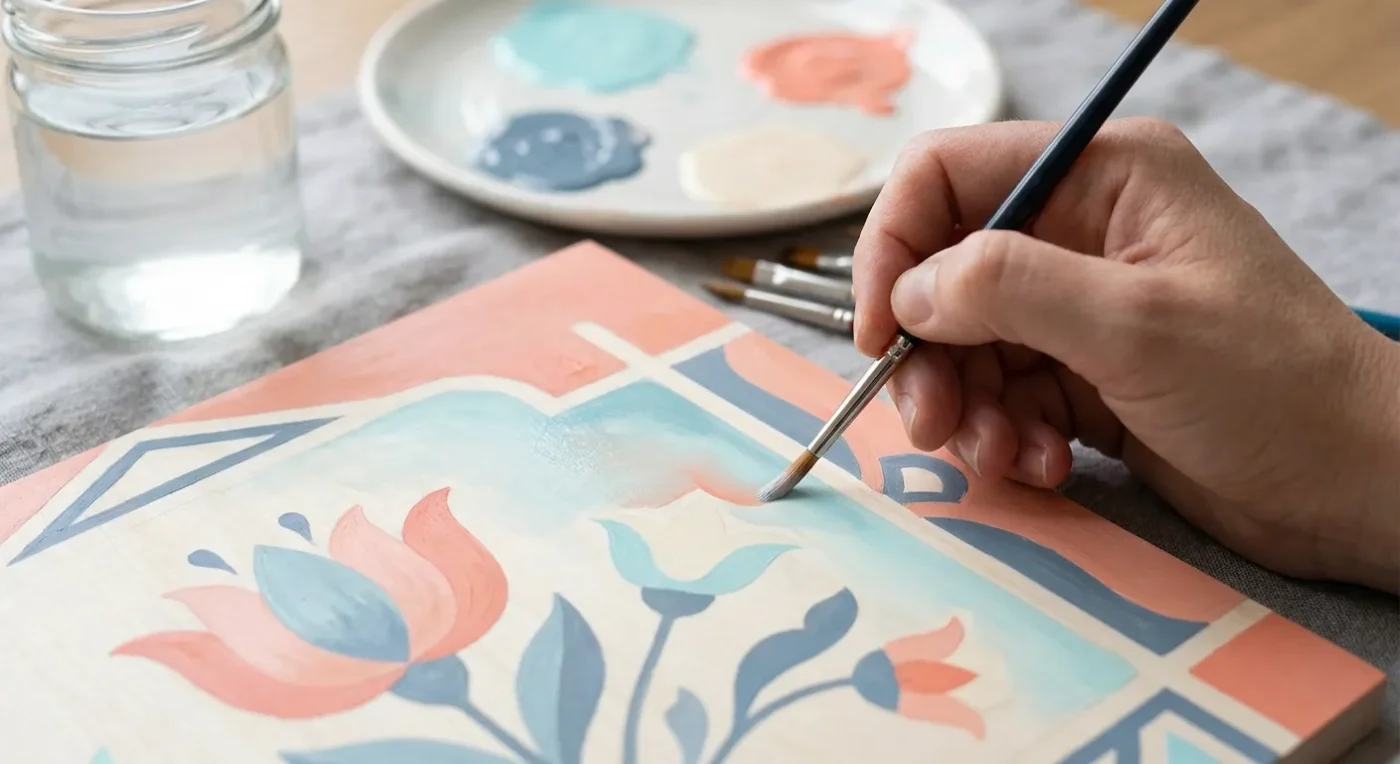

Creating beautiful decorative art often relies on achieving seamless color transitions, and mastering smooth paint blending is key to elevating your folk art projects. Whether you’re painting intricate florals, serene landscapes, or detailed figures, the ability to blend colors without harsh lines adds a professional and refined touch. This guide will walk you through essential techniques to achieve those coveted smooth transitions, making your artwork truly shine.
Techniques for Smooth Paint Blending
One of the most common and effective methods for smooth paint blending is the wet-on-wet technique. This involves applying a second color directly onto a still-wet first layer, allowing the pigments to naturally merge on the surface. For this, acrylic paints are often preferred due to their relatively quick drying time, which still offers a workable window. Start by applying your base color, then quickly introduce the blending color next to it, using a clean, damp brush (or the same brush wiped clean) to gently feather the edges where the two colors meet. The key is light pressure and repetitive, short strokes until the transition looks fluid. Experiment with different brush types; soft, flat brushes or filberts can be excellent for this.
Another valuable technique is dry brush blending, especially useful for creating subtle textures or softening edges on partially dry paint. Unlike wet-on-wet, this method uses a brush with very little paint, often just a residual amount, and no water. After applying your main colors and letting them set slightly, pick up a tiny bit of the lighter or darker shade on a dry brush. Blot most of it off, then lightly feather the brush over the area you wish to blend. This builds up color gradually, allowing for precise control over the transition. It’s perfect for adding highlights, shadows, or creating a misty effect around elements in your folk art piece.
Mastering smooth paint blending takes practice, but the effort is well worth it. By experimenting with both wet-on-wet and dry brush techniques, you’ll gain confidence in creating stunning, professional-looking gradients in all your decorative painting projects. Don’t be afraid to try these methods on scrap surfaces first to get a feel for how your paints and brushes interact. Soon, you’ll be creating folk art with beautifully seamless transitions.