
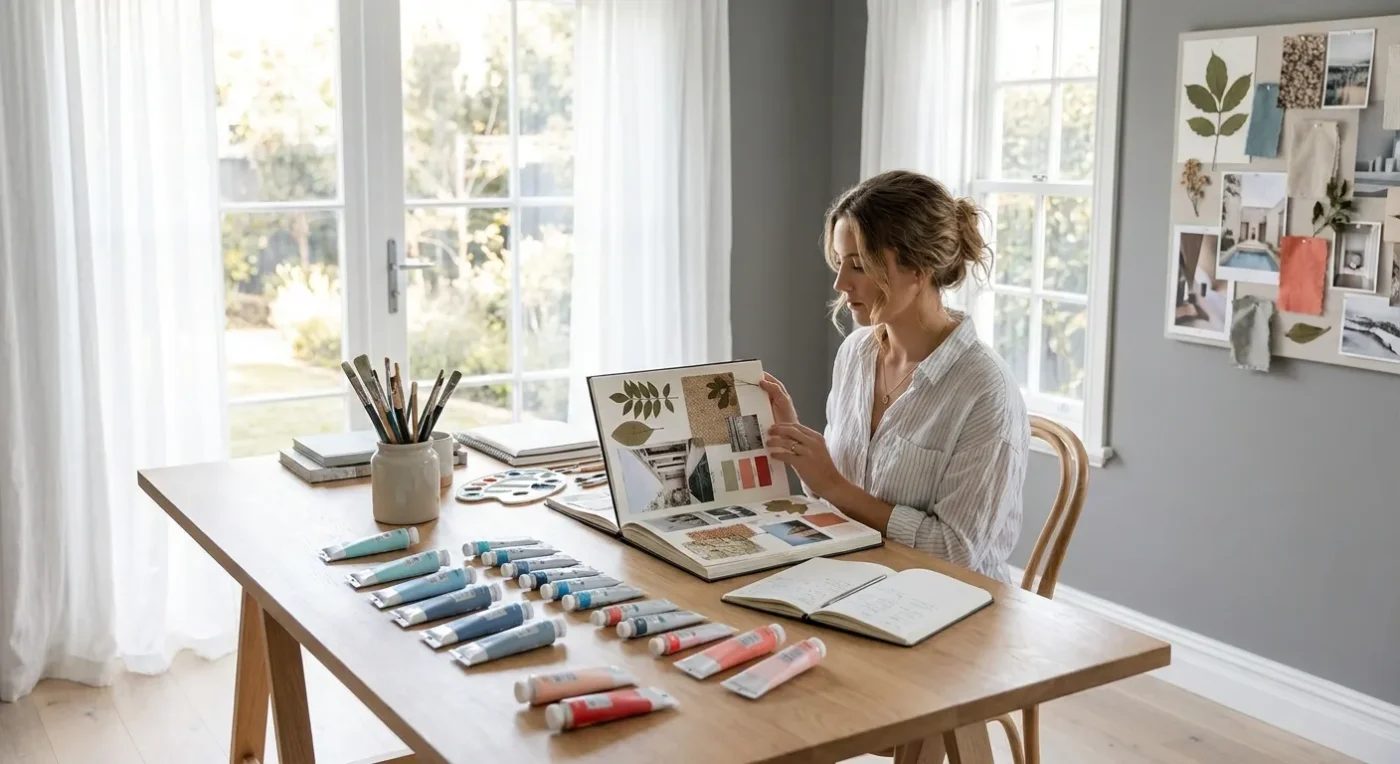

Every artist, from hobbyist to professional, occasionally faces a creative lull. But what if inspiration wasn’t something you waited for, but something you actively sought out? Learning to find painting inspiration in your everyday life can transform your artistic practice, keeping your ideas fresh and your brushes moving. This listicle explores practical strategies to spark your imagination and fuel your next folk art masterpiece.
1. Observe Nature’s Details
Nature is an endless wellspring of inspiration. Take a walk and truly observe the intricate patterns of a leaf, the vibrant colors of a sunset, or the unique textures of tree bark. Photograph these details, sketch them in a small notebook, or simply commit them to memory. The organic forms and color palettes found in nature are perfect for translating into folk art motifs, from stylized flowers to whimsical animals. Even a simple change in season can offer a whole new range of visual cues to draw from.
2. Explore Historical Folk Art
Dive into the rich history of folk art from different cultures and eras. Browse books, visit museums virtually or in person, and study traditional patterns, themes, and color schemes. Don’t copy, but let these historical pieces ignite new ideas for your own interpretations. Seeing how artists from the past expressed themselves can be incredibly motivating. Remember, the key to learning how to find painting inspiration is to be open, curious, and willing to see the artistic potential in everything around you. These simple shifts in perspective can lead to a wealth of new creative avenues. For further reading on this topic, consider our guide on Drawing Inspiration from Historical Folk Art Patterns.
3. Draw from Everyday Objects
Look around your home or workspace with fresh eyes. Common household items can hold surprising artistic potential. Perhaps the intricate weave of a basket, the unique shape of a vintage teacup, or the playful arrangement of fruit in a bowl could spark an idea. Consider the textures, colors, and forms. How could you simplify or stylize these elements into a folk art design? For instance, a simple kitchen utensil might inspire a recurring motif in a border design. These everyday discoveries truly help artists discover new painting ideas.
Furthermore, mundane objects often have stories. Think about the journey of an old wooden spoon or the memories attached to a well-loved quilt. These narratives can add depth and personal meaning to your artwork. Transforming an ordinary object into something extraordinary through paint is a hallmark of folk art. Therefore, training your eye to see the artistic in the ordinary is a powerful skill.
4. Engage with Other Artists and Communities
Connecting with other artists is a fantastic way to stimulate your creativity. Share your work, discuss challenges, and exchange ideas. Join an online forum, attend a local painting group, or participate in workshops. Often, seeing how another artist approaches a subject can provide a completely new perspective. Their enthusiasm might also be contagious, helping you to find artistic ideas when your own well feels dry. Indeed, communal learning is a cornerstone of artistic growth.
Moreover, these connections can introduce you to new techniques or materials, which in turn can spark fresh project concepts. For example, learning about new paint mediums might inspire you to experiment with different textures and finishes. Discovering new ways to get painting ideas often comes from unexpected conversations. PaintWorks Mag encourages this collaborative spirit; learn more about The Power of Connection: Benefits of Joining a Decorative Painting Community.
5. Revisit Childhood Memories and Stories
Our past experiences and favorite stories are rich sources of unique painting ideas. Think back to your childhood. What were your favorite toys, books, or games? What stories did your grandparents tell? These nostalgic elements can be transformed into charming and deeply personal folk art pieces. A whimsical scene from a fairy tale, a stylized depiction of a childhood pet, or a pattern inspired by a beloved blanket could all become central themes.
In fact, folk art often carries a strong narrative quality. Using your own memories ensures your work is authentic and resonates with a personal touch. Consider how you might simplify these complex memories into iconic, recognizable forms. This process of introspection can truly help you find painting inspiration that is uniquely yours. Consequently, your art will tell a more compelling story.
6. Experiment with New Techniques and Materials
Sometimes, the best way to get new artistic ideas is to step outside your comfort zone. Try a new paint medium, experiment with different brushes, or learn a completely new decorative painting technique. If you usually paint on canvas, try painting on fabric or wood. This change of pace can open up entirely new creative avenues and help you discover new ways to express yourself.
For instance, exploring A Guide to Acrylic Paint Mediums might inspire you to create pieces with different textures or sheens. Similarly, learning about Adding Detail with Decorative Painting Stencils could lead to a series of patterned works. When you’re actively learning something new, your mind is more open to possibilities, making it easier to find painting inspiration in unexpected places. This continuous learning keeps your artistic journey exciting.
7. Seek Inspiration from Other Art Forms
Don’t limit your search for inspiration solely to painting. Explore other art forms like music, poetry, sculpture, textiles, or even architecture. How does a piece of music make you feel? Can you translate those emotions or rhythms into color and line? What patterns or forms do you see in a historical building? A poem’s imagery might spark a visual narrative. This cross-pollination of ideas is a powerful method to generate fresh concepts.
For example, the intricate patterns of a woven tapestry might inspire a new border design for your folk art piece. The dynamic movement in a dance performance could suggest new compositional arrangements. By broadening your artistic horizons, you naturally expand your capacity to find painting inspiration. Museums and cultural centers are excellent places to explore these diverse art forms. Moreover, online resources like The Metropolitan Museum of Art’s collection offer a vast array of global art to peruse from home. Similarly, the Victoria and Albert Museum provides extensive digital archives of design and decorative arts. These resources can be incredibly enriching.
Cultivating a Creative Mindset
Ultimately, learning to find painting inspiration is less about searching for a single grand idea and more about cultivating an observant, curious, and open mindset. It involves seeing the world through an artist’s eyes, constantly looking for patterns, colors, textures, and stories that can be translated into your chosen medium. Keep a sketchbook or a camera handy to capture fleeting moments of inspiration. Jot down ideas, even if they seem small or incomplete at first. These fragments can often coalesce into something significant later on.
Furthermore, don’t be afraid of