
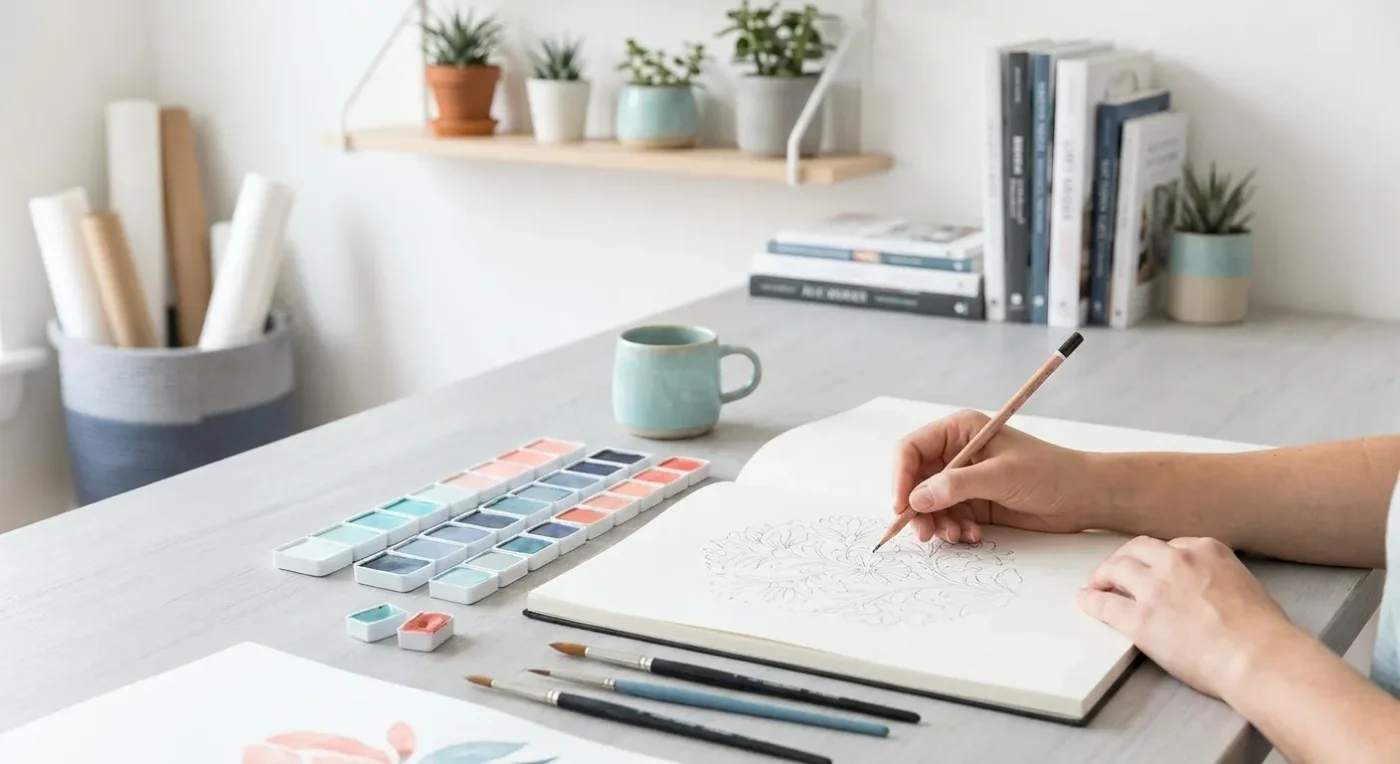

For many decorative painters, the immediate urge is to grab a brush and dive straight into color. However, taking a moment to embrace the humble pencil and paper can dramatically elevate your finished pieces. The benefits of sketching extend far beyond just planning a layout; it’s a foundational practice that sharpens your eye, refines your ideas, and builds confidence before the first drop of paint touches your surface. It’s a low-stakes way to explore and refine, making your painting process smoother and more intentional.
The Core Benefits of Sketching for Artists
Sketching acts as a visual diary and a problem-solving tool. Firstly, it allows you to experiment with composition without the commitment of paint. You can quickly try different arrangements of motifs, adjust proportions, and ensure balance before investing time and materials into the final piece. Secondly, sketching enhances your observation skills. By slowing down and drawing what you see (or imagine), you train your brain to notice details, light, and shadow, which directly translates to more informed and nuanced painting. This practice also helps in developing a visual library in your mind, making it easier to recall and adapt elements for future projects. Moreover, sketching can be a powerful tool for overcoming creative blocks; simply doodling without pressure can often spark new ideas and free up your artistic flow. For more on this, consider exploring strategies to overcome creative blocks in decorative painting.
Refining Your Vision: Composition and Design through Drawing
One of the most significant advantages of preliminary drawing is its ability to refine your artistic vision. Before committing to paint, a sketch allows you to explore multiple compositional possibilities. You can shift elements, alter perspectives, and play with positive and negative space. This iterative process helps you identify the strongest arrangement, ensuring your final painting is well-balanced and aesthetically pleasing. Furthermore, understanding basic design principles through sketching, such as the rule of thirds or leading lines, can dramatically improve the impact of your decorative pieces. This careful planning saves time and materials in the long run, preventing rework and frustration.
For instance, imagine you are planning a folk art floral design. With a pencil, you can quickly sketch various flower placements, leaf orientations, and scrollwork patterns. You might discover that a slight shift in a central motif creates a more dynamic flow or that a different background element enhances the overall harmony. These subtle adjustments, easily made with a pencil, become much more challenging and time-consuming once paint is applied. Therefore, the early investment in drawing pays considerable dividends.
Sharpening Observation: How Drawing Improves Your Eye
The act of sketching forces you to truly see. Instead of merely glancing at an object, you meticulously study its form, contours, and the way light interacts with its surfaces. This heightened observation is crucial for decorative artists, as it enables you to render details with greater accuracy and sensitivity. When you draw, you train your brain to break down complex forms into simpler shapes, understand spatial relationships, and perceive subtle variations in tone. Consequently, this improved visual literacy directly translates to your painting, allowing you to create more realistic, vibrant, and expressive works.
Think about painting a textured surface, such as wood grain or fabric. By first sketching these elements, you become acutely aware of the minute lines, shadows, and highlights that give them their characteristic appearance. This detailed understanding allows you to replicate those textures more convincingly with your brush. Many art educators emphasize the importance of drawing from life to develop this observational skill, and for good reason. It builds a strong foundation for all other artistic endeavors.
Building Confidence and Overcoming Hesitation
Approaching a blank canvas or surface can sometimes be intimidating. This is where the practice of drawing truly shines in building an artist’s confidence. By working through ideas on paper first, you reduce the pressure associated with the final painting. You gain a clearer roadmap for your project, knowing that you have already worked out the kinks in composition and design. This preliminary work minimizes uncertainty and allows you to approach your painting with a sense of purpose and assurance. The benefits of sketching include this crucial psychological support.
Moreover, regular drawing practice improves your hand-eye coordination and fine motor skills. As your drawing abilities grow, so does your general dexterity, which translates directly to better brush control and more precise paint application. Feeling more competent with your tools and techniques naturally boosts your self-assurance. For artists at any level, a stronger sense of confidence can make the entire creative process more enjoyable and less stressful.
Integrating Sketching into Your Daily Routine
Making sketching a regular part of your artistic practice doesn’t require hours of dedicated time. Even 10-15 minutes a day can yield significant results. Start with simple exercises: sketch objects around your home, replicate folk art motifs from reference images, or simply doodle abstract patterns. Don’t worry about perfection; the goal is to practice seeing and translating. For a specific decorative painting project, create several thumbnail sketches – small, quick drawings that explore different compositional ideas. Use these to decide on the strongest layout before transferring your design to your final surface. This preliminary work helps to iron out potential issues, giving you a clearer vision and greater confidence when you do pick up your paintbrushes. The small investment in drawing time pays dividends in the quality and enjoyment of your decorative painting.
Consider carrying a small sketchbook with you. Opportunities for quick drawings are everywhere, from the pattern on a coffee cup to the shape of a leaf in your garden. These informal sessions are excellent for honing your observational skills without the pressure of creating a finished piece. Furthermore, exploring different drawing mediums, such as charcoal or pen, can also broaden your artistic vocabulary and provide new ways to express your ideas. The continuous practice of drawing strengthens your artistic muscles.
Exploring Different Sketching Techniques
There are various approaches to drawing, each offering unique advantages. Thumbnail sketches, as mentioned, are small, rapid drawings used to explore compositions. Contour drawing focuses on the outline and edges of a subject, helping to develop a strong sense of form. Gesture drawing captures the essence and movement of a subject quickly, often in just seconds. Blind contour drawing, where you draw without looking at your paper, is an excellent exercise for improving hand-eye coordination and truly seeing what you are drawing. Experimenting with these different techniques can keep your practice fresh and continuously develop new skills.
Furthermore, consider value studies. These sketches focus on light and shadow, using various shades of gray to represent the tonal range of your subject. Understanding value is critical for creating depth and dimension in your paintings. A well-executed value study can inform your color choices, ensuring that your painted piece has strong contrast and visual interest. Learning to see and represent values accurately is one of the profound benefits of sketching.
The Connection Between Sketching and Smooth Paint Blending
While seemingly distinct, a strong drawing foundation significantly impacts painting techniques like smooth paint blending. When you have a clear understanding of form and value through sketching, you can better anticipate how colors and tones will interact on your canvas. This foundational knowledge allows you to apply paint with greater intentionality, creating seamless transitions and achieving a more polished finish. For instance, knowing where highlights and shadows fall, established through your preliminary drawing, guides your blending efforts, ensuring natural and harmonious gradations.
Moreover, the precision developed through drawing translates directly to brush control. A steady hand and an eye for detail, honed by sketching, make it easier to execute delicate blending techniques. The ability to visualize the final outcome before applying paint, a skill refined through drawing, is invaluable for achieving the desired effects in techniques such as mastering smooth paint blending in folk art. Therefore, viewing drawing as a preparatory step for painting enhances every aspect of your creative process.
The Historical Significance of Drawing for Artists
Throughout art history, drawing has been the cornerstone of artistic practice. Master artists from the Renaissance to modern times meticulously sketched and studied before embarking on their grand works. Leonardo da Vinci’s notebooks are filled with anatomical studies and mechanical designs, all rendered with exquisite detail. Michelangelo created countless preparatory drawings for the Sistine Chapel frescoes. These artists understood that a strong drawing foundation was indispensable for creating complex and impactful art. For further reading on the importance of drawing in art, consider exploring resources like The Metropolitan Museum of Art’s section on drawing or articles from institutions like the Royal Academy of Arts.
This historical precedent underscores the timeless importance of drawing, even in disciplines like decorative painting where color often takes center stage. The principles of form, composition, and observation remain universal. By embracing drawing, contemporary decorative artists connect with a rich tradition that has empowered countless creators throughout the centuries. The benefits of sketching are truly enduring.
Conclusion: Embrace the Pencil, Elevate Your Art
The journey of a decorative artist is one of continuous learning and refinement. While the allure of vibrant colors and intricate brushwork is strong, the humble practice of drawing offers a powerful, yet often overlooked, pathway to artistic excellence. The benefits of sketching are undeniable: it sharpens your eye, refines your compositions, boosts your confidence, and ultimately enriches your entire creative process. By integrating this foundational skill into your routine, even for just a few minutes each day, you will discover a profound improvement in the quality, intentionality, and enjoyment of your decorative painting projects. So, before you reach for that brush, take a moment for the pencil. Your art will thank you.
FAQ:
Why is preliminary drawing so important for decorative painters?
Preliminary drawing is crucial because it allows artists to plan compositions, experiment with design elements, and refine their vision without committing to paint. This saves time and materials, reduces frustration, and ensures a stronger, more intentional final piece.
How can drawing improve my observation skills?
Drawing forces you to slow down and meticulously study your subject. This practice trains your brain to notice details, light, shadow, and proportions, which directly translates to a more informed and nuanced approach when you pick up your paintbrushes.
What are some easy ways to incorporate drawing into my artistic routine?
Start with small, consistent efforts. Dedicate 10-15 minutes daily to sketching objects around your home, practicing folk art motifs, or creating thumbnail sketches for upcoming projects. The key is regular practice, not perfection.
Can drawing help me overcome creative blocks?
Absolutely. Drawing, especially free-form doodling without pressure, can help to loosen up your creative flow and spark new ideas. It’s a low-stakes way to explore and experiment, often leading to breakthroughs when you feel stuck.
Does drawing improve my painting techniques?
Yes, drawing significantly enhances painting techniques. The precision, hand-eye coordination, and understanding of form and value developed through drawing directly improve brush control, color application, and blending capabilities in your paintings.
Are there different types of drawing I should try?
Indeed! Experiment with various techniques like thumbnail sketches for composition, contour drawing for outlines, gesture drawing for movement, and value studies for understanding light and shadow. Each method offers unique advantages for skill development.