
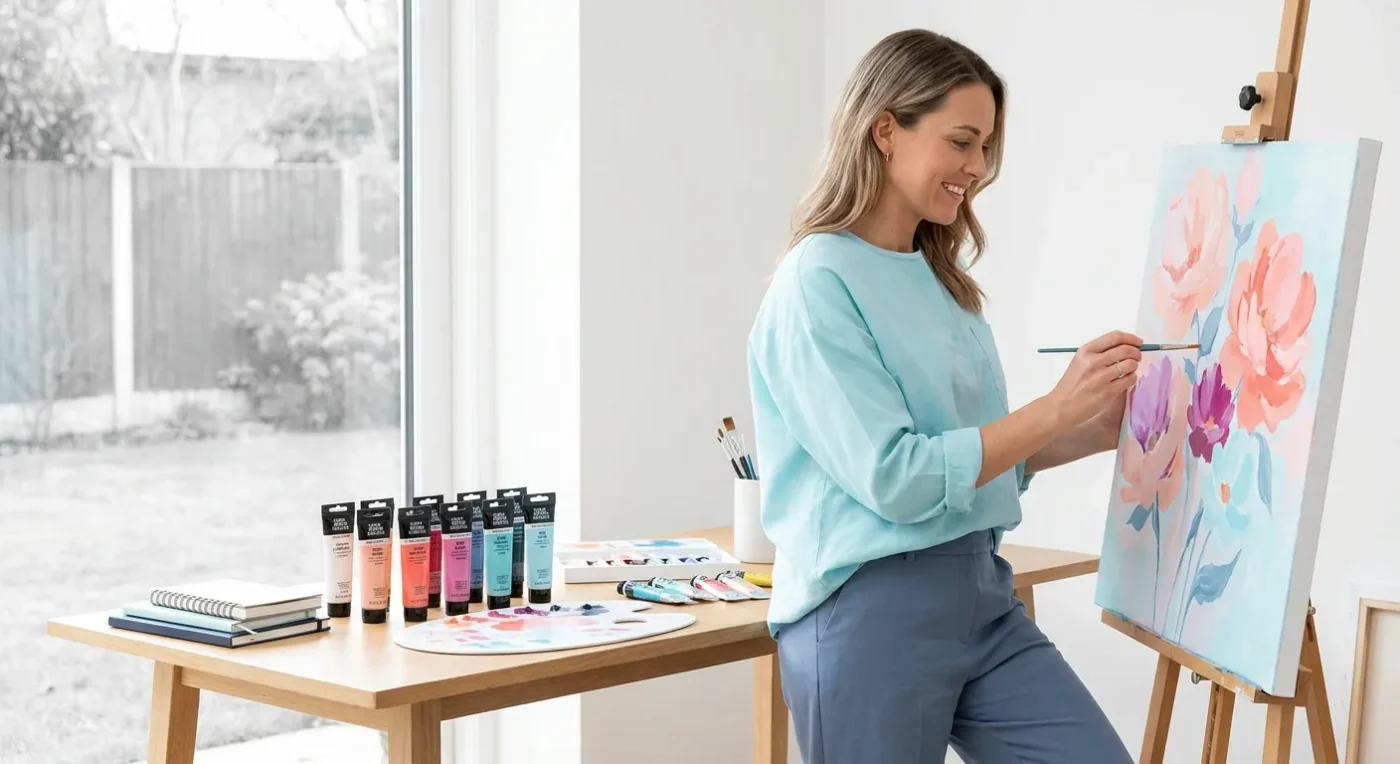

Every artist, from beginner to experienced, faces moments of self-doubt. This is a natural part of the creative process. However, for hobbyist decorative painters and folk art enthusiasts, building and maintaining boost painting confidence is crucial for long-term enjoyment and skill development. At Paint Works Mag, we believe that consistent ‘small wins’ are the most powerful way to conquer creative hesitation and foster a vibrant, ongoing passion for your craft. This aligns perfectly with the current trend of smaller, more affordable art gaining traction, with Artsy reporting a 66% increase in purchases of miniature paintings in 2025. This proves that impactful art does not always have to be grand in scale.
Many painters feel intimidated by the idea of a large, complex project. The sheer scale can be overwhelming, often leading to procrastination or abandoning a project halfway through. Small wins, however, break down that intimidation. They are achievable, manageable tasks that provide immediate gratification and a tangible sense of accomplishment. Each completed ‘mini-project’ or mastered technique reinforces your abilities, chipping away at self-doubt and building a robust foundation of confidence. This incremental progress is far more sustainable and effective than waiting for a single, monumental success.
Why Small Accomplishments Cultivate Confidence
Focusing on small, achievable goals is a fundamental principle in various fields, from personal development to sports training. In decorative painting, applying this principle means breaking down your artistic journey into digestible steps. When you successfully complete a small task, your brain releases dopamine, a neurotransmitter associated with pleasure and motivation. Consequently, this positive feedback loop encourages you to continue, thereby strengthening your belief in your capabilities. This is how you truly build painting self-assurance.
Consider the alternative: constantly striving for perfection on a huge canvas. This approach can lead to frustration and burnout, especially when progress feels slow or mistakes seem insurmountable. Conversely, celebrating small victories keeps your motivation high and your artistic spirit engaged. Indeed, consistent positive reinforcement is key to sustaining any creative endeavor. Therefore, embracing small wins is not just about finishing projects; it is about cultivating a resilient and joyful artistic mindset.
Strategies to Boost Painting Confidence Through Small Wins
Here are practical ways to integrate small wins into your painting routine. These methods turn every session into a confidence-boosting experience, helping you improve your artistic self-assurance.
1. Focus on Mastering a Single Stroke
Instead of aiming to paint an entire scene, dedicate a session to perfecting just one type of stroke. Perhaps you could focus on the comma stroke or an S-stroke. Fill a practice sheet with variations. The satisfaction of seeing your brush control improve, even on a simple stroke, is a powerful confidence builder. This direct feedback loop is similar to the hybrid learning programs gaining popularity, which combine live instruction with AI-powered feedback tools. In your case, the ‘feedback’ comes from your own visible progress on the page. This practice helps to boost painting confidence significantly.
Practice is essential for mastering any technique. For example, try repeating a specific stroke twenty times, observing the subtle improvements each time. This focused repetition not only refines your skill but also provides clear evidence of your learning. Moreover, you can explore resources like our guide on Achieve Seamless Transitions: Mastering Smooth Paint Blending in Folk Art to further enhance your foundational skills, which in turn will help to build painting self-assurance.
2. Create Miniature Projects
Embrace the trend of smaller art! Choose tiny canvases, wooden tags, or even smooth stones. These small surfaces are less intimidating and can be completed relatively quickly. A miniature floral motif, a tiny folk art animal, or a simple patterned border on a bookmark offers a full creative cycle—from concept to completion—without the pressure of a large piece. The quick turnaround means more finished projects, which in turn means more confidence boosts. This method is excellent to boost painting confidence.
Consider the psychological impact: finishing a small project gives you a sense of closure and accomplishment. This feeling is invaluable for maintaining momentum. Furthermore, miniature projects are perfect for experimenting with new color palettes or design elements without a significant time commitment. You can also easily display these small pieces, providing constant reminders of your achievements. In fact, many artists find joy in creating collections of these charming small works, further solidifying their artistic identity.
3. Experiment with a New Material or Tool
The decorative arts industry is constantly evolving, with new materials and tools emerging. For instance, Winsor & Newton introduced a premium watercolor line with sustainably sourced pigments in 2025, and there is a growing interest in niche brush types. Dedicate a short session to trying out a new type of paint, a different brush shape, or an unfamiliar medium. The goal here is not perfection, but exploration. Learning how a new tool behaves and discovering its unique qualities can be incredibly liberating and will help to elevate your artistic self-assurance.
This strategy encourages you to step outside your comfort zone in a low-stakes environment. For instance, you might try acrylic inks if you usually work with heavy body acrylics. Alternatively, explore different textures with various palette knives. Even if the initial results are not what you expected, the act of trying something new expands your artistic vocabulary and adaptability. This adaptability is a key component of artistic growth and will undoubtedly boost painting confidence.
4. Replicate a Simple Design
Find a simple folk art design or a decorative motif that you admire. Instead of creating an original piece, challenge yourself to replicate it. This practice removes the pressure of invention and allows you to focus purely on execution and technique. It is an excellent way to study how other artists achieve certain effects and to refine your own hand-eye coordination. Successfully reproducing a design, even a simple one, provides a clear and undeniable ‘win’ that reinforces your skills and helps to build painting self-assurance.
This method is akin to practicing scales in music. It builds fundamental skills without the added complexity of composition. Look for designs in books, online galleries, or even patterns on everyday objects. Break the design down into its basic components and tackle each part individually. As a result, you will gain a deeper understanding of design principles and improve your technical prowess. This focused practice is invaluable for any artist seeking to improve painting self-assurance.
5. Dedicate Time to Color Mixing
Color is fundamental to decorative painting. Set aside a short session purely for mixing colors. Challenge yourself to create a specific shade, or explore a new color palette. Document your mixes in a sketchbook, noting the proportions of each color used. The ability to confidently mix the exact color you envision is a powerful skill. It provides a sense of control and mastery over your medium, which directly contributes to your artistic confidence. This focused exercise is a fantastic way to boost painting confidence.
Understanding color theory is a journey in itself. Experiment with primary, secondary, and tertiary colors. Explore how adding white or black changes the value and intensity. Furthermore, investigate complementary and analogous color schemes. When you can consistently achieve the colors you desire, your creative expression becomes much more fluid and less intimidating. This mastery over color will significantly elevate your belief in your artistic capabilities.
6. Finish an Unfinished Project (Even a Small Part)
We all have them: those half-finished canvases or forgotten wooden pieces. Choose one small, neglected project and commit to completing just one aspect of it. Perhaps you only need to add the final highlights to a flower, or paint the background of a small section. The satisfaction of bringing even a small part of an old project to completion can be incredibly motivating and helps to boost painting confidence.
Completing a task, no matter how small, offers a psychological closure that can release creative blocks. For additional inspiration on overcoming creative hurdles, you might find our article Reignite Your Muse: Strategies to Overcome Creative Blocks in Decorative Painting useful. This approach also helps clear your creative space, both physically and mentally. Moreover, it reminds you that progress, not perfection, is the true measure of success. Each small step towards completion is a win in itself, reinforcing your ability to follow through.
The Long-Term Impact of Consistent Small Wins
Consistently achieving small wins does more than just provide momentary boosts. Over time, these incremental successes accumulate, forming a robust foundation of artistic confidence. You begin to trust your instincts, fear mistakes less, and approach new challenges with a positive mindset. This sustained self-assurance fosters a greater willingness to experiment and take creative risks, ultimately leading to significant artistic growth. It truly helps to boost painting confidence in the long run.
Furthermore, this approach cultivates resilience. When you encounter a setback, your history of small successes reminds you that you are capable of overcoming challenges. You learn that progress is not always linear, but that consistent effort yields results. This mindset shift is invaluable for any artist, allowing you to navigate the ups and downs of the creative journey with grace and perseverance. Consequently, your artistic journey becomes more enjoyable and fulfilling.
Embracing the Journey to Boost Painting Confidence
Building confidence in any skill takes time and consistent effort. In the world of decorative arts, it is particularly important to celebrate every step of the journey. By focusing on small, achievable wins, you can steadily dismantle self-doubt and cultivate a vibrant, enduring passion for painting. Remember, every master began with a single stroke. Your journey to boost painting confidence is paved with these small but significant accomplishments.
We encourage you to choose one or two of these strategies and incorporate them into your next painting session. Observe how even a small success can shift your perspective and invigorate your creative spirit. Share your small wins with us at Paint Works Mag or connect with other artists. For more resources and inspiration, visit our Blog. Together, we can continue to inspire and support each other in our artistic endeavors. Keep painting, keep growing, and keep celebrating every step of your progress to boost painting confidence!
Remember that even renowned artists like Vincent van Gogh produced countless sketches and studies before his masterpieces. His early works show a clear progression, built on countless small attempts and learning experiences. Similarly, contemporary artists often emphasize the importance of process over product, advocating for daily practice and experimentation. For example, the acclaimed artist Agnes Martin often created series of small, repetitive works, finding profound meaning and confidence in the systematic exploration of form and line. Her approach exemplifies how focused, incremental effort can lead to profound artistic insights and a deep sense of self-assurance. You can explore more about her work and similar artists at reputable art history sites like the Metropolitan Museum of Art or the Museum of Modern Art, which often feature artists who built their careers through deliberate, focused practice. This consistent effort is truly the best way to boost painting confidence.
Frequently Asked Questions About Artistic Self-Assurance
How can I overcome the fear of a blank canvas?
Start with a small, low-stakes project. Instead of a large canvas, use a small wooden tag or a piece of practice paper. Focus on a simple exercise, like mastering a single stroke or mixing colors. This reduces pressure and makes the first step less intimidating, helping you to build painting self-assurance.
What if my ‘small win’ doesn’t look perfect?
The goal of a small win is progress, not perfection. Celebrate the completion and the learning experience. Every attempt, even if imperfect, contributes to your skill development and overall artistic self-assurance. Focus on what you learned and how you can apply it next time.
How often should I practice these ‘small win’ strategies?
Aim for consistency rather than long, infrequent sessions. Even 15-30 minutes a few times a week dedicated to a small win strategy can make a significant difference. Regular, focused practice is more effective for strengthening your artistic belief than sporadic, intense efforts.
Can these strategies help experienced painters too?
Absolutely! Even experienced artists can face creative blocks or self-doubt. Focusing on small wins can help reignite passion, encourage experimentation with new techniques, and refresh their perspective. It is a valuable tool for continuous growth and maintaining artistic confidence at any level.
What is the most important thing to remember when trying to build painting self-assurance?
The most important thing is to be kind to yourself and celebrate every step of your progress. Artistic growth is a journey, not a destination. Each small success, no matter how minor, contributes to a stronger, more confident artist. Enjoy the process of learning and creating!
Where can I find more resources for decorative painting?
Paint Works Mag offers a variety of resources, from how-to guides to project inspiration. Explore our Blog for articles and tips designed to support your artistic journey. Additionally, consider visiting our Glossary of Terms for definitions of common painting techniques and tools.