
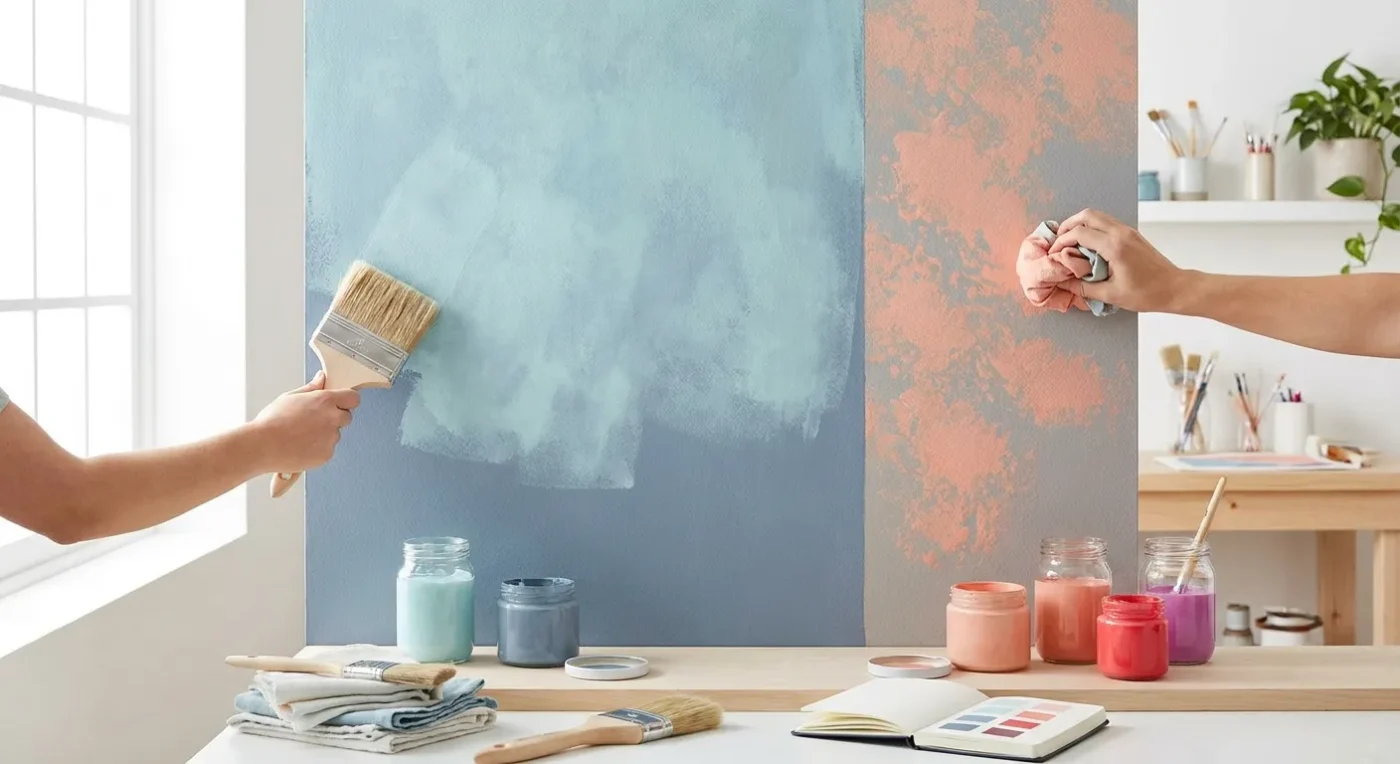

In a world increasingly driven by digital perfection, there’s a powerful and growing desire for the authentic, the human-made, and the tactile. This sentiment is deeply felt within the decorative arts, where the trend of “Textural Softness and Dimensionality” is captivating enthusiasts. Moving beyond a simple flat coat, decorative painters are seeking ways to infuse their projects with depth, character, and a visible “human hand.” This month, Paint Works Mag is guiding you to achieve textured paint finishes that transform ordinary surfaces into works of art. We’ll explore two classic yet versatile techniques: limewash and rag rolling, empowering you to add unique dimension and a touch of artisanal charm to your next project.
The Allure of Limewash: A Subtle, Organic Finish
Limewash paint offers a soft, chalky, and mottled appearance that evokes the timeless beauty of ancient plaster. It’s a mineral-based paint that allows for subtle variations in tone and texture, giving walls and furniture an organic, lived-in feel. This technique perfectly aligns with the “Warm Minimalism & Earthy Palettes” trend, creating grounded, nature-connected spaces with gentle neutrals.
Materials You’ll Need for Limewash
- Limewash paint (available in a range of earthy tones like muted clay, soft olive, or warm ochre)
- Large, natural bristle limewash brush
- Stir stick
- Drop cloths or protective sheeting
- Painter’s tape
- Primer (if your surface is highly absorbent or a stark color)
Step-by-Step Limewash Application
Firstly, ensure your surface is clean, dry, and free of dust. If you’re working on a new or highly absorbent surface, apply a suitable primer and allow it to dry completely. This helps the limewash adhere evenly and prevents excessive absorption. Understanding various primers can be helpful here. Subsequently, limewash paint separates, so stir it meticulously until it’s completely uniform. Do not shake, as this can introduce air bubbles.
Next, dip your limewash brush into the paint, removing any excess. Apply the paint in broad, crisscrossing, and somewhat irregular strokes. The key here is not to create a perfectly uniform coat, but to allow for natural variations. Think of it as painting in an “X” pattern, blending as you go. Work in small sections to maintain a wet edge. Allow the first coat to dry completely, typically 2-4 hours. You’ll notice the color appears much lighter as it dries. Apply subsequent coats using the same technique. The number of coats depends on the depth of color and texture you desire. Typically, two to three coats are sufficient to build that beautiful, translucent depth. Embrace the slight imperfections and tonal shifts—this is where the “human hand” truly shines, creating a unique finish that AI could never replicate with its sterile perfection.
Limewash Tips for Success
Do not overwork the paint. Resist the urge to go over the same area repeatedly, as this can flatten the texture. Instead, apply with confident, flowing strokes. Furthermore, always test your limewash on a small, inconspicuous area or a scrap piece of material first. This allows you to see how the color develops and practice your technique before committing to your main project. For larger areas, it’s beneficial to work with a helper. One person can apply the paint, while the other follows to blend and ensure a consistent, wet edge. This prevents harsh lines. Finally, consider the light. Limewash reacts beautifully to natural light, with its subtle variations becoming more apparent. Therefore, observe how the finish looks at different times of the day.
Rag Rolling: Classic Elegance with a Unique Twist
Rag rolling is another fantastic method to achieve textured paint finishes. This technique creates a delicate, mottled effect, often compared to suede or aged leather, adding a layer of sophistication to any room. It involves applying paint with a bunched-up rag, which creates a soft, broken color effect. This technique is particularly effective for adding warmth and visual interest to walls, furniture, or even smaller decorative items. It offers a wonderful contrast to the smooth surfaces often found in contemporary homes.
Preparing for Rag Rolling
Before you begin, ensure your surface is clean, dry, and prepared with a suitable base coat. The base coat should be a contrasting color to your rag rolling glaze, as this contrast is what creates the visual depth. For example, a light beige base with a darker tan glaze works wonderfully. Allow the base coat to dry completely, usually 24 hours. Gather your materials: two complementary paint colors (one for the base, one for the glaze), a glaze medium, a natural sea sponge or a clean, lint-free rag (old t-shirts or cheesecloth work well), painter’s tape, and drop cloths.
Rag Rolling Application Steps
First, mix your topcoat paint with a glaze medium according to the manufacturer’s instructions. The glaze medium extends the drying time, making it easier to work with and manipulate the paint. It also makes the topcoat more translucent. Next, dip your bunched-up rag into the mixed glaze, then squeeze out any excess. You want the rag to be damp with paint, not dripping. Lightly roll or dab the rag over the dried base coat. The key is to create an uneven, broken pattern. Experiment with different pressures and movements to see what effects you can achieve. Some prefer a rolling motion, while others prefer a dabbing or twisting motion.
Work in small sections, always maintaining a wet edge to avoid visible seams. Overlap your sections slightly to ensure a continuous pattern. As you work, periodically re-bunch your rag to expose different areas, which helps maintain a varied texture. If the rag becomes saturated, switch to a fresh one. Step back frequently to assess your progress and ensure an even distribution of texture across the surface. Allow the rag-rolled finish to dry completely. This can take longer than regular paint due to the glaze medium. Finally, if desired, you can apply a clear protective topcoat, especially for high-traffic areas or furniture, to enhance durability.
Rag Rolling Best Practices
Always practice your rag rolling technique on a practice board or an inconspicuous area first. This helps you get a feel for the pressure and movement needed to achieve your desired effect. The choice of rag significantly impacts the outcome; a more textured rag will create a more pronounced effect. Experiment with different materials like cheesecloth, old t-shirts, or even plastic bags to see what you prefer. Maintain a consistent amount of glaze on your rag. Too much will result in a heavy, less textured look, while too little will create a sparse, uneven finish. For optimal results, ensure the room temperature is moderate and humidity is not too high, as extreme conditions can affect drying time and workability.
Comparing Limewash and Rag Rolling Techniques
Both limewash and rag rolling are excellent ways to create textured wall finishes, yet they offer distinct aesthetics. Limewash provides a soft, mineral, and organic look, characterized by subtle mottling and natural color variation. It’s ideal for achieving an aged, rustic, or Mediterranean feel. Rag rolling, conversely, produces a more defined, often suede-like or cloud-like texture, with a clear contrast between the base and topcoat. It lends itself well to more classic or even opulent decorative schemes. Exploring folk art color palettes can further inspire your choices for either technique.
Limewash is inherently more breathable and offers a matte finish, making it a favorite for historical restorations or eco-conscious projects. Rag rolling, on the other hand, allows for greater control over the intensity of the texture and can be adapted to various gloss levels depending on the glaze and topcoat chosen. The choice between them often comes down to the desired mood and overall style of your space. For instance, if you aim for understated elegance and a connection to natural materials, limewash is a superb choice. If you prefer a more pronounced, intentionally decorative effect, rag rolling might be more suitable.
Creative Applications for Textured Finishes
Beyond walls, these techniques open up a world of possibilities for adding character to various surfaces. Consider using limewash on an old dresser or a wooden side table. The soft, chalky finish can transform a plain piece into a charming, antique-inspired focal point. Imagine a bathroom vanity with a subtle limewash texture, enhancing a spa-like atmosphere. Similarly, rag rolling can revitalize outdated furniture. A simple bookcase, given a rag-rolled finish, can become a statement piece. This is a great way to achieve textured paint finishes on smaller items.
For decorative accents, try applying these methods to picture frames, planters, or even ceramic vases. These smaller projects are excellent for practicing your technique and experimenting with different color combinations. Furthermore, textured finishes can be used to delineate spaces within an open-plan home. A limewashed accent wall in a dining area can subtly define the space without needing physical dividers. The tactile quality of these finishes invites touch and adds a layer of sensory experience to your home environment. You can truly achieve textured paint finishes on almost anything.
Maintaining Your Textured Masterpiece
Once you successfully achieve textured paint finishes, proper care ensures their longevity. Both limewash and rag-rolled surfaces are generally durable, but they benefit from gentle cleaning. For limewash, simply dust regularly with a soft cloth. For tougher marks, a very lightly dampened cloth can be used, but avoid harsh scrubbing, which can damage the delicate finish. Limewash is breathable, so it naturally resists mold and mildew, making it a good choice for certain environments.
Rag-rolled surfaces, particularly if sealed with a protective topcoat, can be wiped down more readily. Use a mild soap solution and a soft cloth, again avoiding abrasive cleaners or sponges. Always test any cleaning method on an inconspicuous area first to ensure it doesn’t affect the finish. For high-traffic areas or surfaces prone to spills, a clear matte or satin varnish can add an extra layer of protection without compromising the visual texture. This is especially true for furniture pieces. Regular maintenance will preserve the beauty and integrity of your unique decorative paintwork for years to come.
In conclusion, embracing textured paint finishes like limewash and rag rolling allows you to infuse your projects with unparalleled depth, character, and a tangible sense of artistry. These techniques move beyond the ordinary, transforming surfaces into captivating focal points that reflect individuality and a love for the hand-crafted. We hope this guide empowers you to explore these beautiful methods and confidently achieve textured paint finishes in your own home. Your creative journey is important to us. If you have questions, please contact us.
FAQs About Textured Paint Finishes
What is the main difference between limewash and traditional paint?
Limewash is a mineral-based paint that works by absorbing into the surface, creating a breathable, mottled, and translucent finish with subtle color variations. Traditional paint, conversely, forms a solid film on top of the surface, resulting in a uniform, opaque color. Limewash offers a soft, chalky texture, while traditional paints are typically smooth.
Can I apply these decorative painting techniques over existing paint?
Yes, both limewash and rag rolling can be applied over existing paint, provided the surface is properly prepared. For limewash, a suitable primer might be needed, especially if the existing paint is glossy or a very dark color. For rag rolling, ensure the existing paint is clean, dry, and forms a good base coat. Always clean and lightly sand glossy surfaces to ensure adhesion.
Are these textured finishes durable enough for high-traffic areas?
While both techniques create durable surfaces, their suitability for high-traffic areas depends on the specific product and whether a protective topcoat is applied. Limewash is naturally durable but can be delicate if scrubbed. Rag rolling, especially when sealed with a clear varnish, can withstand more wear and tear. For optimal durability in high-traffic zones, consider a clear, matte protective finish.
What kind of rag is best for rag rolling?
The best rag for rag rolling is a clean, lint-free material that can be easily bunched and manipulated. Old cotton t-shirts, cheesecloth, or even specialized decorative painting rags work very well. Experiment with different textures and materials to see what kind of pattern you prefer. The goal is to create an uneven, broken effect, so avoid perfectly smooth cloths.
How do I choose the right colors for a textured look?
Choosing colors for a textured look involves considering contrast and desired mood. For limewash, earthy, muted tones enhance the organic feel. For rag rolling, select two complementary colors where the topcoat glaze contrasts subtly or boldly with the base coat. Lighter glazes over darker bases create a soft, ethereal effect, while darker glazes over lighter bases offer more depth. Test combinations first!