
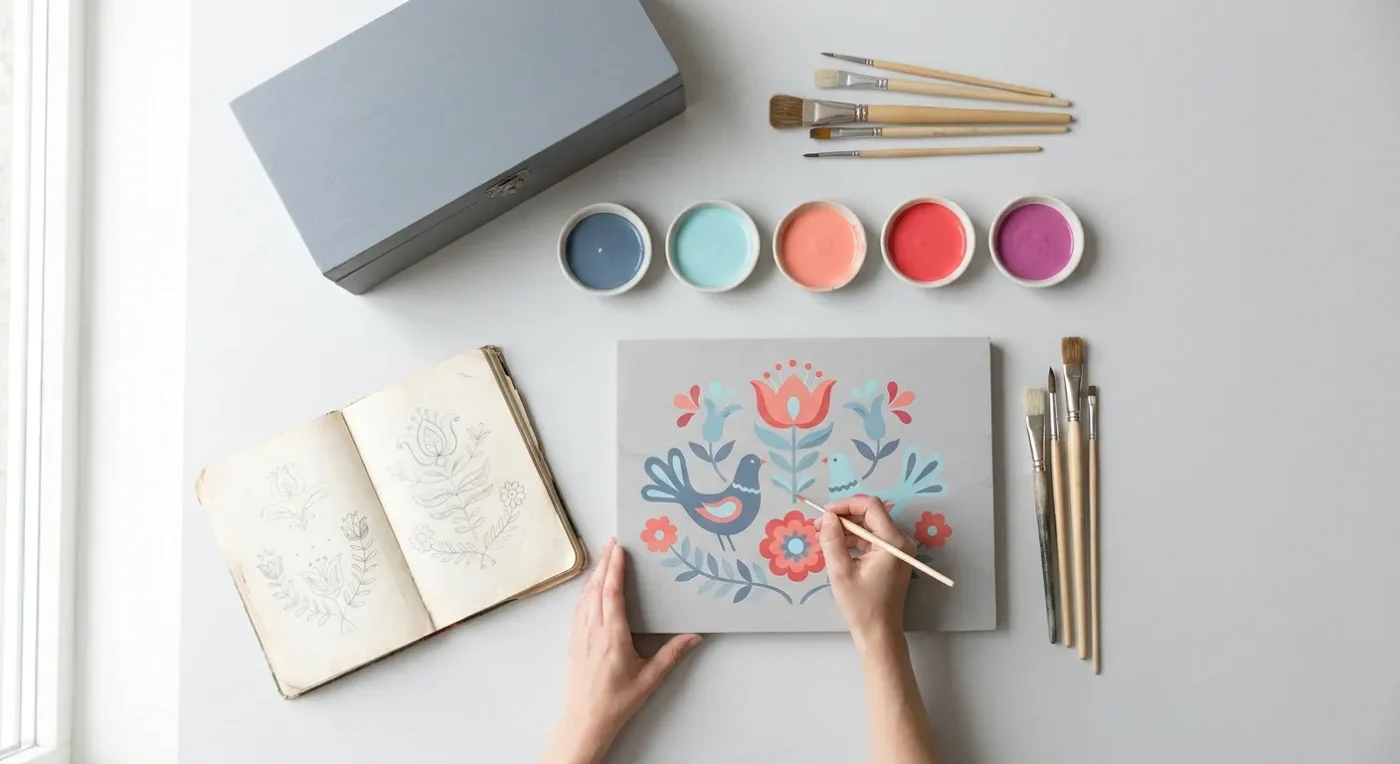

Dive into the rich history and charming aesthetics of traditional folk art motifs to enrich your decorative painting projects. Folk art is a beautiful reflection of culture and everyday life, often featuring recurring symbols and patterns that tell a story. Understanding these classic designs can not only inspire new creations but also connect you to a timeless artistic tradition. Let’s explore some beloved motifs and how you can incorporate them into your work.
Discovering Traditional Folk Art Motifs
From the intricate floral patterns of Pennsylvania Dutch hex signs to the vibrant animal figures in Scandinavian rosmaling, folk art motifs are incredibly diverse. Common elements include stylized flowers like tulips and roses, birds (doves, peacocks), hearts, leaves, and geometric shapes. These motifs are often simplified, bold, and symmetrical, making them ideal for decorative applications on furniture, trays, and walls. Each region boasts its unique visual language; for instance, Mexican folk art might feature calaveras and bright, intricate patterns, while traditional Russian folk art often showcases elaborate floral designs on lacquered boxes. Studying these variations helps broaden your artistic vocabulary. Consequently, you will find new ways to express yourself.
Moreover, the beauty of these traditional designs lies in their narrative quality. Each symbol often carries a specific meaning, reflecting cultural values, beliefs, or historical events. For example, a heart often symbolizes love or devotion, while a bird might represent freedom or peace. Understanding these underlying meanings can add depth and personal significance to your artwork. Therefore, when selecting elements for your next project, consider the story you wish to tell. This thoughtful approach enriches both the creative process and the final piece. Indeed, it transforms a simple decoration into a meaningful expression.
The Enduring Appeal of Folk Art Symbols
The timeless charm of folk art symbols stems from their simplicity and universal appeal. They are often easy to recognize and evoke a sense of heritage and comfort. Furthermore, these designs are incredibly adaptable, allowing artists to interpret them in various styles and color palettes. Whether you prefer vibrant, bold hues or more subdued, earthy tones, folk art designs can be customized to suit your aesthetic. Many artists find joy in researching the origins of specific traditional folk art motifs, delving into the history of a culture through its visual language. This exploration offers a deeper connection to the art form and its practitioners across generations.
For example, the iconic Pennsylvania Dutch hex signs, found on barns throughout certain regions, are not merely decorative. They often incorporate symbols like stars, tulips, and hearts, which were believed to bring good luck, protect against evil, or symbolize fertility. Similarly, the detailed patterns in Ukrainian Pysanky eggs tell stories of spring, rebirth, and family blessings. Learning about these cultural contexts enriches your appreciation for each design. You can find more information about the history and symbolism of folk art at resources like The Folk Art Society of America, which offers extensive insights into various traditions. The Folk Art Society of America is an excellent starting point for further research.
Incorporating Traditional Folk Art Motifs into Your Projects
To start, choose a motif that resonates with you. Perhaps a simple heart or a stylized bird. Begin by sketching the motif to understand its basic structure. Then, experiment with color palettes. Traditional folk art often uses bold, primary colors, but you can adapt them to a more subdued or contemporary scheme if you prefer. Consider where the motif will be placed – a repeating border, a central focal point, or scattered accents. Don’t be afraid to simplify or combine elements from different motifs to create something truly unique while still honoring the traditional spirit. The beauty of folk art lies in its accessibility and adaptability, inviting artists of all levels to participate in its enduring legacy. This approach encourages personal expression.
When integrating these designs, think about the surface you are decorating. Small, intricate patterns might suit a jewelry box, whereas larger, bolder motifs could adorn a piece of furniture or a wall mural. For instance, a simple floral garland can transform a plain wooden tray. If you are new to decorative painting, consider starting with a basic design and gradually increasing complexity. Many artists find that practicing individual elements, like a single tulip or a simple leaf, helps build confidence. This foundational practice is crucial for mastering more elaborate compositions. For tips on achieving smooth paint transitions, which are often key in folk art, refer to our guide on Mastering Smooth Paint Blending in Folk Art.
Regional Variations of Folk Art Designs
Exploring the regional variations of folk art designs offers a fascinating journey through global cultures. Scandinavian folk art, particularly rosmaling, is known for its graceful C and S scrolls, intertwined with flowers and leaves, often painted in rich, opaque colors. Conversely, German folk art, especially that of the Pennsylvania Dutch, features bold, geometric hex signs and intricate fraktur calligraphy. Mexican folk art bursts with color and often depicts scenes from daily life, religious figures, or whimsical animals. These distinct styles provide a wealth of inspiration for any artist. Moreover, each region’s designs reflect its unique history and available materials.
Russian folk art, such as Palekh miniatures and Khokhloma painting, showcases elaborate gold and red floral patterns on black backgrounds, creating a striking contrast. Similarly, Polish folk art often features vibrant paper cut-outs (wycinanki) and intricate embroidery with symbolic patterns. These diverse expressions highlight the universal human desire to decorate and tell stories through art. Understanding these regional differences not only broadens your artistic horizons but also deepens your appreciation for the craft. In fact, many artists find it rewarding to specialize in a particular regional style, delving deep into its techniques and traditions. You can discover more about the global scope of folk art through institutions like the International Folk Art Market, which showcases artists from around the world. The International Folk Art Market is a great resource for seeing contemporary folk art.
Developing Your Own Folk Art Style
While honoring tradition is important, developing your unique folk art style is equally rewarding. Start by mastering the basic strokes and forms of various traditional folk art motifs. Once comfortable, begin to experiment. Perhaps you combine elements from different cultural traditions, or you might introduce a modern color palette to classic designs. Consider altering the scale of motifs or using them in unexpected contexts. For example, a traditional bird motif could be painted on a contemporary canvas rather than a wooden plate. This creative exploration allows you to put your personal stamp on an ancient art form. As a result, your pieces will stand out.
Furthermore, think about the tools and materials you use. While many traditional folk art pieces were created with specific brushes and paints, contemporary artists have access to a vast array of options. Experiment with acrylics, oils, or even watercolors to see how they affect the look of your chosen designs. Don’t be afraid to make mistakes; they are an essential part of the learning process. Overcoming creative blocks is a common challenge, and our article Reignite Your Muse: Strategies to Overcome Creative Blocks in Decorative Painting offers helpful advice. Remember, folk art celebrates individuality and ingenuity. Consequently, your unique interpretations are highly valued.
The Significance of Traditional Folk Art Motifs in Modern Decor
Traditional folk art motifs are experiencing a resurgence in popularity within modern home decor and fashion. Their handmade aesthetic and connection to heritage offer a refreshing contrast to mass-produced items. Incorporating these designs into your home can add warmth, personality, and a sense of history. Imagine a hand-painted chest adorned with stylized floral patterns or a series of framed tiles featuring animal motifs. These pieces serve as conversation starters and reflect a love for artisanal craftsmanship. Many designers are drawing inspiration from these classic patterns, adapting them for textiles, pottery, and furniture. Indeed, their timeless appeal makes them versatile.
Moreover, the process of creating art with these designs can be incredibly meditative and fulfilling. It allows you to slow down, focus on detail, and connect with a creative lineage that spans centuries. Whether you are painting a small keepsake or a large furniture piece, the act of bringing these beloved designs to life is a rewarding experience. The accessibility of folk art means that artists of all skill levels can participate, making it a wonderful hobby or even a professional pursuit. By keeping these traditions alive, you contribute to a vibrant cultural tapestry. Furthermore, you enrich your own life with beauty and purpose.
Preserving and Evolving Folk Art Traditions
Preserving folk art traditions is crucial for maintaining cultural heritage. Every time an artist learns and reproduces traditional folk art motifs, they contribute to this preservation. However, preservation does not mean stagnation. Folk art has always evolved, adapting to new materials, techniques, and cultural influences. Contemporary folk artists often blend traditional elements with modern themes, creating new expressions that are both respectful of the past and relevant to the present. This ongoing evolution ensures that folk art remains a living, breathing art form, continually inspiring new generations of creators. As a result, its legacy continues to thrive.
We encourage you to explore the vast world of folk art, from its historical roots to its contemporary manifestations. Take classes, read books, and visit museums to deepen your understanding. Most importantly, start painting! The more you practice, the more confident and skilled you will become. Remember, every stroke you make carries forward a rich artistic heritage. For a deeper understanding of terms used in decorative painting, check out our Glossary of Terms. Embracing traditional folk art motifs allows you to infuse your decorative painting with historical charm and cultural depth. By understanding their origins and practicing their forms, you can create pieces that are both beautiful and meaningful, carrying forward a beloved artistic heritage.
FAQ
What are common folk art design elements?
Common elements in folk art designs often include stylized flowers like tulips and roses, various birds such as doves and peacocks, hearts, leaves, and simple geometric shapes. These are frequently depicted in bold, simplified forms and often exhibit symmetry.
How can I incorporate traditional patterns into my art?
To incorporate traditional patterns, begin by selecting a design that appeals to you. Sketch it to understand its structure, then experiment with colors. Decide if it will be a border, a focal point, or scattered accents. Don’t hesitate to simplify or combine elements to create a unique piece while respecting the original spirit.
Are folk art designs always brightly colored?
While many traditional folk art pieces are known for their vibrant, bold, and sometimes primary color palettes, you are not limited to these. Artists can adapt these designs to more subdued or contemporary color schemes to suit their personal aesthetic or project requirements.
What is the cultural significance of these art forms?
Folk art forms are deeply significant as they reflect the culture, beliefs, and daily life of a community. Many symbols carry specific meanings, telling stories or conveying wishes for good luck, protection, or prosperity. Understanding these contexts adds depth to the artwork.
Where can I find inspiration for traditional folk art projects?
Inspiration for traditional folk art projects can be found by researching different regional styles like Pennsylvania Dutch, Scandinavian rosmaling, or Mexican folk art. Books, museums, and online resources dedicated to folk art history are excellent starting points. Additionally, observing historical artifacts and decorative items can spark new ideas.