
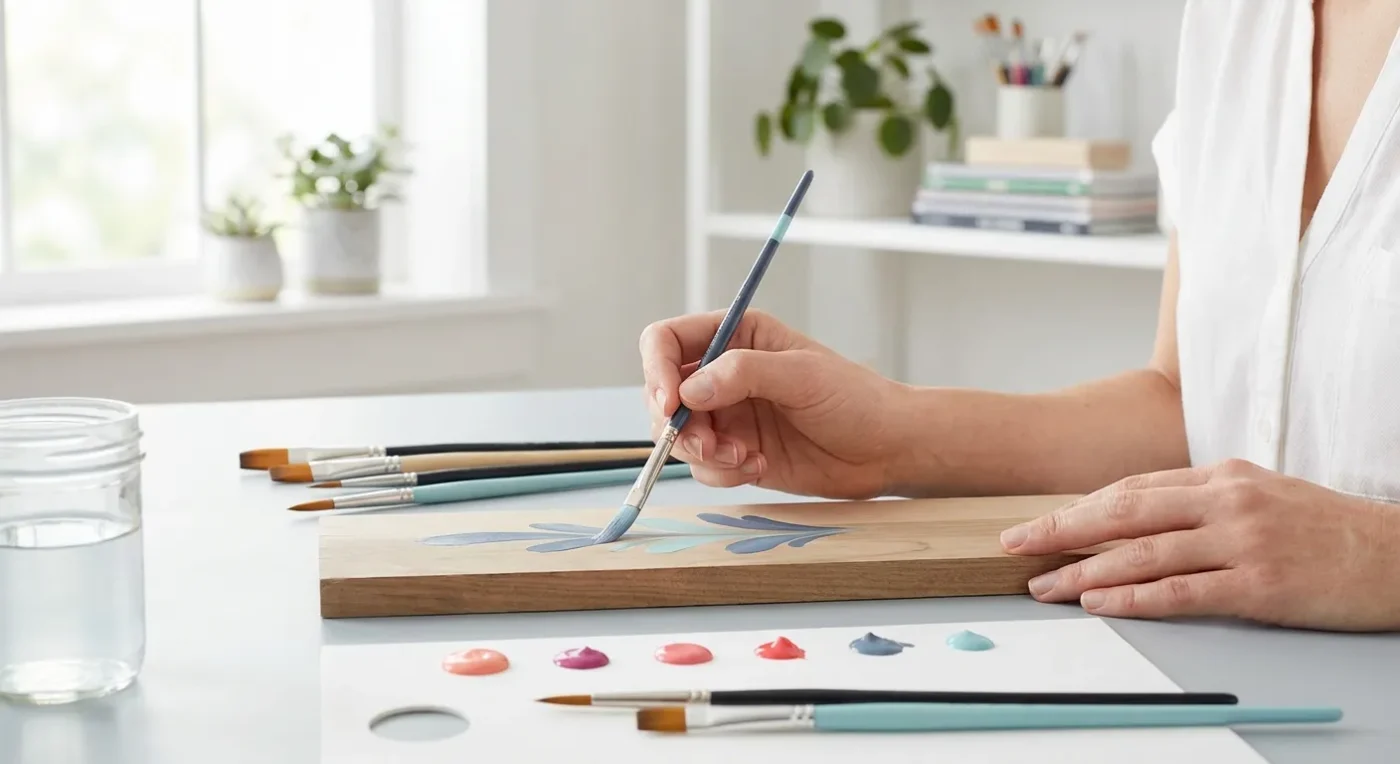

Achieving beautiful detail in decorative painting often comes down to mastering decorative painting brushstrokes, the foundation of folk art designs. It’s not just about what you paint, but how you paint it. For hobbyist decorative painters and folk art enthusiasts, developing good brush control can feel like a significant hurdle. But with focused practice and the right guidance, you can transform hesitant marks into confident, flowing strokes. Paint Works Mag is here to demystify these essential techniques, empowering you to create intricate and expressive designs with ease.
Why Brushstroke Mastery Matters for Folk Art
In decorative and folk art, individual brushstrokes are often visible elements of the design, contributing to its texture and character. Unlike fine art where strokes might be blended away, folk art celebrates the distinct mark of the brush. Understanding how to execute consistent, controlled strokes allows you to:
- Create clean lines and shapes: Essential for intricate patterns and motifs.
- Achieve smooth blends and floats: Adding depth and dimension to your work.
- Develop unique textures: Bringing life and interest to your painted surfaces.
- Paint faster and more efficiently: With practice, you’ll gain speed and precision.
Moreover, developing proficiency in these fundamental movements builds confidence. You will find that complex designs become approachable once you have a solid grasp of the basic components. This foundation is truly invaluable for any aspiring decorative artist.
Essential Brushstrokes to Practice for Folk Art
Let’s break down some fundamental brushstrokes that form the backbone of many folk art designs. Remember, consistency comes from repetition. Practice these regularly to build muscle memory and control. Indeed, dedicating time to these basics will pay off immensely in your finished pieces.
1. The Comma Stroke (Using a Round Brush)
This versatile stroke is perfect for petals, leaves, and decorative flourishes. Load your round brush with paint, touch the tip to the surface, press down firmly to create a wider belly, then lift and drag the brush to a fine point. The result is a comma-like shape. Practice varying the pressure to control the width and length. This stroke is a cornerstone for many floral motifs. Furthermore, experiment with different round brush sizes to see how they impact the stroke’s appearance. Many folk art flowers, for instance, are constructed almost entirely from variations of this simple stroke.
2. The C-Stroke and S-Stroke (Using a Round or Liner Brush)
These flowing, curved strokes are essential for scrollwork, tendrils, and graceful decorative elements. For a C-stroke, apply light pressure, curve the brush, and lift. For an S-stroke, combine two C-strokes in opposite directions. Maintain consistent pressure for an even line, or vary it slightly for a more organic feel. These strokes require a relaxed hand and arm movement, not just wrist action. Consequently, avoid stiff wrist movements; instead, let your whole arm guide the brush. Practicing these will significantly enhance your ability to create intricate borders and filigree.
3. The Floating Stroke (Using an Angle or Flat Brush)
Floating color adds soft shading and dimension, making objects appear more rounded or defined. Load your angle or flat brush by dipping one corner into paint and blending it on your palette until the paint is concentrated on one side, gradually fading to clear water on the other. Apply the painted edge to your surface, with the dry edge just off the area you want to shade. Drag the brush, allowing the paint to gradually transfer and create a soft shadow. This technique is particularly effective for adding realism to fruit or folds in fabric. Learning this skill is crucial for adding depth to your work, much like mastering glazing techniques can achieve luminous depth.
4. The Tear Drop Stroke (Using a Round Brush)
Similar to the comma, the tear drop stroke starts with light pressure, presses down to create a wider base, and then lifts straight up, leaving a rounded, tear-like shape. This stroke is excellent for small leaves, berries, or creating textured patterns. It’s a quicker, more direct stroke than the comma, often used for repetitive elements. Moreover, varying the amount of pressure and how quickly you lift the brush will produce different effects. This adaptability makes it a valuable addition to your repertoire.
5. The Liner Stroke (Using a Liner or Striper Brush)
Liner brushes are designed for fine lines, delicate details, and script work. Load the brush with thin, inky paint, then apply consistent, light pressure as you draw a continuous line. Practice creating lines of varying lengths and thicknesses. This stroke is fundamental for adding details like veins on leaves, tendrils, or fine outlines. For example, many folk art pieces feature intricate border designs that rely heavily on precise liner work. This is a key component of truly mastering decorative painting brushstrokes.
Tips for Successful Brushstroke Practice
Becoming proficient at decorative painting requires more than just knowing the strokes; it demands consistent, mindful practice. Here are some tips to help you on your journey toward mastering decorative painting brushstrokes.
Choose the Right Tools
The quality of your brushes significantly impacts your results. Invest in good quality brushes designed for decorative painting. Synthetic brushes are often preferred for their snap and ability to hold a fine point. Furthermore, ensure your paints are of a consistent, creamy consistency – not too thick, not too watery. A good quality palette is also essential for proper paint loading and blending, as discussed on art supply sites like Dick Blick Art Materials.
Consistent Paint Consistency
The flow of your paint is critical. Acrylic paints are commonly used in decorative art. Thin them slightly with water or a flow improver until they are like ink for liner work, or a creamy consistency for other strokes. Test on a scrap surface first. Too thick, and your strokes will be clumpy; too thin, and they will be watery and lose their opacity.
Proper Brush Loading
Loading your brush correctly is half the battle. For most strokes, you want paint evenly distributed on the bristles, often just on the tip or a specific edge, depending on the stroke. Practice loading your brush on a palette until it feels natural. This prevents uneven application and ensures clean lines.
Relax Your Hand and Arm
Tension is the enemy of fluid brushstrokes. Hold your brush comfortably, not in a death grip. Use your whole arm for larger movements and your wrist and fingers for finer details. Breathe deeply and relax. Many artists find that listening to music helps them relax and get into a rhythm. This relaxed approach is vital for achieving elegant lines and curves.
Practice, Practice, Practice
There’s no shortcut to mastery. Dedicate regular time to practicing your strokes. Fill pages with comma strokes, C-strokes, and floats. Don’t aim for perfection immediately; aim for consistency. Over time, your muscle memory will develop, and your strokes will become more confident and controlled. Consider creating a dedicated practice journal to track your progress and observe improvements. This consistent effort is truly the path to mastering decorative painting brushstrokes.
Use a Reference
When you’re first learning, it’s helpful to have visual references. Look at examples of folk art, observe how different artists execute their strokes. Try to replicate them. Many online resources and books offer step-by-step guides for specific folk art patterns. For further inspiration on traditional folk art patterns and their brushwork, you might explore resources like The American Folk Art Museum.
Integrating Brushstrokes into Folk Art Designs
Once you feel comfortable with individual strokes, the next step is to combine them into cohesive designs. This is where the magic of folk art truly comes to life. For instance, a simple flower might combine comma strokes for petals, a tear drop for the center, and liner strokes for delicate stems. Building up designs from these fundamental elements is a rewarding process.
Think of each stroke as a building block. You can create intricate scrollwork by linking C and S strokes. Shading with floating strokes adds realism to painted fruits or leaves. The beauty of folk art lies in its ability to take these simple, distinct marks and arrange them into charming and often elaborate patterns. This iterative process of combining learned techniques is central to truly mastering decorative painting brushstrokes.
Furthermore, don’t be afraid to experiment. While traditional folk art has specific conventions, there’s always room for personal interpretation. Try varying the size, pressure, and angle of your strokes to see what new effects you can create. This playful approach can lead to unique and personal artistic expressions.
Overcoming Common Challenges
Every artist faces challenges, especially when learning new techniques. Here are some common hurdles when working on painting brushstroke control and how to overcome them:
- Wobbly Lines: This often indicates too much tension in your hand or arm, or an inconsistent paint flow. Relax, thin your paint slightly, and try using your whole arm for longer lines.
- Uneven Pressure: Practice pressing down and lifting consistently. Drills where you focus solely on pressure changes can be very beneficial.
- Muddy Floats: This usually means too much paint in the clear water side of your brush, or not blending enough on the palette. Ensure a clean, dry edge.
- Skipping Paint: Your paint might be too dry or your brush too sparsely loaded. Re-load your brush and check your paint consistency.
Remember, patience is key. Every