
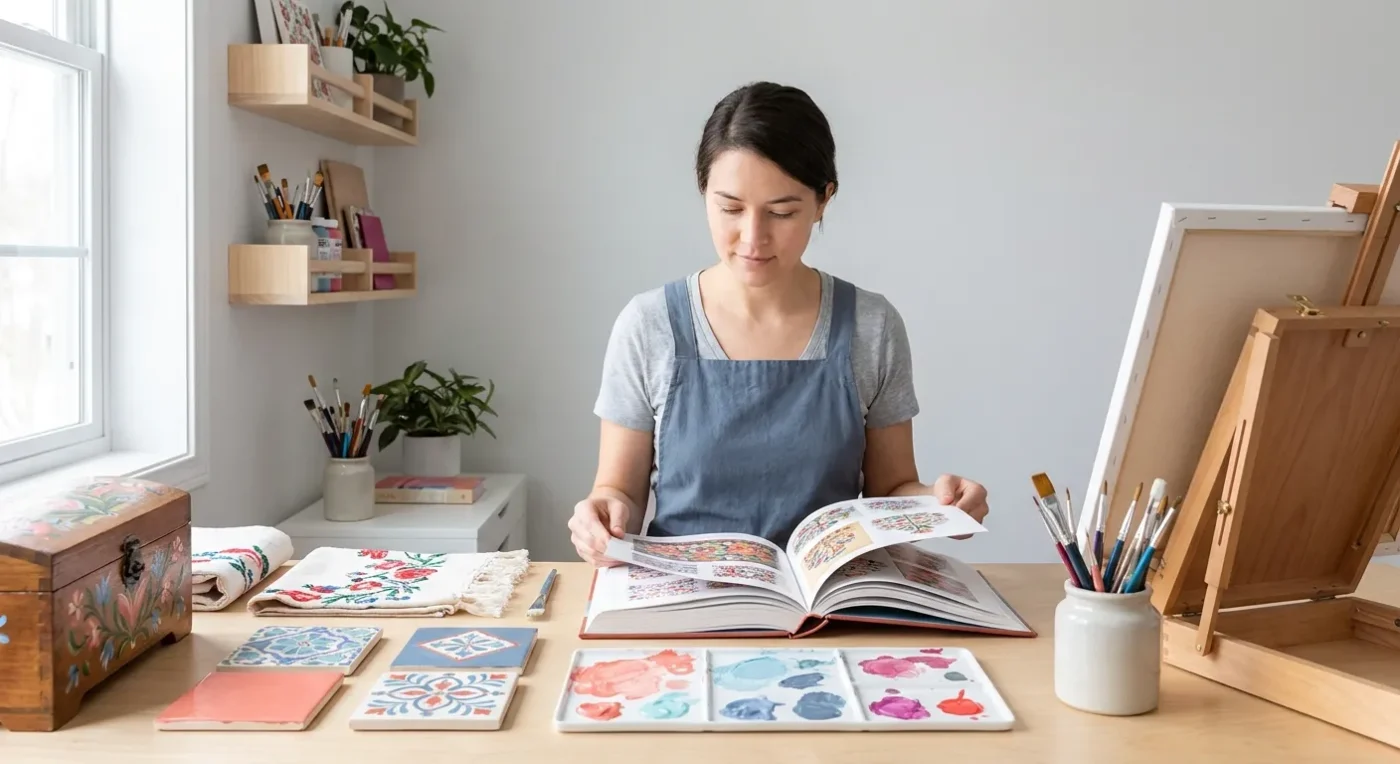

In an era increasingly shaped by digital tools and AI-generated imagery, there’s a profound “recalibration” towards human-made art. For hobbyist decorative painters and folk art enthusiasts, this means a renewed appreciation for the visible humanity, emotion, and imperfection that only a human hand can bring to a canvas. This month, Paint Works Mag encourages you to find folk art inspiration by looking beyond the screen and tapping into authentic sources that fuel genuine creative growth.
The Allure of the Human Touch in Art
While online platforms have expanded access to art education exponentially – with the online segment holding a 58.3% market share in 2025, according to a report by Statista – the industry is also emphasizing authentic, human-made art. Collectors and creators alike are valuing art that unmistakably shows the “human hand,” marked by intuition, risk, and imperfections. This trend challenges us to make our thinking more visible, embracing conceptualization, conscious intent, process exploration, critique, and authorship of meaning. It’s about fostering productive difficulty, repetition, experimentation, and persistence for genuine growth, rather than letting AI tools reduce the struggle of creative work.
Moreover, this shift encourages artists to connect more deeply with their materials and processes. The tactile experience of mixing paints, feeling the brush on canvas, and the deliberate act of creation becomes central. Consequently, the art created carries a unique story and energy. This connection to the handmade is precisely what makes folk art so enduringly popular and personally rewarding for both its creators and admirers. Therefore, understanding this underlying sentiment is crucial for anyone looking to truly develop their artistic voice.
Where to Find Folk Art Inspiration in the Real World
So, how do we connect with this authentic, human-centric approach to folk art? It starts with observation and engagement with the world around us. Here are some practical avenues to find folk art inspiration:
- Local History & Heritage: Visit local museums, historical societies, or antique shops. Examine vintage textiles, handcrafted furniture, or old paintings. Folk art often reflects the stories, traditions, and everyday lives of a community. Pay attention to recurring motifs, color palettes, and stylistic elements that tell a story. You might discover unique regional patterns or forgotten techniques that spark new ideas. For example, a visit to a historical society could reveal intricate needlework designs that can be adapted for painting.
- Nature’s Canvas: Spend time outdoors. The natural world is an endless source of patterns, textures, and colors. Think about the earthy palettes of burnt sienna, clay, olive, and ochre that are prominent in “Warm Minimalism” trends, or the vibrant blues from Dulux’s “Rhythm of Blues” for 2026. Observe the intricate details of leaves, the flow of water, or the unique shapes of local flora and fauna. These can inspire new designs or abstract interpretations in your folk art. Consider how a gnarled tree branch could become a stylized border, or the subtle gradients of a sunset could inform your next color scheme. This direct engagement with nature helps artists develop a deeper appreciation for organic forms and hues.
- Everyday Objects & Domestic Life: Look around your home. What patterns do you see on a quilt, a piece of pottery, or a woven basket? Folk art often elevates the mundane into the beautiful. Consider the “Textural Softness and Dimensionality” trend – how can you translate the texture of a knitted throw or the sculptural folds of fabric into your painting? Simple household items frequently offer a wealth of design possibilities. A worn wooden spoon, for instance, might inspire a series of rustic still lifes. Similarly, the patterns on a favorite teacup could be simplified and incorporated into a decorative border.
- Cultural Exchange & Global Traditions: Explore folk art from different cultures. While respecting origins, you can draw inspiration from the geometric patterns of traditional crafts, the symbolic imagery, or the vibrant storytelling inherent in global folk art. This can broaden your stylistic vocabulary and introduce new design elements. For instance, the bold patterns of Scandinavian folk art or the intricate details of Mexican Talavera pottery can provide fresh perspectives. Learning about different cultural approaches to art enriches your own creative process and helps you to see the world through new eyes.
Embracing the Journey of Discovery
The process of seeking out authentic sources to find folk art inspiration is a journey in itself. It requires curiosity, an open mind, and a willingness to step away from the familiar. This active exploration not only provides fresh ideas but also deepens your connection to the rich history and diverse expressions of folk art. Furthermore, it allows for a more personal interpretation of themes and motifs, making your work truly unique.
As you gather inspiration, remember to document your findings. Sketchbooks, photographs, and notes can be invaluable tools for capturing fleeting ideas. These records become a personal archive of potential projects, helping you to organize your thoughts and develop your creative concepts over time. Ultimately, the goal is not to copy but to absorb, adapt, and transform these observations into something new and distinctly yours.
Developing Your Artistic Eye Through Observation
Training your artistic eye is fundamental to cultivating your own unique style. This involves more than just looking; it means truly seeing the details, the nuances, and the underlying structures in the world around you. For example, when observing an antique quilt, don’t just see the overall pattern. Instead, notice the individual stitches, the fabric choices, and the slight irregularities that give it character. These small observations are often where the most profound inspiration lies.
Practice sketching what you see, even if it’s just a quick doodle. This act of drawing forces you to slow down and analyze forms, textures, and compositions. Over time, this practice will enhance your ability to translate real-world observations into your artistic language. Moreover, regularly engaging in this kind of visual analysis will naturally lead you to new ways to find folk art inspiration.
The Role of Community and Shared Experience
While individual exploration is vital, connecting with a community of fellow artists can also be a powerful source of inspiration. Sharing ideas, discussing techniques, and even critiquing each other’s work can open up new perspectives. Workshops, local art groups, or even online forums dedicated to decorative arts can provide a supportive environment for creative growth. Paint Works Mag, for instance, aims to foster this sense of community through its resources and guides.
Consider attending local craft fairs or art markets. These events offer an opportunity to see how other artists interpret folk art traditions and contemporary trends. Observing different styles and approaches can broaden your own artistic horizons and provide fresh ideas for your next project. It’s often through these interactions that new collaborations and friendships form, further enriching your artistic journey.
Understanding Folk Art’s Enduring Appeal
Folk art, by its very nature, is deeply rooted in human experience. It often tells stories, preserves traditions, and reflects the values of a community. This inherent narrative quality is a significant part of its enduring appeal. When you seek to find folk art inspiration, you are not just looking for pretty pictures; you are engaging with a rich tapestry of human history and creativity. This understanding adds depth and meaning to your own artistic endeavors.
The imperfections often found in folk art are not flaws but rather hallmarks of authenticity and the human touch. They speak to the process, the hand of the maker, and the unique story behind each piece. Embracing this philosophy in your own work can free you from the pressure of perfection and allow for more genuine, expressive creations. It reinforces the idea that art is a journey, not just a destination.
Incorporating Trends Without Losing Authenticity
While the goal is to find folk art inspiration from authentic sources, it’s also valuable to be aware of current trends in color and texture. For instance, knowing about the popularity of earthy tones or the emphasis on textural elements can help you create work that feels both timeless and relevant. However, the key is to integrate these trends in a way that remains true to the spirit of folk art and your personal artistic vision.
Do not simply copy trends; instead, interpret them through your folk art lens. How would a folk artist from a past era incorporate a modern color palette? How can you translate a contemporary textural interest using traditional folk art techniques? This thoughtful integration ensures your art remains authentic while also appealing to a broader audience. For further reading on color, you might explore our article on Crafting Vibrant Hues: Understanding Folk Art Color Palettes.
Practical Steps to Begin Your Search for Inspiration
To effectively find folk art inspiration, start by dedicating specific time to observation. Take a walk in a local park with the intention of noticing patterns in nature. Visit an antique shop with the goal of identifying common motifs in vintage items. Carry a small sketchbook or use your phone’s camera to capture anything that catches your eye. Remember, inspiration can strike anywhere, so being prepared to record it is essential.
Another excellent approach is to choose a specific theme or motif and research its presence in different folk art traditions. For example, if you’re interested in birds, explore how birds are depicted in Scandinavian dala horses, Pennsylvania Dutch hex signs, or Mexican pottery. This focused exploration can reveal surprising connections and provide a wealth of ideas for your own interpretations. Consequently, you will begin to build a personal library of visual references.
The Importance of Reflection and Personal Connection
After gathering potential sources to find folk art inspiration, take time to reflect on what resonates most with you. What emotions do certain patterns evoke? What stories do particular colors tell? Your personal connection to the inspiration is what will truly bring your art to life. Do not just look for things that are visually appealing; seek out what speaks to your soul and your artistic purpose.
This reflective process can involve journaling about your observations, creating mood boards, or simply sitting with your ideas. Allowing your mind to process and synthesize the information you’ve gathered is crucial for developing original concepts. Ultimately, the most compelling folk art comes from a place of genuine curiosity and personal investment. This introspection ensures that your work is not merely decorative but also meaningful.
Overcoming Creative Blocks by Changing Your Environment
Sometimes, the best way to find folk art inspiration when facing a creative block is to simply change your environment. If you’ve been working exclusively in your studio, a trip to a botanical garden, a busy market, or even just a different room in your house can provide a much-needed shift in perspective. New surroundings stimulate different parts of your brain and can help dislodge stagnant ideas.
Engaging with a new environment can trigger unexpected connections. A conversation with a stranger, the aroma of a new spice, or the sound of unfamiliar music can all become catalysts for creative thought. These sensory experiences, often overlooked in our daily routines, can be surprisingly potent sources of artistic awakening. Therefore, actively seeking out diverse environments is a proactive step in maintaining a continuous flow of creative energy.
Conclusion: Your Journey to Authentic Folk Art
To conclude, while digital resources offer convenience, the most profound and authentic ways to find folk art inspiration lie in the real world. By engaging with local history, observing nature, appreciating everyday objects, and exploring global traditions, you can cultivate a rich wellspring of ideas. This journey of discovery not only enriches your artistic practice but also deepens your connection to the human story embedded within folk art. Embrace the visible humanity and the beautiful imperfections that make this art form so special. Paint Works Mag encourages you to step away from the screen, open your eyes, and let the world around you ignite your creative spirit. Continue your artistic journey by visiting our Blog for more tips and projects.
FAQ
How can I discover new themes for my folk art projects?
To discover new themes, immerse yourself in local history, visit museums, or explore cultural festivals. The stories and traditions of your community or other cultures often provide rich thematic material. Look for recurring symbols, historical events, or daily life activities that can be translated into art.
What are some effective ways to observe nature for artistic ideas?
Spend dedicated time outdoors, paying close attention to details like leaf patterns, bark textures, or the colors of local flora and fauna. Carry a sketchbook to capture these observations, focusing on shapes, lines, and color combinations. Nature’s complexity offers endless design possibilities.
How do everyday objects spark creativity in decorative painting?
Everyday objects in your home, such as textiles, pottery, or furniture, often feature patterns, textures, and forms that can be simplified or stylized for folk art. Consider the history and function of these items to uncover their inherent artistic potential. Transforming the mundane into art is a hallmark of decorative painting.
Where can I find examples of folk art from different cultures?
Explore online cultural archives, visit ethnographic museums, or seek out books on global art traditions. While appreciating the original context, you can study the motifs, color palettes, and storytelling techniques to broaden your artistic vocabulary. This exposure can greatly enhance your ability to generate fresh ideas for your own work.
What is the importance of a sketchbook in the creative process?
A sketchbook serves as a vital tool for capturing fleeting ideas, practicing observation, and developing concepts. It’s a personal visual journal where you can experiment without pressure, allowing you to refine your artistic vision and track your creative progress over time. Regularly sketching helps solidify your visual memory and translate observations into tangible art concepts.