
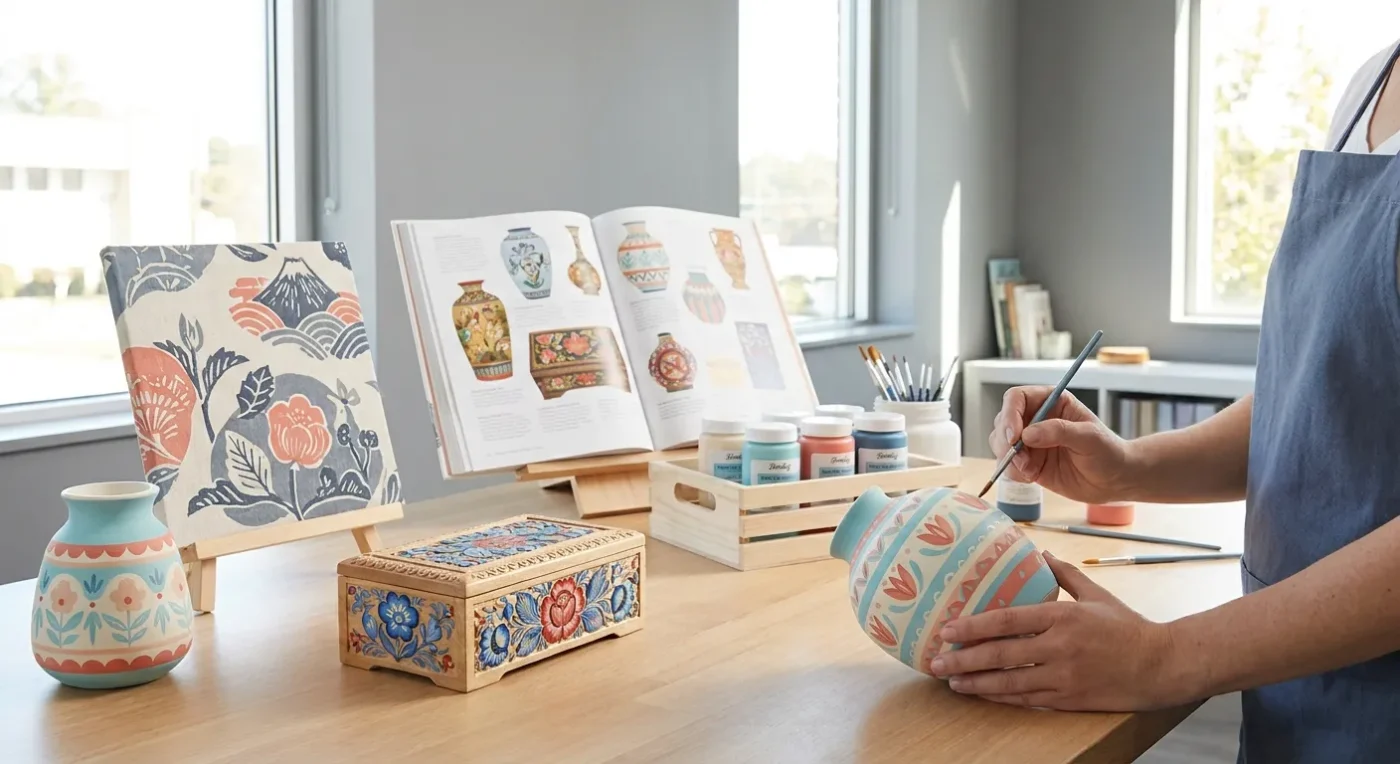

Art knows no boundaries, and the world of decorative painting is a testament to this universal truth. Every culture, throughout history, has developed its unique visual language, creating an astonishing array of patterns, motifs, and techniques. These can inspire and enrich our artistic practices. For hobbyist decorative painters and folk art enthusiasts, exploring global decorative painting styles offers an incredible opportunity for growth and discovery. Paint Works Mag invites you to journey across continents and cultures, uncovering inspiring designs that can expand your artistic vocabulary and spark new creative ideas.
The Rich Tapestry of World Art
From the meticulous brushwork of Japanese Sumi-e to the intricate storytelling of Indian Madhubani, and the bold geometric rhythms of South African Ndebele murals, global decorative art traditions are incredibly diverse. These styles are often deeply rooted in local materials, spiritual beliefs, and daily life. Therefore, they become powerful expressions of cultural identity. Understanding their origins and meanings not only enriches our appreciation but also guides us in respectfully drawing inspiration from them.
Consider the elegance of Japanese decorative elements, often featuring stylized cranes, cherry blossoms, or bamboo rendered with graceful, deliberate strokes. Or the vibrant, symbolic narrative art of Madhubani, where entire walls become canvases for tales of gods, nature, and human life. This art is characterized by intricate line work and natural dyes. The Ndebele people, on the other hand, adorn their homes with striking geometric patterns in vivid, contrasting colors. Each line and shape carries specific cultural significance.
Respectful Inspiration: A Guiding Principle for Exploring Diverse Painting Traditions
When exploring world decorative art styles, it’s crucial to approach them with respect and an open mind. Our goal is to learn, appreciate, and be inspired, not to appropriate. This means taking the time to understand the cultural context, the symbolism behind motifs, and the traditional methods of creation. Instead of merely copying, aim to interpret and integrate elements in a way that honors their origins while speaking to your own artistic vision.
Here’s how to respectfully draw inspiration:
- Research Deeply: Learn about the culture, history, and meaning behind the art you admire. Understand why certain colors, shapes, or figures are used. Extensive research helps in appreciating the depth of these traditions.
- Focus on Elements: Instead of replicating an entire piece, isolate specific elements—a particular color combination, a type of brushstroke, a geometric pattern. Then, consider how its essence can inform your work. This approach allows for creative adaptation.
- Adapt, Don’t Copy: Think about how you can adapt a concept or a technique using your own materials and style. Avoid making an exact replica. For instance, how would a Ndebele-inspired pattern look with your preferred muted palette? Or a Sumi-e technique applied to a contemporary subject?
Journey Through Specific Global Decorative Painting Styles
Let’s delve into a few remarkable decorative art forms from around the globe. These examples showcase the vast potential for inspiration.
Japanese Decorative Painting: Elegance and Simplicity
Japanese art often emphasizes harmony, balance, and the beauty of nature. Techniques like Sumi-e (ink wash painting) focus on minimalist brushstrokes to capture the essence of a subject. Furthermore, Nihonga uses natural pigments on silk or paper, creating rich, subtle textures. These traditions offer a masterclass in controlled brushwork and thoughtful composition. You can find inspiration in their use of negative space and the delicate depiction of flora and fauna. Consider how their precision in mastering layering techniques contributes to the overall effect.
For example, the intricate patterns seen on traditional Japanese kimonos or lacquerware often feature recurring motifs such as waves, chrysanthemums, or bamboo. These motifs carry symbolic meanings of longevity, prosperity, or strength. Incorporating these elements into your folk art can add a touch of refined beauty. However, remember to adapt them to your personal style and medium. This respectful adaptation is key when exploring diverse artistic expressions.
Indian Madhubani Art: Stories in Vibrant Hues
Originating from the Mithila region of Bihar, India, Madhubani painting (also known as Mithila art) is characterized by its intricate geometric patterns and vibrant colors. Traditionally, women painted these on walls and floors of their homes, depicting deities, nature, and scenes from daily life. The art form uses natural dyes and pigments, often applied with twigs or fingers. The distinctive double-line borders and detailed filler patterns are hallmarks of this style. This makes it one of the most recognizable global decorative painting styles.
The storytelling aspect of Madhubani is particularly compelling. Each figure and motif contributes to a larger narrative. Exploring the symbolism of motifs, such as fish for fertility or peacocks for beauty, can inform your own storytelling in art. You might apply similar detailed line work or vibrant color palettes to your projects, drawing on the spirit of Madhubani’s narrative richness. For more on meaning, read our article on uncovering the meaning of decorative motifs.
South African Ndebele Art: Bold Geometry and Cultural Pride
The Ndebele people of South Africa are renowned for their striking house paintings. These are characterized by bold, geometric patterns in bright, contrasting colors like black, white, red, and blue. Each design is meticulously applied by women, often using their fingers or bundles of feathers. The patterns are not merely decorative; they convey messages, reflect social status, or commemorate significant events. This makes Ndebele art a powerful visual language.
The precision and symmetry in Ndebele art offer valuable lessons in composition and color theory. You could experiment with similar strong geometric forms and limited, impactful color palettes in your own work. Consider how the repetition and rhythm of these patterns create a sense of movement and energy. This can be adapted to your decorative pieces, perhaps even through simple stenciling techniques. Understanding the cultural context of these patterns is vital for respectful inspiration.
Mexican Talavera Pottery: A Fusion of Cultures
Mexican Talavera pottery, particularly from Puebla, is a beautiful example of cultural fusion. It blends indigenous artistic traditions with Spanish and Asian influences, brought over during colonial times. Characterized by its vibrant blues, yellows, blacks, greens, and oranges on a white background, Talavera features intricate floral designs, geometric patterns, and often depictions of animals or religious figures. The hand-painted nature of each piece makes it unique.
The rich color palette and detailed brushwork of Talavera can inspire vibrant folk art projects. Furthermore, its ability to integrate diverse cultural elements offers a model for creating something new from existing traditions. You might explore similar color combinations or try your hand at intricate floral patterns, adapting them to your chosen surface. This is a fascinating example of how various decorative art forms can evolve through cultural exchange.
Scandinavian Folk Art: Whimsical and Nature-Inspired
Scandinavian folk art, encompassing styles like Norwegian Rosemaling and Swedish Dalecarlian painting (Dala painting), is known for its whimsical charm and strong connection to nature. Rosemaling, in particular, features flowing, naturalistic designs of flowers, scrolls, and leaves, often painted on wooden objects. The color palettes tend to be earthy yet vibrant, with emphasis on reds, blues, and greens.
This style teaches us about organic flow and the beauty of natural motifs. Its use of stylized floral elements and scrollwork can be a wonderful source of inspiration for your decorative pieces. You can adapt the curvilinear forms and natural themes to your own projects, perhaps using muted tones for a contemporary feel. The joy and simplicity inherent in these traditional painting styles are truly infectious.
Incorporating Global Decorative Painting Styles into Your Art
Now that we’ve explored some fascinating global decorative painting styles, let’s discuss how you can integrate these inspirations into your own work. The key is thoughtful adaptation and personal interpretation.
Start with Research and Sketching
Before you pick up your brush, spend time researching your chosen style. Look at examples, read about its history, and understand its core principles. Then, start sketching. Experiment with motifs, color palettes, and compositional ideas. Don’t aim for perfection at this stage. Instead, focus on understanding the essence of the style and how it resonates with your artistic voice. This preparatory work is crucial for authentic integration.
Experiment with Materials and Techniques
Different global art forms utilize specific materials and techniques. While you don’t need to replicate them exactly, understanding them can inform your approach. For instance, if you’re inspired by the delicate lines of Japanese art, you might experiment with fine brushes and inks. If Ndebele patterns catch your eye, consider using masking tape for crisp lines. Exploring how to paint different surfaces for decorative art can also open up new possibilities for applying these styles.
Develop Your Own Fusion
The most exciting part of exploring different painting traditions is the potential for creating something uniquely yours. Think about how you can combine elements from various cultures or blend a traditional style with a contemporary aesthetic. Perhaps you could use a Madhubani-inspired pattern with a Scandinavian color palette, or apply a Japanese brushwork technique to a folk art subject. The possibilities are endless when you allow yourself to experiment and innovate. Paint Works Mag encourages you to embrace the human touch in your art, as imperfections make your work shine.
Consider the Narrative and Symbolism
Many traditional painting styles are rich in symbolism and storytelling. As you draw inspiration, consider what narrative or meaning you want to convey in your own art. What stories do these particular artistic expressions tell? How can you use motifs and colors to communicate your own message? This thoughtful approach adds depth and personal significance to your work. Moreover, it elevates it beyond mere decoration.
The Enduring Power of Inspiration from Diverse Artistic Traditions
Exploring global decorative painting styles is more than just learning new techniques; it’s a journey of cultural appreciation and artistic growth. By respectfully engaging with the art of different cultures, we not only broaden our creative horizons but also foster a deeper understanding of the world’s rich artistic heritage. Paint Works Mag believes that every brushstroke can connect us to a larger human story.
Continue to seek out new inspirations, whether from ancient textiles, modern street art, or the intricate patterns found in nature. Let these diverse artistic expressions fuel your creativity and help you develop a unique voice in your decorative painting journey. The world is a canvas, full of endless possibilities for your art.
For further exploration, consider visiting resources like the Metropolitan Museum of Art’s Decorative Arts collection for a vast array of examples. Also, the Victoria and Albert Museum offers extensive digital collections on decorative arts from around the globe. These institutions provide invaluable insights into the history and practice of various art forms.
Frequently Asked Questions About World Decorative Art
What are some popular traditional painting styles from different cultures?
Many traditional painting styles exist globally. Some popular examples include Japanese Sumi-e, Indian Madhubani, South African Ndebele murals, Mexican Talavera pottery, and Scandinavian folk art like Rosemaling. Each style has unique characteristics, motifs, and cultural significance.
How can I respectfully incorporate international art forms into my own projects?
Respectful incorporation involves deep research into the style’s cultural context and symbolism. Focus on adapting elements like color palettes, brushstrokes, or specific motifs rather than exact replication. Aim to interpret and integrate aspects while maintaining your unique artistic voice.
Where can I find resources to learn more about diverse painting traditions?
You can find resources at museums, art history books, academic websites, and cultural institutions. Many online platforms also offer courses or documentaries on specific traditional painting styles. Reputable art blogs and educational channels are also excellent starting points.
What benefits come from exploring different cultural painting techniques?
Exploring various cultural painting techniques broadens your artistic vocabulary, introduces you to new methods, and enhances your understanding of art history. It can spark new creative ideas, help you overcome creative blocks, and enrich your personal artistic expression.
Are there any specific tools or materials I should consider when trying new decorative art forms?
While specific tools vary, generally having a range of brushes (fine detail to broader strokes), different paint types (acrylics, watercolors, inks), and various surfaces (wood, canvas, paper) is beneficial. Researching the traditional materials of a style can also provide valuable insight, even if you adapt them to modern alternatives.