
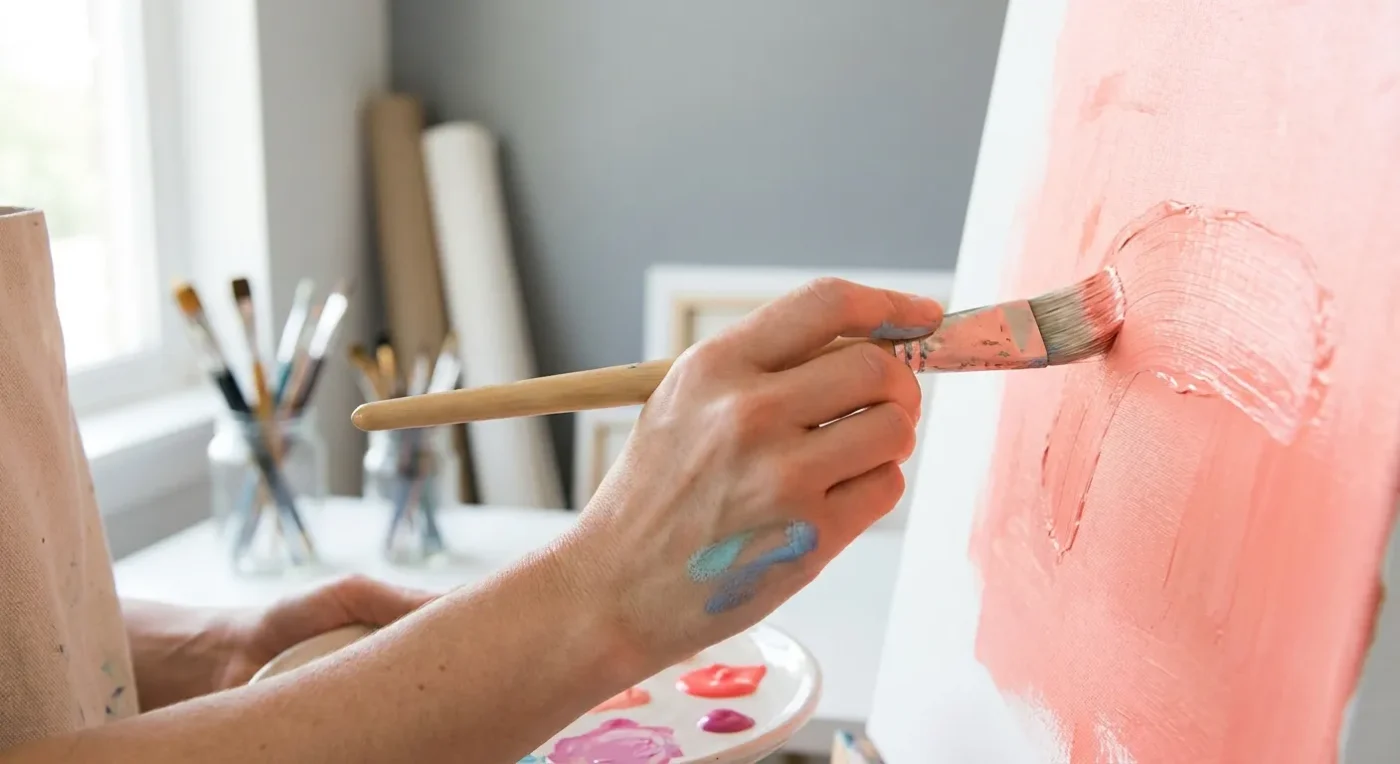

In an age where artificial intelligence can generate images with startling precision, there’s a profound “recalibration” happening in the art world. A significant trend emerging in 2025-2026 is the renewed emphasis on human-made art, rejecting AI’s sterile perfection in favor of visible humanity, emotion, and the beautiful imperfection of the artist’s hand. For hobbyist decorative painters and folk art enthusiasts, this is incredibly empowering. It’s a call to embrace human touch in art, to celebrate what makes your work uniquely yours, and to find confidence in the very qualities that distinguish it from a machine’s output.
Here at Paint Works Mag, we’ve always championed the individual journey of the artist. Now, more than ever, your intuition, risk-taking, and the authentic marks of your process are considered invaluable.
The Value of Visible Imperfections
Consider the allure of a hand-thrown ceramic pot versus a mass-produced, factory-perfect mug. The former possesses a soul, a story told through its subtle wobbles, its unique glaze drips, its very ‘un-perfection.’ This same principle applies directly to decorative painting. When collectors and enthusiasts increasingly value art that unmistakably shows the “human hand,” they are looking for:
- Visible Brushstrokes: The textural evidence of paint being applied, rather than a completely flat, homogenous surface. These marks reveal the artist’s presence.
- Subtle Variations: Slight shifts in color, saturation, or pattern that occur naturally through human application. For instance, a hand-painted floral motif will have more character than a printed one.
- Intuition and Risk: The moments where an artist deviates from a strict plan, guided by feeling, resulting in a unique flourish or unexpected detail. These choices are personal.
These aren’t ‘mistakes’; they are hallmarks of authenticity. They make your art relatable, imbued with a warmth and character that AI, for all its technical prowess, cannot replicate. In fact, celebrating the journey, not just the destination, becomes central to the artistic process.
Making Thinking Visible: Beyond the ‘How-To’
Art education today is challenged to make thinking more visible. This means moving beyond just the ‘how-to’ steps and delving into the ‘why.’ For decorative painters, this translates to:
- Conceptualization: What is the idea behind your piece? What emotion or story are you trying to convey? This initial thought process shapes the entire work.
- Conscious Intent: Why did you choose that specific color palette (perhaps influenced by “Warm Minimalism & Earthy Palettes” or the “Return to Color” trends)? Why that particular folk art motif? Understanding your choices adds depth.
- Process Exploration: Documenting or reflecting on your process. What challenges did you encounter? How did you solve them? These are valuable learning moments, and sharing them can inspire others.
- Authorship of Meaning: Understanding that your unique perspective and execution infuse your artwork with personal meaning that no algorithm can generate. Your interpretation of a trend, like “Art Deco Reimagined,” becomes distinctly yours.
By focusing on these elements, artists can truly make their work resonate. Furthermore, this approach helps to solidify their personal style and voice.
The Enduring Appeal of Folk Art
Folk art, by its very nature, has always been an ode to the human hand. It often originates from functional objects, handcrafted with accessible materials and passed down through generations. These pieces inherently carry the marks of their maker – the slight unevenness of a carved detail, the painterly quality of a decorative stroke, the variations in a repeated pattern. Indeed, folk art teaches us to appreciate the beauty in the handmade, making it a perfect example of why we should embrace human touch in art.
The history of folk art is rich with examples of artists creating stunning works without formal training, guided instead by tradition, community, and personal expression. This historical context provides a powerful foundation for today’s artists. For more on this, you might explore resources like the American Folk Art Museum, which showcases countless examples of this authentic artistry.
Cultivating Confidence in Your Unique Style
Many aspiring decorative painters struggle with the idea of ‘perfection.’ They compare their work to others, or even to a perceived ideal, and feel discouraged by perceived flaws. However, it’s precisely these unique qualities that define your artistic voice. To cultivate confidence and truly embrace human touch in art, consider these strategies:
- Practice Mindful Painting: Focus on the process, not just the outcome. Feel the brush against the surface, observe the paint’s flow. This mindful approach helps you connect with your work.
- Experiment Fearlessly: Try new techniques, color combinations, or motifs without the pressure of a perfect result. Sometimes the most beautiful discoveries happen accidentally.
- Keep a Sketchbook or Journal: Document your ideas, experiments, and reflections. This helps you track your growth and understand your creative journey.
- Study Masterpieces with a New Eye: Look at historical decorative arts or folk art pieces. Can you spot the visible brushstrokes? The subtle variations? Recognize that even masters had their unique ‘hand.’
Ultimately, your unique artistic fingerprint is your greatest asset. It’s what makes your work memorable and gives it soul.
Why Authenticity Outshines AI Perfection
Artificial intelligence excels at replication and generating technically flawless images based on vast datasets. However, it lacks lived experience, emotion, and the capacity for genuine spontaneous intuition. When you paint, you bring your mood, your memories, your skill level, and even your slight tremor of the hand to the canvas. These elements combine to create something that is uniquely human. This is why it’s so important to embrace human touch in art.
The current artistic landscape offers a distinct advantage to human creators. As AI-generated art becomes more prevalent, the value of genuinely handmade items will only increase. People seek connection, and a handmade object carries a piece of the maker’s spirit. It tells a story that an algorithm cannot replicate. This shift empowers artists to lean into their individuality.
For example, when exploring Crafting Vibrant Hues: Understanding Folk Art Color Palettes, your personal interpretation and application of colors will always differ from an AI’s rendering. Your choice of a particular shade, the way you blend it, or even a slight unevenness in its application, all contribute to the unique character of your piece.
Building Skills While Retaining Individuality
Developing your skills as a decorative painter doesn’t mean sacrificing your unique style. In fact, stronger skills allow you to express your individual vision more effectively. Learning foundational techniques provides a toolkit, but how you use those tools is where your personality emerges. For instance, mastering brush control gives you the ability to make intentional, expressive marks, rather than accidental ones. This enables you to truly embrace human touch in art with purpose.
We encourage artists to learn from others, take classes, and practice diligently. However, always remember to filter that learning through your own artistic lens. Ask yourself: “How can I adapt this technique to suit my style?” or “What personal twist can I add to this traditional motif?” This reflective practice is crucial for growth. You can find more inspiration by exploring Where to Find Folk Art Inspiration: Everyday Discoveries.
The Future is Handmade: A Call to Action
The art world is sending a clear message: the future is handmade. The desire for authentic, human-made objects is growing, and decorative artists are perfectly positioned to meet this demand. Your work, with its visible brushstrokes, subtle variations, and unique artistic decisions, possesses an inherent value that sterile perfection simply cannot match. It’s time to truly embrace human touch in art, confidently sharing your authentic creations.
Don’t be afraid to let your personality shine through your work. Celebrate the journey, the process, and the beautiful imperfections that make your art genuinely yours. This empowers you as an artist and connects you more deeply with those who appreciate your craft. For further reading on the broader impact of AI on creativity, consider articles from reputable sources like The Art Newspaper, which often discusses the evolving relationship between technology and art.
At Paint Works Mag, we believe every stroke tells a story. Your story is unique, and that is its greatest strength. So pick up your brush, let your hand guide you, and create something wonderfully, beautifully imperfect.
Frequently Asked Questions About Embracing Imperfection in Art
Why is it important to allow human elements in art?
Allowing human elements in art makes your work unique and relatable. These elements, such as visible brushstrokes or slight variations, convey authenticity and emotion that machine-generated art cannot replicate. It connects the viewer to the artist’s creative journey and personal expression.
How can I develop confidence in my unique artistic style?
To develop confidence, practice mindful painting, allowing yourself to experiment without fear of imperfection. Keep an art journal to track your progress and reflections. Also, study historical art to see how master artists incorporated their own distinct human touch, which can be very encouraging.
What is the difference between a mistake and a valued imperfection?
A mistake often arises from a lack of skill or understanding, leading to an unintended negative outcome. A valued imperfection, conversely, is a subtle mark or variation that occurs naturally through human application. It adds character and authenticity, distinguishing it from mass-produced perfection. It often reflects a conscious or intuitive choice by the artist.
How does folk art exemplify the beauty of the artist’s hand?
Folk art is a prime example of the beauty of the artist’s hand because it traditionally emphasizes handmade craftsmanship, often using accessible materials and techniques passed down through generations. These pieces inherently display unique characteristics, such as slight irregularities and visible tool marks, which are celebrated as part of their charm and heritage.
Will focusing on human qualities in art remain relevant with AI advancements?
Yes, focusing on human qualities in art will become even more relevant with AI advancements. As AI produces increasingly perfect images, the value of art that clearly shows the human hand, with its inherent imperfections and emotional depth, will only grow. People seek connection and authenticity, which human-made art inherently provides.