
For hobbyist decorative painters and folk art enthusiasts, a common question is: where do you find your next great idea? The truth is, folk art inspiration sources are all around us, often hidden in plain sight. Cultivating an observant eye and an open mind can transform everyday experiences into a rich wellspring of creative concepts, making every walk, chore, or conversation a potential spark for your next masterpiece. Indeed, embracing curiosity helps artists discover new avenues for their craft. This guide will explore numerous pathways to uncover artistic potential in the ordinary.
The World Around You: Everyday Objects and Nature
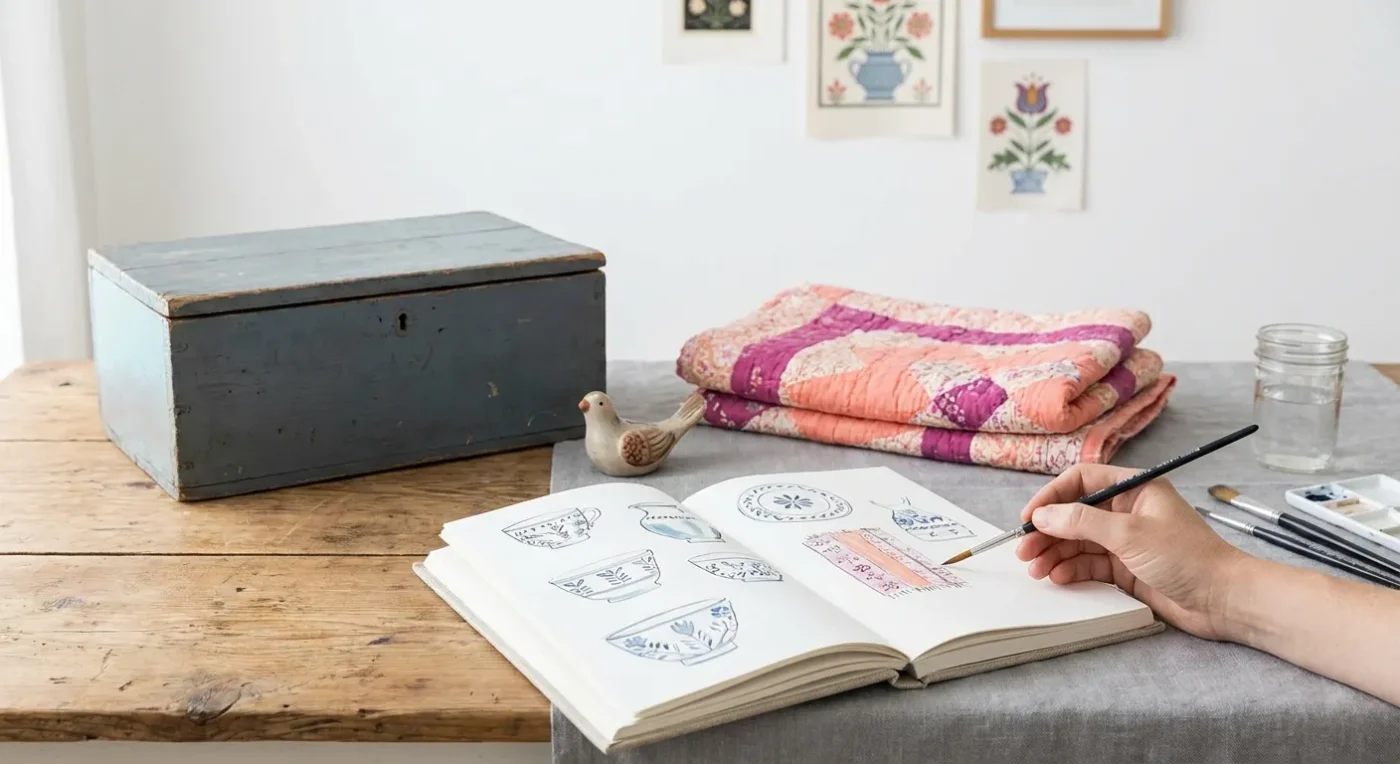
One of the most accessible folk art inspiration sources is the immediate environment. Look at the patterns on a kitchen towel, the shape of a simple ceramic mug, or the design on a vintage postcard. These everyday objects, often overlooked, can hold delightful motifs waiting to be reinterpreted. For instance, a simple checkerboard pattern on a placemat might inspire a border design. Similarly, the silhouette of a teacup could be simplified into a charming folk art element. Observing these small details closely reveals their artistic potential.
Nature is another boundless source. Observe the intricate veins of a leaf, the swirling patterns in wood grain, or the vibrant hues of a wildflower. Folk art often simplifies and stylizes these natural elements, transforming them into iconic designs like birds, flowers, and vines. Moreover, the changing seasons offer a dynamic palette of colors and forms. Think of the bright reds and oranges of autumn leaves or the delicate blossoms of spring. Even the textures of old stone walls or the way light plays on a weathered fence can offer abstract ideas for backgrounds or decorative borders. Training yourself to see the artistic potential in the mundane is a powerful step in developing your unique folk art style.
Consider a walk through a local park. You might notice the specific shape of a tree branch, the way petals unfurl on a rose, or the varied textures of bark. These observations, when translated through the lens of folk art, become simplified, bold, and often whimsical. Furthermore, collecting natural elements like pressed leaves or interesting stones can serve as tangible references in your studio. These natural elements are not just pretty; they provide a foundation for countless creative endeavors. Consequently, keeping a small sketchbook or taking photos during these walks can be incredibly beneficial for capturing fleeting ideas.
History, Culture, and Personal Stories
Beyond immediate surroundings, delve into history and culture to uncover more folk art inspiration sources. Research traditional folk art from different regions – the geometric patterns of a quilt, the symbols in a piece of pottery, or the narratives depicted in historical paintings. These rich traditions offer a wealth of motifs, color schemes, and storytelling methods. For example, Pennsylvania Dutch folk art is renowned for its vibrant ‘hex signs’ and stylized birds, while Scandinavian folk art often features intricate floral patterns known as ‘rosemaling’. Studying these diverse styles can broaden your artistic vocabulary significantly.
Additionally, your own life experiences and personal stories can be a profound wellspring. Think about family heirlooms, childhood memories, or significant events. Folk art often reflects community and personal narratives; infusing your work with elements that are meaningful to you will create pieces that are not only beautiful but also deeply authentic and resonant. Your art can become a visual diary, celebrating your unique perspective on the world. Perhaps a grandmother’s favorite flower could become a recurring motif, or a cherished family vacation spot could inspire a landscape scene rendered in a folk art style. In fact, these personal connections imbue your art with unique character.
Exploring local history museums or historical societies can also provide a wealth of ideas. Old photographs, domestic artifacts, and regional crafts often display charming folk art motifs that reflect the daily lives and beliefs of past generations. Furthermore, understanding the cultural context of these historical pieces can deepen your appreciation and inform your own interpretations. Many folk art forms emerged from practical needs, such as decorating furniture or household items, which adds another layer of authenticity to their designs. Therefore, historical research is not just academic; it’s a creative journey.
Literature, Folklore, and Storytelling
Another rich area for discovering artistic ideas comes from literature and folklore. Traditional fairy tales, myths, and local legends often feature vivid imagery and memorable characters that translate beautifully into folk art. Consider the whimsical creatures of a children’s story or the symbolic elements within a regional folktale. These narratives provide a ready-made framework for creating engaging and imaginative painted pieces. Moreover, the allegorical nature of many folktales allows for creative interpretation and personal expression. Consequently, reading widely can spark countless visual concepts.
Think about classic fables like Aesop’s or the Brothers Grimm. Their animal characters, moral lessons, and fantastical settings offer endless possibilities for stylized depictions. Similarly, regional folklore often contains unique creatures or symbolic representations that are perfect for folk art projects. For instance, the ‘jackalope’ of American folklore or the ‘gnomes’ of European tradition could inspire delightful painted figures. Infusing your work with these storytelling elements adds depth and narrative interest. In addition, illustrating scenes from your favorite stories can be a rewarding way to develop a series of related pieces.
Even poetry can serve as a powerful catalyst for visual ideas. The descriptive language and emotional resonance of a poem can evoke specific colors, forms, and compositions. Furthermore, exploring different cultural storytelling traditions, such as Native American myths or African proverbs, can introduce you to entirely new visual vocabularies and symbolic meanings. These diverse sources of inspiration encourage a global perspective on folk art and its universal appeal. Ultimately, storytelling through paint connects artists with their audience on a deeper level.
Travel and Observation: Broadening Your Horizons
Travel, whether near or far, presents unparalleled opportunities to find new artistic inspiration. Visiting different towns, cities, or countries exposes you to unique architectural styles, local customs, and regional crafts. The colors of a market stall, the patterns on a traditional garment, or the design of a wrought-iron gate can all spark new ideas. Observing the world with a painter’s eye means looking beyond the obvious and seeking out the distinctive details that characterize a place. In fact, even a day trip to a neighboring community can reveal surprising visual treasures.
When traveling, make an effort to visit local museums, art galleries, and craft markets. These venues often showcase indigenous folk art and craft traditions that are specific to the region. For example, Mexican folk art is vibrant and diverse, featuring intricate papel picado, colorful alebrijes, and symbolic pottery. Japanese folk art, known as ‘mingei’, emphasizes utilitarian beauty and often incorporates natural materials and simple forms. Studying these regional variations can significantly enrich your understanding of the genre and provide fresh perspectives for your own work. Moreover, interacting with local artists and artisans can offer valuable insights into their creative processes.
Even if extensive travel isn’t possible, virtual tours and documentaries can serve as excellent substitutes. Many museums around the world offer online collections and exhibitions, allowing you to explore diverse artistic traditions from the comfort of your home. Websites like The Metropolitan Museum of Art or Smithsonian Magazine’s Arts & Culture section provide vast digital resources for exploring global art forms. These digital expeditions can be just as inspiring as physical travel, offering a window into different cultures and their unique artistic expressions. Consequently, geographical limitations need not hinder your quest for creative input.
Developing an Observational Practice
Cultivating an observant eye is perhaps the most crucial skill for finding consistent folk art inspiration sources. This involves more than just looking; it means actively seeing, analyzing, and interpreting the visual information around you. Start by carrying a small sketchbook or a camera wherever you go. Jot down notes, make quick sketches, or snap photos of anything that catches your eye – a peculiar shadow, an interesting color combination, or a unique texture. These small acts of documentation create a personal visual library that you can draw upon later. Indeed, this practice transforms everyday experiences into artistic data.
Try specific exercises to sharpen your observational skills. For example, dedicate five minutes each day to intently observing a single object, noting all its details, colors, and forms. Alternatively, take a ‘color walk’ where you focus solely on identifying and appreciating different color palettes in your environment. These focused exercises train your brain to notice details that might otherwise be overlooked. Furthermore, regularly reviewing your sketches and photos helps to consolidate these observations and allows new connections to emerge. Over time, this consistent practice will make finding inspiration a more intuitive process.
Another effective technique is to ‘deconstruct’ what you see. When you encounter an interesting pattern or design, try to break it down into its fundamental shapes, lines, and colors. How could it be simplified? How could its elements be rearranged? This analytical approach is particularly useful for folk art, which often involves stylization and simplification. Moreover, don’t be afraid to experiment with different mediums for capturing your observations. Sometimes, a quick watercolor sketch or a charcoal drawing can reveal aspects that a photograph might miss. Ultimately, developing this robust observational practice ensures a continuous flow of creative ideas.
Curating Your Inspiration: Tools and Techniques
Once you start discovering numerous artistic ideas, effective curation becomes essential. Create an ‘inspiration journal’ or a digital mood board to organize your findings. This could be a physical sketchbook filled with drawings, collages, and written notes, or a digital folder on your computer with images, links, and design ideas. Categorize your entries by theme, color, or motif to make them easily accessible. For example, you might have sections for ‘floral patterns,’ ‘animal motifs,’ or ‘historical textiles.’ This systematic approach helps prevent ideas from getting lost or forgotten.
Don’t just collect; actively engage with your collected inspiration. Regularly review your journal or mood board, looking for connections between seemingly disparate elements. Perhaps a color palette from a vintage poster could be combined with a bird motif from a nature photograph. Experiment with different combinations and interpretations. Furthermore, don’t be afraid to mix and match influences from various sources. Folk art often thrives on eclecticism, blending elements from different traditions and personal experiences. This playful approach encourages innovation and helps you develop a unique artistic voice.
Consider creating ‘design briefs’ for yourself. Based on your collected inspiration, challenge yourself to create a piece that incorporates specific elements or explores a particular theme. For instance, you might set a goal to paint a piece using only elements found in your garden, or to create a design inspired by a historical event. These self-imposed challenges push your creative boundaries and encourage you to translate inspiration into tangible art. Ultimately, actively engaging with your ideas transforms raw observations into finished projects. Consistent practice with these techniques ensures a steady stream of creative output.
Conclusion: Embrace the Everyday for Endless Inspiration
By consciously seeking out and interpreting these varied folk art inspiration sources, you’ll never be short on ideas. Embrace curiosity, keep a sketchbook handy, and allow the world to fill your creative spirit. Every corner of your life, from the patterns on a favorite mug to the stories in an old book, holds potential for your next decorative painting project. Remember, the journey of an artist is one of continuous discovery. So, open your eyes, engage your mind, and let the everyday wonders around you ignite your artistic passion. Your unique perspective is what truly makes your folk art shine.
FAQ: Where can I find ideas for folk art projects?
You can find ideas for folk art projects everywhere! Look at everyday objects like kitchenware or textiles, observe nature’s patterns and colors, explore historical and cultural traditions, and draw from your own personal stories and memories. Additionally, literature, folklore, and even travel can provide a wealth of concepts.
FAQ: How do I develop my eye for artistic motifs?
Developing an eye for artistic motifs involves active observation. Carry a sketchbook, take photos of interesting details, and practice daily observation exercises. Focus on breaking down what you see into basic shapes and colors. Regularly review your collected observations to find new connections and patterns.
FAQ: Can historical folk art inspire modern pieces?
Absolutely! Historical folk art offers a rich tapestry of motifs, color schemes, and storytelling methods that can be reinterpreted for modern decorative painting. Studying traditional patterns from different cultures provides a strong foundation for developing contemporary folk art designs with a timeless appeal.
FAQ: What role do personal stories play in decorative art?
Personal stories and experiences are incredibly important in decorative art. Infusing your work with elements meaningful to you – such as family heirlooms or childhood memories – creates pieces that are not only beautiful but also deeply authentic and resonant. Your art becomes a visual reflection of your unique perspective.
FAQ: How can I organize my collected artistic ideas?
To organize your collected artistic ideas, create an inspiration journal or a digital mood board. Categorize your findings by theme, color, or motif. Regularly review your collection, looking for connections and experimenting with different combinations. This systematic approach helps you manage and utilize your creative insights effectively.
Explore more: More from Paint Works Mag