
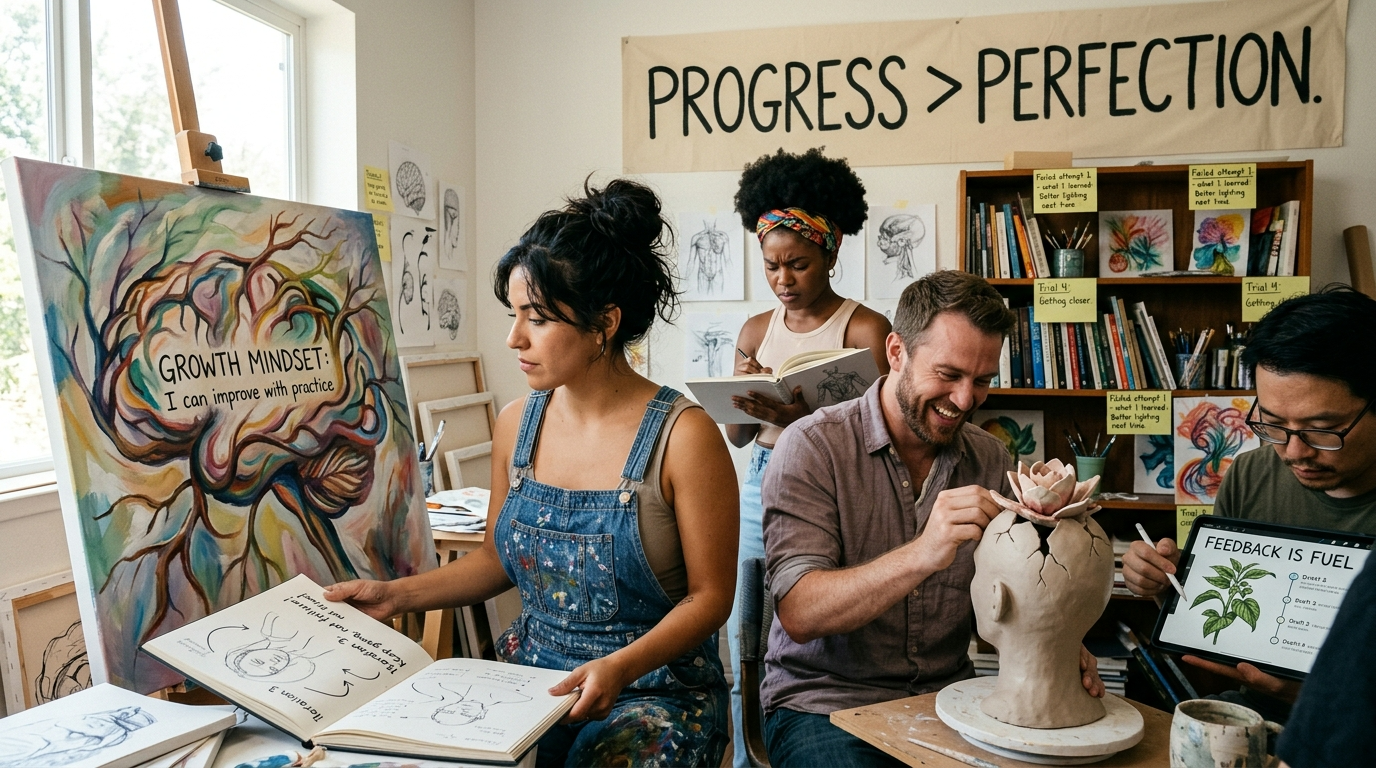

Many artists believe talent alone determines success. However, long-term creative growth often depends on something deeper. The perspective known as a growth mindset artists adopt can dramatically influence how skills develop over time.
A growth mindset focuses on learning, experimentation, and continuous improvement. Instead of fearing mistakes, artists view them as opportunities to grow. This attitude allows painters, illustrators, and creators to push beyond creative limitations.
When artists embrace the growth mindset artists practice, they become more open to challenges. Instead of avoiding difficult subjects or techniques, they approach them with curiosity.
Over time, this mindset leads to stronger skills, greater confidence, and a clearer artistic voice. This guide explores how adopting this mindset can transform artistic development and unlock long-term creative progress.
Understanding the Growth Mindset in Art
A growth mindset is the belief that abilities improve through effort and learning. This idea contrasts with a fixed mindset, which assumes talent is permanent and unchangeable.
Artists who adopt the growth mindset artists rely on approach challenges differently. They see each painting as a learning experience rather than a final judgment of their ability.
Instead of worrying about producing perfect work, these artists focus on improvement. They analyze mistakes and adjust techniques during the next attempt.
This shift in thinking encourages experimentation. Painters try new materials, explore unfamiliar subjects, and develop new approaches.
Over time, the growth mindset helps artists build resilience and confidence while developing stronger creative skills.
Why Mindset Influences Artistic Development
Mindset shapes how artists respond to challenges and setbacks.
Creative work often involves trial and error. Paintings may fail before they succeed. However, artists with a fixed mindset may interpret these struggles as signs of failure.
In contrast, those who embrace the growth mindset artists approach view challenges as valuable feedback.
Instead of giving up, they ask questions:
- What technique caused this problem?
- How can the next attempt improve?
- What new skill should I practice?
These questions encourage learning. As a result, artists develop stronger problem-solving abilities and greater technical control.
Because of this mindset shift, artistic progress becomes more consistent and sustainable.
Embracing Mistakes as Creative Lessons
Many artists fear making mistakes. However, mistakes often provide the most valuable learning opportunities.
When painters experiment with new techniques, unexpected results frequently occur. Sometimes these results reveal new textures, color effects, or compositional ideas.
Artists practicing the growth mindset artists rely on treat mistakes as information rather than failure.
They analyze what happened and identify ways to improve.
For example, a color mixture may produce an unexpected shade. Instead of discarding the result, the artist might explore how that color could enhance future paintings.
Over time, this mindset encourages experimentation and discovery. Creative breakthroughs often emerge from mistakes that artists are willing to examine.
Building Confidence Through Practice
Confidence in art rarely appears instantly. Instead, it develops gradually through consistent practice.
Artists who follow the growth mindset artists use focus on repetition and skill-building rather than perfection.
Small daily exercises can significantly strengthen technical ability.
Practice fundamental techniques
Brush control, color mixing, and shading improve with repetition.
Create quick studies
Short studies help artists explore new techniques without pressure.
Reflect on progress
Reviewing past work reveals improvement that might otherwise go unnoticed.
Each practice session builds experience and confidence. Over time, these small improvements accumulate into major skill development.
Learning From Other Artists
Studying the work of other artists helps expand creative understanding.
Instead of comparing themselves negatively, artists with a growth mindset treat others as learning resources.
They analyze how experienced painters handle color, composition, and brushwork.
Artists who adopt the growth mindset artists rely on often ask questions such as:
- How did the artist achieve this texture?
- What colors create this lighting effect?
- How is the composition structured?
By analyzing techniques, artists expand their creative toolbox.
Eventually, these influences blend into a unique personal style.
Setting Realistic Creative Goals
Goal setting helps artists maintain motivation and direction.
However, goals should focus on improvement rather than perfection.
Artists who practice the growth mindset artists rely on often create skill-based goals.
Examples include:
- Learning a new painting technique
- Practicing color blending
- Completing a series of small studies
These goals encourage progress without overwhelming pressure.
Breaking large ambitions into smaller steps makes artistic growth more manageable.
As each goal is achieved, confidence naturally increases.
Overcoming Creative Blocks
Creative blocks affect artists at every experience level. Sometimes inspiration disappears, leaving artists unsure how to proceed.
A growth mindset helps artists navigate these periods more effectively.
Instead of waiting for inspiration, artists focus on action. They practice small exercises, explore new subjects, or study reference images.
Artists embracing the growth mindset artists rely on remain curious during creative blocks.
Experimentation often restores creative momentum.
By staying active, painters avoid the frustration that often accompanies inactivity.
Creative flow often returns once the artist begins experimenting again.
Developing Patience With Artistic Progress
Artistic growth takes time. Mastery rarely happens quickly.
Many beginners become discouraged when their work does not match their expectations.
However, artists practicing the growth mindset artists rely on understand that improvement requires patience.
Instead of comparing themselves to experts, they compare their work to earlier pieces.
This comparison reveals steady improvement.
Artists who remain patient allow their skills to evolve naturally.
Over time, persistence leads to noticeable progress.
Strengthening Creativity Through Exploration
Exploration plays a crucial role in artistic growth.
Artists with a growth mindset constantly experiment with new techniques and ideas.
They may try different painting mediums, color palettes, or composition styles.
Artists embracing the growth mindset artists rely on often explore unfamiliar subjects to challenge their abilities.
Painting outside one’s comfort zone encourages creative flexibility.
New techniques also reveal unexpected possibilities.
Exploration keeps the creative process exciting and prevents artistic stagnation.
Building Resilience in the Creative Process
Resilience is essential for long-term artistic success.
Every artist experiences criticism, failed experiments, and frustrating painting sessions.
A growth mindset helps artists remain motivated during these challenges.
Instead of viewing criticism as personal failure, artists treat it as constructive feedback.
Artists who adopt the growth mindset artists rely on approach criticism with curiosity.
They ask how feedback can strengthen their work.
This resilience allows artists to continue improving even during difficult periods.
Creative success often depends on persistence more than talent.
Creating a Supportive Learning Environment
Environment also influences mindset and creativity.
Artists benefit from surrounding themselves with supportive communities and resources.
Art classes, workshops, and online communities provide opportunities for learning and feedback.
Artists practicing the growth mindset artists rely on often share their work with others to gain new perspectives.
Supportive communities encourage experimentation and reduce fear of failure.
Learning alongside other artists accelerates creative growth.
Collaboration often inspires new ideas and techniques.
Conclusion
Artistic growth depends on more than technical ability. Mindset plays a crucial role in how artists approach challenges, learning, and creative exploration.
A growth mindset encourages experimentation, resilience, and continuous improvement. Instead of fearing mistakes, artists treat them as valuable learning experiences.
By focusing on practice, goal setting, and exploration, painters gradually strengthen their skills and confidence.
Artists who adopt the growth mindset artists rely on transform obstacles into opportunities for growth.
Over time, this mindset supports stronger artistic skills, clearer creative direction, and a deeper connection to the creative process.
Developing a growth mindset may be one of the most powerful steps any artist can take toward long-term success.
FAQ
1. What does a growth mindset mean for artists?
It means believing artistic skills improve through practice, learning, and experimentation rather than relying solely on natural talent.
2. How can artists develop this mindset?
Artists can focus on learning from mistakes, practicing regularly, and viewing challenges as opportunities for improvement.
3. Why do some artists struggle with confidence?
Many artists compare themselves to experienced professionals instead of focusing on their own progress.
4. Can beginners benefit from this approach?
Yes. Beginners often improve faster when they view each project as a learning experience rather than a test of ability.
5. How does this mindset improve creativity?
It encourages experimentation, exploration, and curiosity, which often lead to new techniques and creative discoveries.