
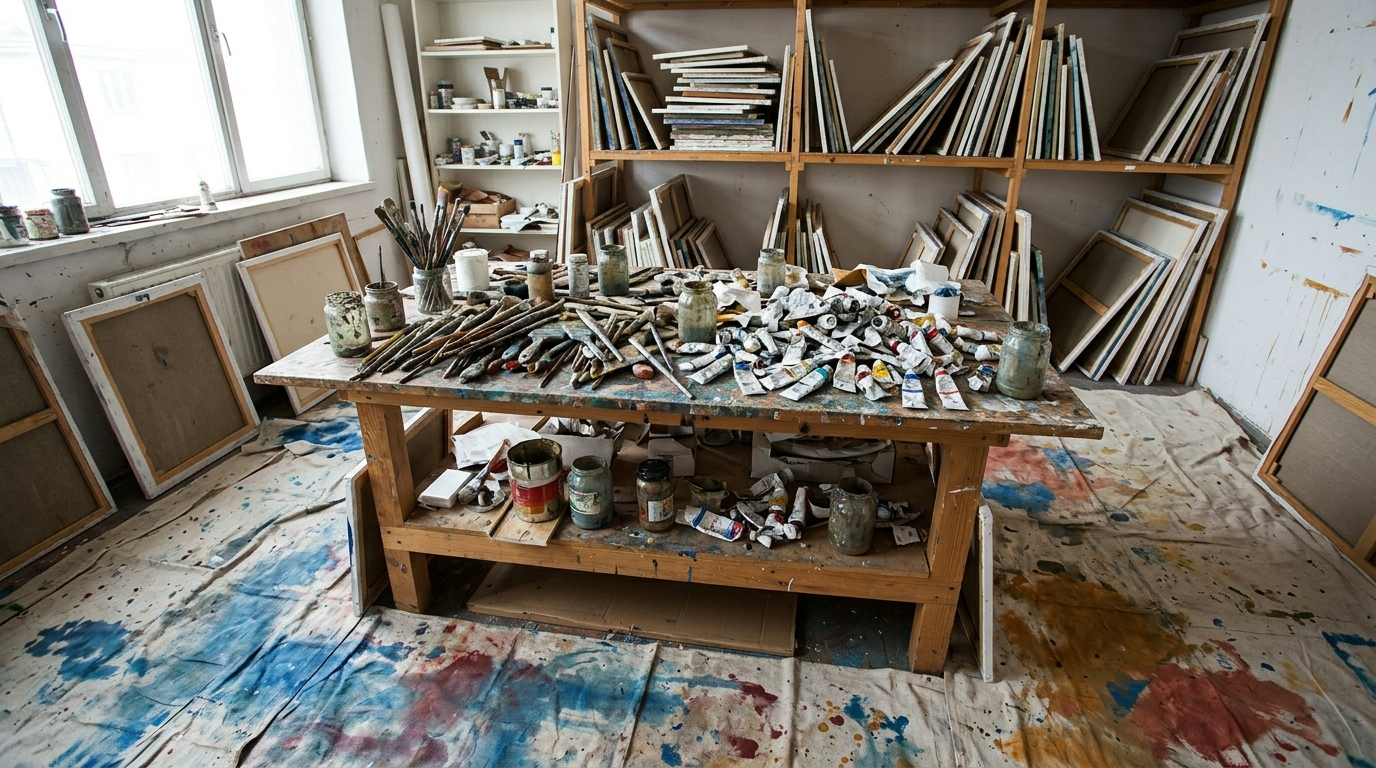

A well-arranged workspace can transform how artists create. When painters organize painting studio environments carefully, they often discover improved focus and stronger creative direction. An organized space reduces distractions and allows artists to concentrate on developing their techniques.
Cluttered studios can slow down creative flow. Searching for brushes, paints, or reference materials interrupts the rhythm of painting. However, when artists organize painting studio layouts thoughtfully, they create a space that supports experimentation and clarity.
A structured environment also helps artists recognize patterns in their work. Over time, these patterns contribute to a recognizable artistic style. This guide explains practical ways to arrange your studio so creativity flows more naturally and artistic identity becomes clearer.
Why Studio Organization Influences Artistic Style
Creative environments influence how artists think and work. A chaotic workspace can make it harder to focus on artistic goals. Meanwhile, a carefully arranged studio encourages consistent practice and experimentation.
When artists organize painting studio spaces effectively, they remove unnecessary obstacles from the creative process. Supplies remain easy to access, and the workspace supports uninterrupted painting sessions.
Organization also allows artists to evaluate their work more clearly. When tools and materials stay arranged in predictable places, the mind focuses on creative decisions instead of logistical challenges.
Additionally, a structured studio encourages routine. Consistent routines often lead artists to refine techniques and gradually develop their personal artistic voice.
Design a Workspace That Encourages Creativity
A productive painting space should feel comfortable and inspiring. Before arranging supplies, artists should think about how they use their workspace.
Choose a dedicated painting area
A dedicated area signals the brain that it is time to create. Even a small corner can become an effective studio.
Arrange furniture for easy movement
Painters should move freely between palettes, brushes, and canvases. Smooth movement keeps creative momentum strong.
Prioritize natural lighting
Good lighting improves color accuracy and reduces eye strain. Natural light often works best for painting.
Artists who carefully organize painting studio layouts often notice increased productivity and more enjoyable painting sessions.
A comfortable environment supports creative exploration.
Create Zones for Different Painting Tasks
Many artists benefit from dividing their workspace into activity zones. Each zone supports a different stage of the painting process.
Painting zone
This area contains the easel, brushes, and primary paints. It should remain clean and free of unnecessary objects.
Preparation zone
Artists can mix colors and prepare surfaces here. Having a separate area keeps the main painting space tidy.
Reference zone
Reference photos, sketches, and inspiration boards belong in this area.
When painters organize painting studio spaces using zones, their workflow becomes more efficient. Each activity occurs in a dedicated area, reducing confusion.
Over time, this structure improves concentration and productivity.
Arrange Tools for Easy Access
Efficient tool placement helps maintain creative momentum. Artists should place frequently used tools within arm’s reach.
Brush holders, paint organizers, and palette trays simplify tool management.
Grouping similar items together also reduces time spent searching for materials. For example, keeping all brushes in one container prevents clutter.
Painters who organize painting studio storage carefully often experience smoother creative sessions.
Quick access to tools allows artists to stay focused on the artwork rather than the workspace.
Small adjustments can dramatically improve efficiency.
Use Storage Solutions to Reduce Clutter
Clutter distracts the mind and slows down creative work. Effective storage keeps the studio clean while protecting supplies.
Shelves for paint and mediums
Shelving units help display paints in an organized way.
Drawer systems for small tools
Small compartments keep pencils, palette knives, and erasers sorted.
Containers for brushes
Separate containers help protect brush shapes and extend their lifespan.
When artists consistently organize painting studio storage systems, they maintain a cleaner and more inspiring environment.
A tidy space encourages longer and more productive painting sessions.
Display Your Work for Inspiration
Displaying finished or in-progress paintings can help artists evaluate their creative direction.
Seeing multiple works together reveals patterns in color choices, subjects, and techniques.
Artists often gain valuable insights when they observe their work from a distance.
Wall displays, pinboards, or simple clip systems can showcase sketches and paintings.
When painters organize painting studio walls intentionally, they create a visual gallery that supports reflection and inspiration.
This practice also helps artists recognize the elements shaping their personal style.
Maintain a Clean Workspace
Cleanliness supports both creativity and efficiency.
Paint spills, dried palettes, and scattered supplies can quickly overwhelm a studio.
Regular cleaning routines keep the workspace ready for the next painting session.
Artists should clean brushes immediately after use and wipe down surfaces regularly.
Maintaining a tidy workspace reinforces the habit to organize painting studio spaces consistently.
A clean environment promotes focus and prevents unnecessary distractions.
Artists often feel more motivated when their workspace feels inviting.
Keep a Creative Planning Area
Many artists benefit from a small planning area within the studio.
This area may include sketchbooks, color studies, and idea boards.
Planning areas allow painters to experiment with concepts before committing them to canvas.
Artists who organize painting studio layouts with planning spaces often develop clearer artistic direction.
Sketching ideas and testing compositions in a dedicated area reduces mistakes during the final painting process.
Creative planning encourages experimentation and thoughtful decision-making.
Use Inspiration Boards to Guide Style Development
Inspiration boards help artists collect ideas that influence their work.
These boards may include photographs, color palettes, or sketches.
Visual references help clarify artistic goals and stylistic preferences.
Artists who organize painting studio inspiration boards thoughtfully can quickly review creative influences.
Over time, recurring visual themes become easier to identify.
These themes often contribute to the development of a unique painting style.
Inspiration boards also motivate artists during moments of creative uncertainty.
Establish Daily Studio Habits
Consistent habits keep the studio organized over time.
Artists should develop routines that maintain order before and after each painting session.
Simple actions such as cleaning brushes, returning tools, and wiping surfaces take only a few minutes.
However, these habits prevent clutter from accumulating.
When painters consistently organize painting studio spaces through daily routines, they create an environment that supports long-term creativity.
Habitual organization also reinforces discipline within the artistic process.
Review Your Studio Setup Regularly
Creative needs change as artists develop new techniques and ideas.
Therefore, studio layouts should evolve as well.
Artists should review their workspace periodically to identify improvements.
Maybe certain tools need easier access, or additional storage solutions might improve efficiency.
Painters who regularly organize painting studio arrangements keep their workspace aligned with their artistic goals.
Flexibility ensures the studio continues to support creative growth.
A studio that evolves with the artist remains a powerful creative tool.
Conclusion
A thoughtfully arranged studio supports both creativity and artistic growth. When artists remove clutter and arrange tools carefully, they create an environment that encourages focus and experimentation.
Dividing the studio into functional zones improves workflow and reduces distractions. Meanwhile, organized storage and inspiration boards help painters recognize patterns in their work.
Regular cleaning habits and thoughtful planning areas also support a productive creative routine.
Artists who consistently organize painting studio environments often experience clearer artistic direction and stronger creative confidence.
Over time, a well-structured studio becomes more than a workspace. It becomes a supportive environment where artistic style naturally develops and evolves.
FAQ
1. Why does studio organization matter for artists?
An organized studio reduces distractions and allows artists to focus on creative work, which improves productivity and artistic clarity.
2. What is the best way to store painting supplies?
Shelves, drawers, and containers help keep supplies visible and easy to access while protecting tools from damage.
3. How often should artists reorganize their studio?
Artists should review their workspace every few months or whenever their creative process changes significantly.
4. Can a small space function as an effective art studio?
Yes. Even a small corner can become a productive workspace when arranged thoughtfully with essential tools and good lighting.
5. What role do inspiration boards play in creative work?
Inspiration boards help artists collect ideas, track visual themes, and maintain motivation while developing their personal artistic direction.