
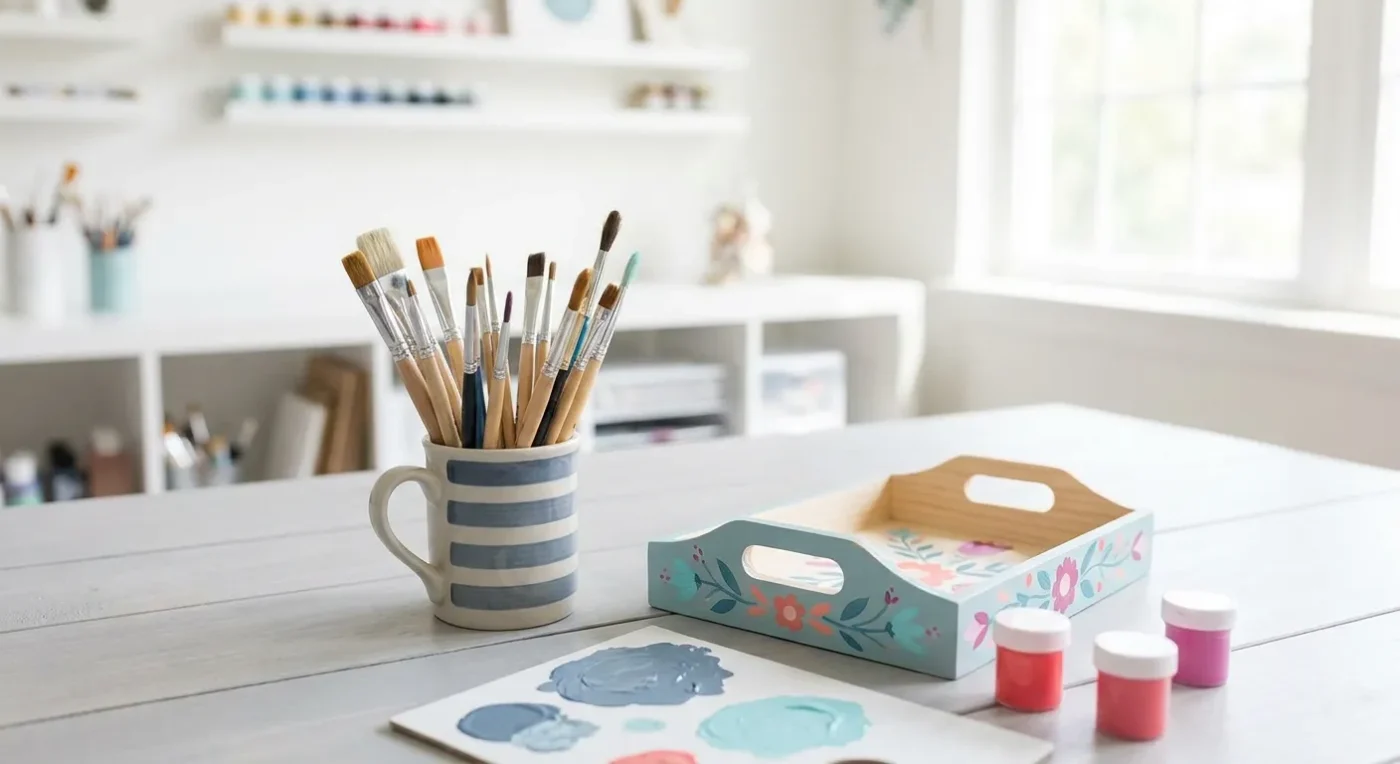

For any hobbyist decorative painter, the right tools are just as crucial as the technique itself. When it comes to creating beautiful folk art home decor, having the best brushes for folk art can make all the difference in achieving those crisp lines, delicate details, and smooth blends. This guide will walk you through building your essential brush kit, ensuring you have the perfect instruments to bring your creative visions to life.
At Paint Works Mag, we’re committed to providing practical, fact-based guidance that empowers you. Understanding your tools is a fundamental step in building confidence and mastering decorative painting. With painting remaining a top home improvement project for 2026 and DIY enthusiasts increasingly opting for creative projects, equipping yourself with the right brushes is an investment in your artistic journey.
Why Your Brushes Matter for Decorative Painting
Just as a chef needs the right knives, a decorative painter needs a diverse set of brushes. Each brush type is designed for specific applications, allowing you to execute various folk art strokes and details with precision. Using the wrong brush can lead to frustration and less-than-ideal results. Investing in quality brushes also means they’ll last longer with proper care, a sustainable practice that extends to all aspects of crafting, including responsible material usage.
Your Essential Folk Art Brush Types
Here are the core brushes you’ll want in your folk art kit, along with their primary uses:
1. The Round Brush (Sizes #2, #4, #6)
- Purpose: Versatile for general painting, filling small areas, creating teardrop shapes, and basic scrollwork. Its pointed tip allows for fine lines, while varied pressure can create broader strokes.
- Why it’s essential: A workhorse for many folk art designs, from flower petals to small leaves and basic outlines. It’s excellent for the comma strokes often found in Rosemaling or Swedish folk art.
2. The Liner/Striper Brush (Sizes #00, #0, #1)
- Purpose: Designed for very fine lines, delicate details, lettering, and intricate scrollwork. It holds a good amount of paint for its size, allowing for continuous lines.
- Why it’s essential: Indispensable for adding tiny details like veins on leaves, outlines, cross-hatching, or the fine tendrils in traditional folk art motifs. If you’re doing Norwegian Rosemaling, this is crucial for the delicate C and S strokes.
3. The Flat Brush (Sizes 1/4 inch, 1/2 inch)
- Purpose: Ideal for base coating, filling larger areas, sharp edges, and creating clean, consistent strokes. It’s also used for shading and blending techniques.
- Why it’s essential: Great for quickly covering larger sections of your project, creating crisp borders, or executing square-edged folk art elements. It can also be used for dry brushing textures.
4. The Filbert Brush (Sizes #4, #6, #8)
- Purpose: A flat brush with an oval-shaped tip, the filbert combines the coverage of a flat brush with the softer edges of a round brush. Consequently, it’s perfect for blending, creating rounded shapes, and soft transitions.
- Why it’s essential: This brush is invaluable for painting petals, leaves, and other elements requiring a soft, feathered edge. It’s also excellent for blending colors seamlessly, which is often seen in nature-inspired folk art motifs.
5. The Angle Brush (Sizes 1/4 inch, 3/8 inch)
- Purpose: Featuring an angled tip, this brush is exceptional for painting crisp lines, sharp edges, and detailed strokes like leaves and flower petals. Its unique shape allows for precise control, especially when working with curved designs.
- Why it’s essential: For instance, the angle brush is perfect for creating comma strokes with a sharp point or for painting ribbon-like elements. Many decorative painters find it indispensable for achieving clean, defined shapes in their work.
6. The Deerfoot Stippler (Sizes 1/4 inch, 3/8 inch)
- Purpose: This short, stiff brush with a blunt, slightly angled tip is designed for creating textured effects, stippling, and dabbing. It’s often used to simulate fur, foliage, or other textured surfaces.
- Why it’s essential: The deerfoot stippler adds charming texture to folk art pieces, such as the fluffy texture of animal fur or the dense appearance of shrubbery. It’s a specialized brush that truly enhances the character of your decorative painting.
7. The Fan Brush (Small to Medium)
- Purpose: With its splayed bristles, the fan brush is excellent for creating natural textures like grass, trees, and water. It can also be used for softening edges and blending colors lightly.
- Why it’s essential: This brush is fantastic for adding organic details to landscapes or rustic scenes within your folk art projects. It provides a unique textural element that other brushes cannot easily replicate.
Selecting Quality Brushes for Folk Art
Choosing good quality brushes is fundamental. Look for brushes with bristles that maintain their shape, whether synthetic or natural hair, depending on your paint type. Synthetic brushes are generally excellent for acrylics, offering durability and easy cleanup. Natural hair brushes, conversely, are often preferred for oils due to their ability to hold more paint and create smoother blends. A good brush will spring back into shape after each stroke, providing consistent results. Moreover, comfortable handles are important for extended painting sessions.
While it might be tempting to opt for the cheapest option, investing a little more in your tools will save you frustration and improve your results in the long run. The mastery of techniques often goes hand-in-hand with reliable equipment. For more detailed information on various art materials, you might find our Glossary of Terms helpful.
Caring for Your Folk Art Brushes
Proper brush care is paramount to extending the life of your tools and ensuring they perform optimally. After all, even the best brushes for folk art won’t last if neglected. Here are some key tips:
- Clean Immediately: Always clean your brushes immediately after use. Acrylic paints, in particular, dry quickly and can permanently damage bristles if left uncared for.
- Use Appropriate Cleaners: For water-based paints, warm water and mild soap are sufficient. For oil paints, use a brush cleaner or mineral spirits, followed by soap and water.
- Rinse Thoroughly: Ensure all paint is removed from the bristles and near the ferrule (the metal part connecting bristles to the handle). Paint left in the ferrule can cause bristles to splay.
- Reshape and Dry: Gently reshape the bristles to their original form. Store brushes flat or bristle-side up to prevent water from seeping into the ferrule and loosening the glue.
- Avoid Soaking: Do not leave brushes soaking in water for extended periods, especially bristle-down, as this can bend the bristles and damage the handle.
By following these simple care instructions, your painting tools will remain in excellent condition, ready for your next project. This diligent approach is a hallmark of any dedicated artist, much like the care involved in upcycling everyday objects with decorative paint.
Expanding Your Folk Art Brush Collection
As you gain experience, you might discover specialized brushes that cater to particular techniques or styles within folk art. For example, some artists prefer a dagger striper for very long, flowing lines, while others might explore different stippling brushes for unique textures. Consider trying a few new types as your confidence grows. Experimentation is key to finding what truly works for your individual artistic expression. The goal is to build a collection that supports your creative journey, allowing you to confidently tackle any folk art project.
Understanding the nuances of various brushes and their applications will elevate your decorative painting. This knowledge helps you achieve professional-looking results on your home decor items. Therefore, don’t hesitate to explore resources and tutorials that demonstrate specific brush strokes. Many online communities and art supply stores offer valuable insights into choosing and using different types of brushes for folk art. Indeed, consistent practice with a diverse set of painting instruments will significantly enhance your skill set.
Where to Find Your Brushes for Folk Art
You can find quality decorative painting brushes at various art supply stores, both online and in brick-and-mortar locations. Reputable brands often have a wide selection tailored for different artistic needs. Furthermore, don’t overlook local craft stores, which sometimes carry excellent starter sets. Online retailers provide convenience and often a broader range of options, but it’s always beneficial to read reviews. Always remember that Paint Works Mag may earn a commission from qualifying purchases made through affiliate links, as detailed in our Amazon Affiliate Disclaimer.
When purchasing, consider buying individual brushes rather than large, generic sets. This allows you to select specific sizes and types that truly align with your folk art projects. Investing in individual, high-quality brushes ensures you get the best tools for your specific needs, rather than accumulating brushes you may never use. Additionally, many art instructors and professional decorative painters often recommend their preferred brands and types, which can be a great starting point for your research. Ultimately, the right selection of painting tools will make your creative process more enjoyable and your results more satisfying.
The Role of Brushes in Different Folk Art Styles
Different folk art styles often emphasize particular brush techniques, making certain brushes indispensable. For instance, in Norwegian Rosemaling, the delicate C and S scrolls demand fine liner brushes and precise round brushes. Conversely, the bold, often geometric patterns of Pennsylvania Dutch folk art might utilize more flat brushes for broad strokes and crisp edges. Mexican folk art, with its vibrant colors and intricate details, benefits from a versatile set that includes rounds, liners, and even small filberts for blending. Knowing the style you wish to explore can guide your brush selection. Ultimately, having the best brushes for folk art allows you to authentically capture the essence of these diverse traditions.
Consider, too, the surface you are painting on. A smooth wooden plaque will respond differently to a brush than a textured canvas or a piece of tinware. Consequently, the flexibility and stiffness of your brush bristles can influence how paint adheres and spreads. For very detailed work on small surfaces, smaller brushes are naturally preferred. Conversely, for larger decorative pieces, you may find yourself reaching for broader flat or filbert brushes to cover areas efficiently. This adaptability in brush choice is a hallmark of an experienced decorative painter.
Conclusion: Building Your Perfect Folk Art Brush Kit
Building an essential brush kit is an exciting step in your folk art painting journey. By understanding the purpose of each brush type and investing in quality tools, you set yourself up for success. Remember, the best brushes for folk art are those that feel comfortable in your hand and allow you to execute your desired strokes with precision and ease. Take care of your brushes, and they will serve you well for countless creative projects.
We encourage you to experiment, practice, and enjoy the process of bringing beautiful folk art to life on your home decor items. With the right tools and a little patience, you’ll be amazed at what you can create. Happy painting!
Frequently Asked Questions About Folk Art Brushes
What are the most important brushes for a beginner in decorative painting?
For beginners, we recommend starting with a foundational set that includes a good quality round brush (sizes #2, #4), a liner brush (size #0 or #00), and a flat brush (1/4 inch or 1/2 inch). These allow you to practice basic strokes and cover most common folk art elements. As you gain confidence, you can gradually add more specialized tools.
How do I know if I’m using the right brush for a specific stroke?
The right brush should allow you to execute the stroke cleanly and with control. If you’re struggling to achieve a crisp line, a finer liner might be needed. If a large area is taking too long to fill, a wider flat or filbert brush would be more efficient. Practice and observation will help you develop an intuitive understanding of brush selection for different tasks in decorative painting.
Can I use craft store brushes for folk art projects?
While craft store brushes can be a starting point, they often lack the quality and durability of artist-grade brushes. They may not hold their shape as well or last as long. For truly satisfying results and longevity, we recommend investing in brushes specifically designed for decorative painting or fine art. However, for initial practice or less critical projects, they can be acceptable.
What’s the difference between synthetic and natural hair brushes for folk art?
Synthetic brushes, made from nylon or other man-made fibers, are durable, easy to clean, and excellent for acrylics and other water-based paints. They tend to hold their shape well. Natural hair brushes, such as sable or hog bristle, are often preferred for oil paints due to their ability to hold more paint and create softer blends. For folk art with acrylics, synthetic brushes are generally a versatile choice.
How often should I replace my painting brushes?
The lifespan of a brush depends on its quality, how frequently it’s used, and how well it’s cared for. With proper cleaning and storage, good quality brushes can last for years. You know it’s time to replace a brush when its bristles are permanently splayed, frayed, or no longer hold their original shape, making it difficult to achieve precise strokes. Inspect your tools regularly to ensure they are performing optimally.