
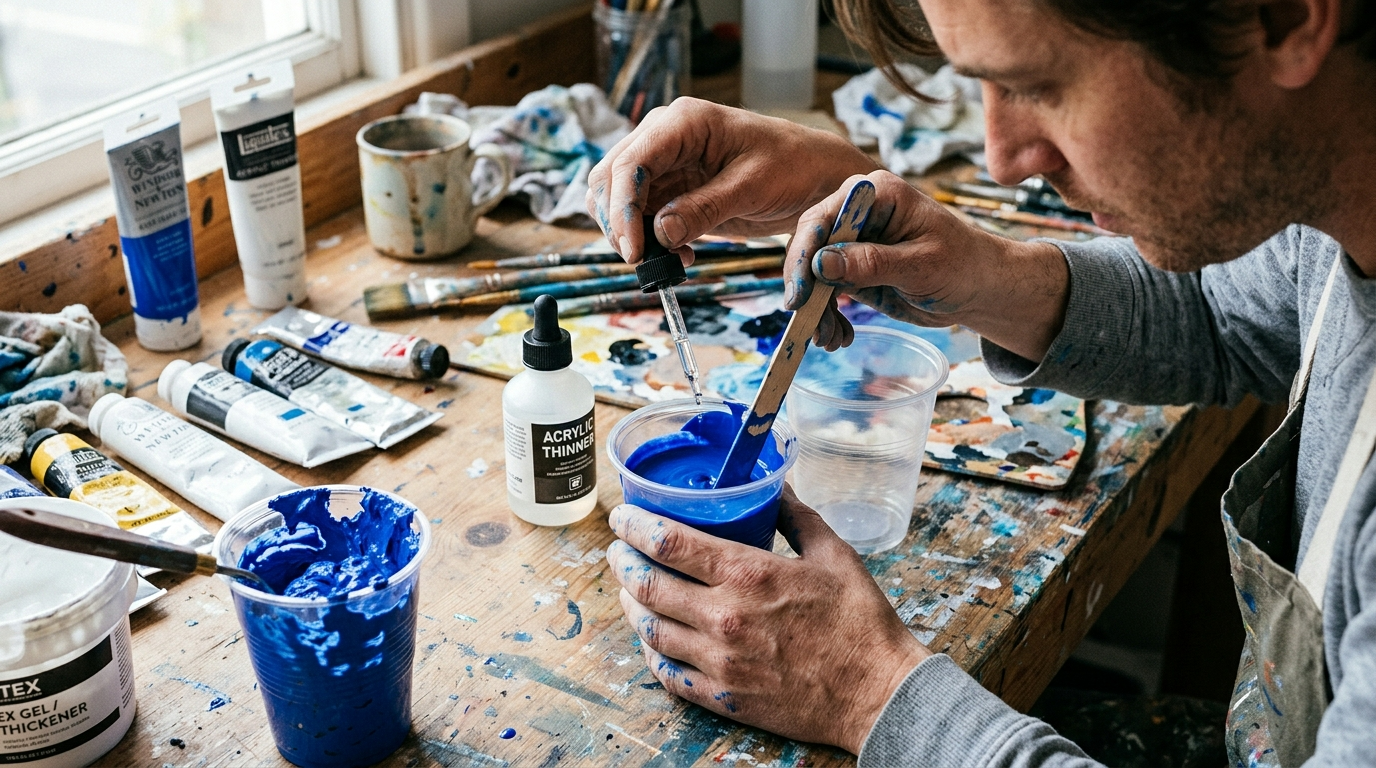

Many painters focus on brushes, colors, and techniques. However, paint consistency often determines how well those tools perform. Learning how to adjust paint consistency gives artists greater control over brush movement, blending, and coverage.
Paint that is too thick can drag across the surface. On the other hand, paint that is too thin may spread uncontrollably. Both problems make it difficult to achieve smooth brush strokes.
Artists who understand how to adjust paint consistency can adapt their paint to match different techniques and surfaces. As a result, brush control improves significantly.
This guide explains practical methods artists use to control paint thickness and achieve better painting results.
Why Paint Consistency Affects Brush Control
Paint consistency influences how easily paint flows from the brush onto the surface. If the paint resists movement, brush strokes may appear uneven.
Thick paint often creates heavy textures and visible ridges. While that effect works well for certain styles, it reduces precision.
Thin paint behaves differently. It flows quickly across the surface and spreads more easily. However, extremely thin paint may reduce color intensity.
Artists often adjust paint consistency to find the balance between control and fluidity.
When paint flows smoothly but still maintains color strength, brush strokes become easier to manage. This balance allows painters to achieve both detail work and smooth blending.
Understanding Different Paint Thickness Levels
Paint thickness varies depending on the medium and the intended technique.
Artists usually work with three basic consistency levels.
Thick paint
Thick paint resembles soft butter. It holds texture and visible brush strokes.
Painters often use thick paint for expressive brushwork or impasto techniques.
Medium consistency
Medium consistency flows smoothly while still maintaining body. This texture works well for most painting techniques.
Many artists prefer this balance when they adjust paint consistency for everyday painting.
Thin paint
Thin paint behaves more like ink or watercolor. It spreads easily and creates transparent layers.
Artists frequently use thin paint for glazing and washes.
Understanding these levels helps painters choose the right consistency for each technique.
Tools Used to Modify Paint Thickness
Several simple tools help artists control paint consistency during painting.
Water
Water is the most common method for thinning water-based paints such as acrylic or watercolor.
Adding small amounts gradually allows painters to control the flow.
Mediums
Acrylic mediums and oil painting mediums modify paint without weakening the pigment.
These products help artists adjust paint consistency while preserving color strength.
Palette knives
Palette knives help mix paint thoroughly. Proper mixing ensures consistent texture across the entire paint mixture.
Using the right tools makes consistency adjustments easier and more predictable.
How to Thin Paint Properly
Thinning paint requires careful balance.
Adding too much liquid can reduce color intensity and paint adhesion.
Therefore, artists should always begin with small adjustments.
Start by placing a small amount of paint on the palette. Then add a few drops of water or medium.
Mix the paint slowly until it reaches the desired thickness.
Artists often adjust paint consistency several times during a painting session because different techniques require different textures.
Testing the paint on scrap paper or canvas helps confirm the consistency before applying it to the final artwork.
How to Thicken Paint When Needed
Sometimes paint becomes too thin during the mixing process. Fortunately, artists can restore thickness easily.
Adding fresh paint from the tube helps restore body and pigment strength.
In acrylic painting, certain mediums also increase paint thickness. Gel mediums create heavier textures while maintaining color intensity.
Artists who frequently adjust paint consistency often keep several mediums available for different situations.
Learning how to thicken paint allows artists to maintain full control over brush behavior.
This flexibility improves painting efficiency.
Matching Paint Consistency to Painting Techniques
Different painting techniques require different paint textures.
Artists often adjust their mixtures depending on the desired effect.
Detail painting
Fine details require paint that flows smoothly but still maintains control.
Slightly thinned paint often works best for precise brush strokes.
Blending and gradients
Blending colors requires moderate fluidity. Paint should glide easily across the surface.
Artists frequently adjust paint consistency to achieve smoother color transitions.
Layering and glazing
Thin transparent layers allow colors beneath to remain visible.
These layers often require highly diluted paint mixtures.
Matching consistency to technique improves painting accuracy and visual quality.
Surface Type and Paint Flow
Surface texture also influences paint behavior.
Rough surfaces absorb paint differently than smooth ones.
Canvas
Canvas has a slight texture that grips paint effectively. Medium consistency works well for most canvas painting.
Paper
Paper absorbs moisture quickly. Artists may need to adjust paint consistency to prevent paint from spreading too rapidly.
Wood panels
Smooth wood surfaces allow paint to glide easily. Slightly thicker paint often provides better control.
Understanding how surfaces interact with paint helps artists maintain consistent brush behavior.
Testing Paint Before Applying It
Testing paint mixtures helps avoid unexpected results.
Artists often test paint on scrap material before applying it to their artwork.
This quick test reveals whether the paint flows smoothly or requires further adjustment.
Testing also helps artists evaluate color intensity and coverage.
Painters who regularly adjust paint consistency often perform quick tests throughout their painting process.
These tests prevent mistakes and improve final results.
Consistent testing also helps artists develop a better understanding of how paint behaves.
Common Mistakes When Adjusting Paint Thickness
Many beginners struggle with paint consistency because they add too much liquid too quickly.
Over-thinning the paint
Excessive thinning weakens pigment and reduces coverage.
Poor mixing
Incomplete mixing creates uneven paint texture.
Ignoring surface preparation
Uneven surfaces may cause paint to behave unpredictably.
Artists who carefully adjust paint consistency while avoiding these mistakes achieve better control and more consistent results.
Attention to detail makes a noticeable difference in final artwork quality.
Practice Exercises for Better Paint Control
Regular practice helps artists understand how paint behaves under different conditions.
Consistency comparison
Mix three paint samples with different thickness levels. Test each sample using identical brush strokes.
Gradient blending practice
Gradually thin paint across a series of strokes to observe how flow changes.
Texture exploration
Experiment with thick paint to observe how brush marks appear on the surface.
These exercises help artists learn how to adjust paint consistency naturally while improving brush control.
Over time, painters develop an intuitive understanding of paint flow.
Conclusion
Paint consistency plays a crucial role in brush control and overall painting quality. When paint flows properly, artists gain greater control over brush strokes, blending, and layering.
Understanding how thickness affects paint behavior allows artists to adapt their mixtures for different techniques and surfaces. Whether painting fine details or large background areas, the right consistency improves results.
Simple tools such as water, mediums, and palette knives help painters modify paint texture effectively.
Artists who learn to adjust paint consistency gain flexibility and confidence in their creative process.
With practice, controlling paint flow becomes second nature, allowing painters to focus fully on artistic expression.
FAQ
1. Why does thick paint make brush strokes difficult?
Thick paint creates resistance against the brush. This resistance can cause uneven strokes and visible ridges.
2. How can artists thin acrylic paint safely?
Artists usually add small amounts of water or acrylic medium gradually. Mixing slowly helps maintain pigment strength.
3. What consistency works best for detailed painting?
Paint that flows smoothly but still maintains body works best. Slightly thinned paint often provides good control.
4. Can paint consistency change during a painting session?
Yes. Paint may thicken as it dries on the palette. Artists often adjust the mixture several times while working.
5. What tools help control paint thickness effectively?
Palette knives, water, and specialized painting mediums help artists mix and adjust paint mixtures accurately.