
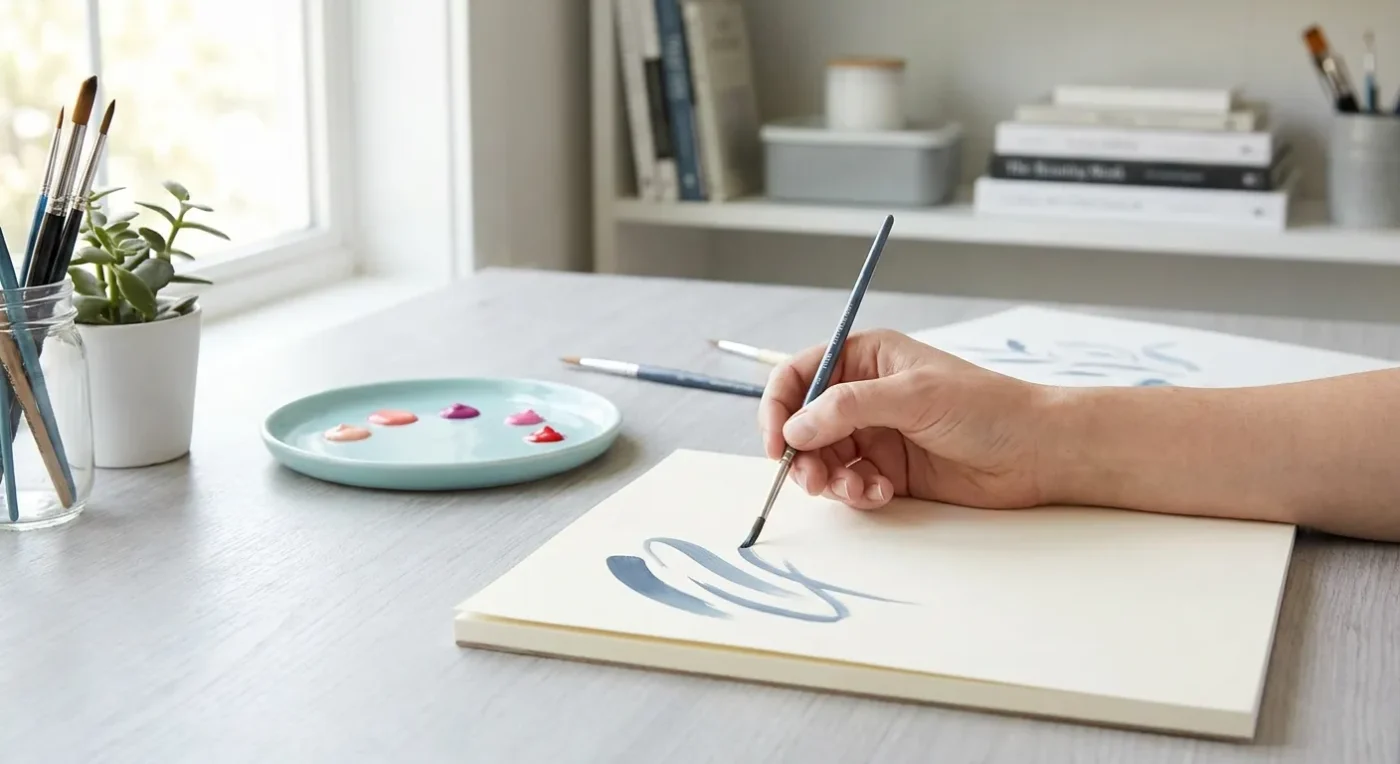

If you’re ready to start your journey into decorative painting, mastering basic brushstrokes is your first essential step. It’s the foundation upon which all beautiful folk art and intricate designs are built. Don’t be intimidated; with a little practice and the right guidance, you’ll gain the confidence to create stunning projects. This guide will break down the fundamental techniques, helping you build muscle memory and understand how your brush interacts with paint and surface.
Why Focus on Fundamental Painting Strokes?
Before you can paint a detailed rose or an intricate scroll, you need to understand how to make a clean line, a smooth curve, or a perfectly weighted comma stroke. These fundamental painting strokes are the building blocks. By dedicating time to them, you’ll develop better control, achieve smoother paint application, and ultimately, elevate the quality of your finished pieces. It’s like learning scales before playing a symphony – crucial for mastery. Therefore, consistent practice is key.
Essential Brush Techniques to Practice
Let’s explore some core decorative strokes that every hobbyist painter should know. For these exercises, use a practice surface like a palette paper or a smooth piece of cardboard, and your favorite acrylic paints. Remember, patience is a virtue in this process. Furthermore, using a good quality brush will make a significant difference.
1. The Comma Stroke
The comma stroke is incredibly versatile, forming petals, leaves, and various decorative elements. It starts with a heavy application of pressure and gradually lifts off, creating a tapered end. In fact, it is one of the most fundamental shapes in folk art.
- How to: Load your round brush with paint. Touch the tip of the brush to your surface, applying firm pressure to create a wide base. As you pull the brush, slowly lift it, reducing pressure until only the very tip is touching, creating a delicate tail. Practice varying the length and curve.
2. The S-Stroke (or Reverse Comma)
Often used in conjunction with the comma, the S-stroke creates fluid, graceful curves perfect for scrollwork and flowing designs. For example, it is essential for creating elegant flourishes.
- How to: This is essentially two comma strokes joined. Start with light pressure, press down in the middle of your stroke for the widest point, then lift off again to create the second tapered end. Imagine an ‘S’ shape. Practice making them flow smoothly.
3. The C-Stroke
The C-stroke is similar to the comma but maintains a more consistent curve, ideal for forming the outer edges of petals or creating gentle arcs. Consequently, it’s perfect for creating balanced, symmetrical designs.
- How to: Load your brush and, with consistent pressure, draw a smooth, curved line resembling the letter ‘C’. Experiment with different sizes and orientations (forward ‘C’, backward ‘C’).
4. Line Work (Thin & Thick)
Precision line work is vital for outlining, detailing, and adding definition. Using a liner or script brush is best for this. Moreover, a steady hand is crucial here.
- How to: Load your liner brush with thinned paint (consistency of ink). For thin lines, use only the very tip of the brush with light, consistent pressure. For thicker lines, apply slightly more pressure and use a bit more of the brush belly. Practice drawing parallel lines and varying line thickness within a single stroke.
Preparing Your Workspace for Optimal Practice
A well-prepared workspace enhances your practice sessions. First, ensure you have good lighting. Natural light is ideal, but a well-lit lamp works too. Next, gather all your materials: brushes, paints, a palette, water containers, and a practice surface. Furthermore, keep a paper towel or cloth handy for wiping brushes. A comfortable chair and table height are also important for maintaining good posture and reducing fatigue during longer sessions. This setup helps you focus entirely on improving your painting strokes. Additionally, consider playing some calming music to create a relaxed atmosphere.
Choosing the Right Brushes for Decorative Painting
Selecting appropriate brushes is fundamental for successful decorative painting. While many brushes exist, a few key types are essential for beginners. Round brushes are excellent for comma and S-strokes due to their pointed tip and full belly. Liner or script brushes are perfect for detailed line work and delicate scrolls. Flat brushes, on the other hand, are great for broader strokes and shading. The Essential Brush Kit for Folk Art Home Decor Projects provides a deeper look into specific brush types. Moreover, understanding how to properly care for your brushes will extend their life and maintain their performance. Always clean brushes thoroughly after each use and reshape them before drying. This ensures they are ready for your next practice session. Consequently, investing in quality brushes will pay off in the long run.
Paint Consistency: A Key to Smooth Strokes
The consistency of your paint profoundly impacts your brushstrokes. Too thick, and your paint will drag, creating uneven lines. Too thin, and it will be watery and lack coverage. Acrylic paints are often used in decorative painting, and they usually need a little thinning with water or a suitable medium. For example, a good starting point is the consistency of light cream or ink for fine lines. Test your paint on your practice surface before committing to a project. Adjust by adding tiny amounts of water, mixing thoroughly, and retesting. Unlocking New Effects: A Guide to Acrylic Paint Mediums can provide more insight into achieving perfect paint consistency. Furthermore, consistent paint consistency helps in achieving consistent results in your decorative painting.
Building Muscle Memory Through Repetition
Just like learning to play an instrument or ride a bicycle, developing proficiency in painting strokes relies heavily on muscle memory. Repetition is not just practice; it’s how your hand and brain learn to work together instinctively. Dedicate short, regular sessions to practicing each stroke. Don’t aim for perfection in every stroke initially; instead, focus on consistency and fluidity. Over time, your hand will naturally guide the brush with greater ease and precision. Consider creating a practice sheet where you fill rows with comma strokes, S-strokes, and C-strokes. This visual progress can be very encouraging. Similarly, try varying the size and direction of your strokes to build versatility. In fact, this repeated action is fundamental to truly mastering basic brushstrokes.
Troubleshooting Common Brushstroke Challenges
Even with diligent practice, you might encounter challenges. Common issues include shaky lines, uneven pressure, or paint drying too quickly on the brush. If your lines are shaky, try resting your wrist or forearm on the table for stability. Uneven pressure can be corrected by consciously focusing on the amount of force applied at different points of the stroke. If paint dries too fast, you might need to thin it slightly more or work in a cooler environment. Remember, every artist faces these hurdles. Common Decorative Painting Blunders and How to Fix Them offers further guidance on overcoming these obstacles. Persistent effort and analysis of your work will lead to improvement. Ultimately, understanding these challenges is part of mastering basic brushstrokes.
Applying Basic Strokes to Simple Designs
Once you feel more comfortable with individual strokes, start combining them into simple designs. For instance, two comma strokes can form a heart shape. Multiple C-strokes can create a simple flower petal arrangement. An S-stroke can become a graceful vine. This step bridges the gap between isolated practice and actual project creation. It allows you to see how your foundational skills translate into beautiful art. Try creating small borders or corner designs on your practice surface. This integration is where the true joy of decorative painting begins to shine. Folk Art Coasters Tutorial: Crafting Charming Home Decor offers a great starting point for applying these skills to a small project. Consequently, this application reinforces your learning.
The Importance of Experimentation and Play
While structured practice is important, don’t forget the value of experimentation. Play with different brushes, try varying paint consistencies, and explore how pressure changes affect your strokes. Sometimes, unexpected discoveries happen when you allow yourself to be less rigid. This playful approach keeps your artistic journey fresh and exciting. It also helps you develop a unique style. Consider trying different types of surfaces, as this can also influence your strokes. For example, painting on wood feels different than painting on paper. Therefore, embracing experimentation is a vital part of your growth as an artist. You’ll find new ways of mastering basic brushstrokes through this process.
Beyond the Basics: Continuing Your Decorative Painting Journey
After you’ve achieved proficiency in mastering basic brushstrokes, a world of decorative painting techniques awaits. You can explore specific folk art styles like Rosemaling, which heavily relies on fluid brushwork. Mastering Rosemaling Strokes: Your Beginner’s Guide to Norwegian Folk Art is an excellent resource for this. Or perhaps you’d like to delve into advanced color blending techniques. The possibilities are endless. Keep practicing, keep learning, and most importantly, keep enjoying the creative process. Your dedication to these fundamentals will serve you well as you tackle more complex projects. Indeed, the journey of an artist is one of continuous learning and refinement. This journey begins with a solid foundation in fundamental brush control. For further inspiration, explore resources like the Society of Decorative Painters for community and educational materials. Additionally, consider exploring different paint types and their unique properties, as discussed by Liquitex on acrylic painting techniques.
Conclusion
Mastering basic brushstrokes is a rewarding endeavor that lays the groundwork for all your decorative painting aspirations. By diligently practicing the comma, S-stroke, C-stroke, and line work, you build the essential control and muscle memory needed for intricate designs. Remember to prepare your workspace, choose the right tools, manage paint consistency, and troubleshoot challenges with patience. As you combine these fundamental elements, you’ll discover the joy of creating beautiful folk art. Continue to experiment and explore new techniques, and your artistic journey will be filled with endless creative possibilities. This foundational knowledge is truly the key to your success in decorative painting.
FAQ
What are the most important painting strokes for beginners?
For beginners in decorative painting, the most crucial strokes to learn are the comma stroke, S-stroke, C-stroke, and basic line work (both thin and thick). These form the basis for many intricate designs and decorative elements.
How often should I practice my painting techniques?
Consistent, short practice sessions are more effective than infrequent long ones. Aim for 15-30 minutes daily or several times a week. This regular repetition helps build muscle memory and improves hand-eye coordination over time.
What kind of paint is best for practicing brush control?
Acrylic paints are generally recommended for practicing brush control. They dry relatively quickly, are water-soluble for easy cleanup, and are versatile for various decorative painting styles. Their forgiving nature makes them ideal for learning.
Can I use any brush to practice decorative art strokes?
While you can start with basic brushes, using specific types like round brushes for comma strokes and liner brushes for fine lines will yield better results and help you learn the correct technique. Good quality brushes make the process smoother.
How do I make my painting strokes smoother and more consistent?
Achieving smoother, more consistent strokes involves several factors: proper paint consistency (not too thick, not too thin), consistent pressure application, and building muscle memory through repeated practice. Resting your hand or forearm can also help stabilize your movements.