
In an art world that increasingly values the authentic ‘human hand’ and unique expression over digital perfection, artists are continually seeking new ways to make their work stand out. One of the most exciting trends emerging in decorative painting is the movement towards textural softness and dimensionality. Moving beyond the flat canvas, hobbyists are actively creating dimensional texture to add depth, interest, and a compelling tactile quality to their projects, echoing a ‘Baroque and Medieval Revival’ that brings richness and layered surfaces back into contemporary spaces. This approach allows your art to truly engage the viewer on multiple sensory levels.
Why Embrace Dimensional Texture? Creating Dimensional Texture with Purpose
Integrating texture into your decorative painting offers profound benefits. First, textured surfaces catch light differently. This creates shadows and highlights that add dynamic visual appeal. Secondly, art that invites touch fosters a deeper, more intimate connection with the viewer, emphasizing the human-made quality. Furthermore, texture can convey emotion, age, or the natural world in a way that flat paint cannot, enhancing the narrative of your piece. Finally, this trend aligns perfectly with contemporary interior design, which favors ‘Warm Minimalism’ and ‘Earthy Palettes’ softened by natural textures and approachable artworks.
By creating dimensional texture, you transform a two-dimensional surface into a rich, sculptural experience. This method elevates simple designs into captivating works of art.
Essential Materials for Building Texture
Achieving varied textures requires understanding the mediums available. Experimentation is key to finding what works best for your vision. Various products can help you achieve stunning results.
Acrylic Mediums for Adding Depth
Acrylics are incredibly versatile for texture. Therefore, they are a popular choice among decorative painters. Look for several types to expand your toolkit:
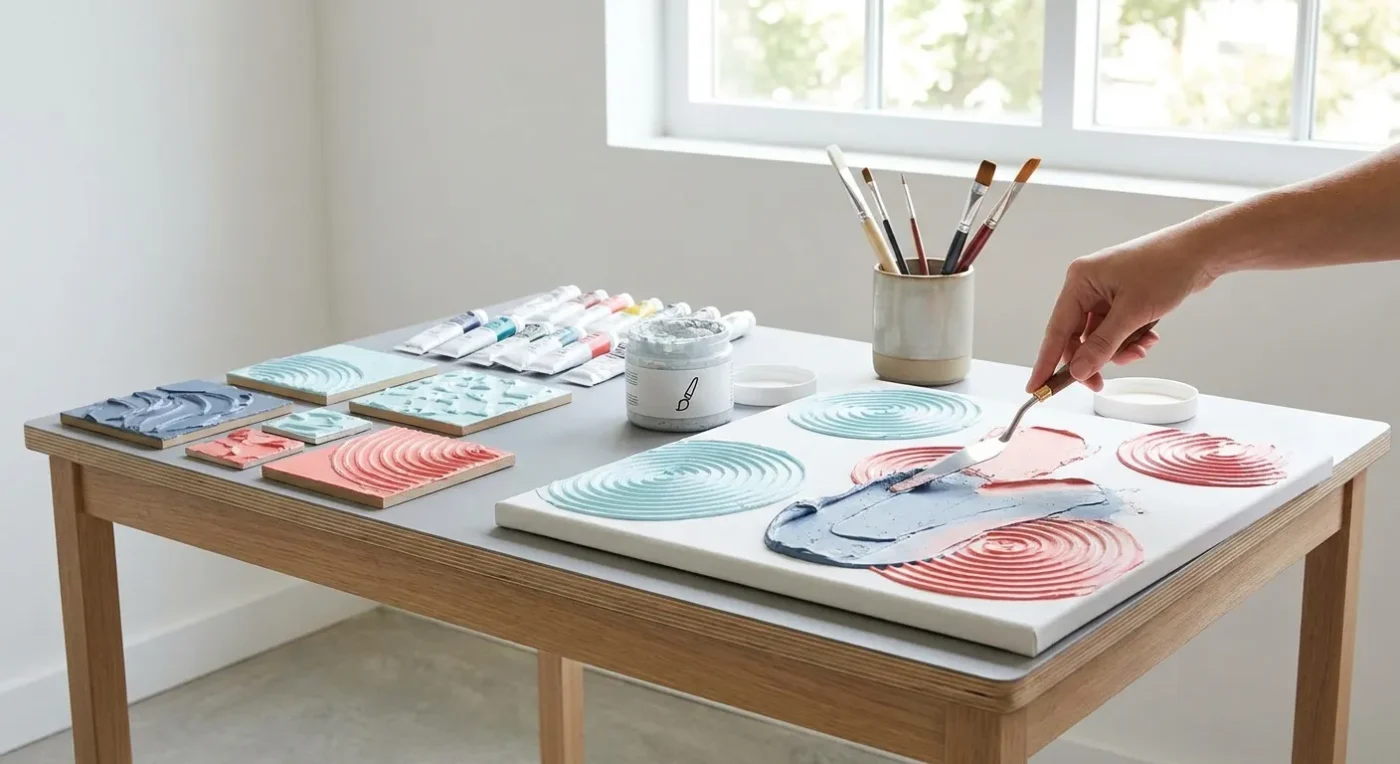
- Modeling Paste/Texture Paste: This is a thick, opaque paste. It can be applied with a palette knife or brush to create significant sculptural forms. It dries hard and can be sanded, carved, and painted over, making it highly adaptable.
- Gel Mediums (Heavy Gel, Extra Heavy Gel): These transparent or translucent gels add body and extend paint. They create impasto effects without losing color intensity. They can be mixed with paint or applied directly, offering flexibility.
- Glass Bead Gel/Sand Texture Gel: These mediums contain small beads or sand particles. As a result, they add a gritty, sparkling, or granular texture. They are perfect for replicating natural surfaces or adding a unique shimmer.
Oil Additives for Rich Surfaces
While oils are naturally thicker, you can enhance their texture even further. Consider these additives:
- Impasto Mediums: These are designed to thicken oil paint for pronounced brushstrokes and palette knife work. Importantly, they do so without compromising drying time or color.
- Cold Wax Medium: When mixed with oil paints, it creates a matte, velvety finish and adds body. This allows for subtle, layered textures and encaustic-like effects.
Each of these materials provides unique opportunities for creating dimensional texture. Moreover, mixing and layering them can lead to even more complex and interesting results.
Techniques for Tactile Surfaces and Beyond
Once you have your materials, the fun begins with application techniques. These methods allow you to truly bring your vision to life.
Impasto Techniques for Bold Strokes
Impasto involves applying paint thickly, often with a palette knife or stiff brush. This technique creates visible brushstrokes and ridges, giving the surface a sculptural quality. For example, Vincent van Gogh famously used impasto to convey movement and emotion in his works. When working with folk art, impasto can add a charming, handcrafted feel. You can build up layers slowly, allowing each to dry slightly before adding the next, which provides even more depth. Many artists find joy in this direct, expressive application.
Stenciling with Texture Pastes
Stenciling isn’t just for flat patterns. In fact, it’s an excellent method for creating dimensional texture. Apply modeling paste or a thick gel medium through a stencil using a palette knife. This creates raised patterns that stand proud from the surface. You can then paint over these textured designs, allowing the underlying relief to catch the light. This technique is particularly effective for adding intricate details or repeating motifs. Consider experimenting with different stencil designs to find unique patterns.
Found Objects and Collage
Incorporating small, lightweight objects directly into your paint or medium can introduce unexpected textures. Think about using sand, small beads, fabric scraps, or even dried plant matter. These elements can be embedded into wet gel medium or modeling paste. Once dry, they can be painted over or left exposed for contrasting finishes. This method adds a truly unique and personal touch to your artwork. Remember to choose objects that are stable and won’t degrade over time. For more inspiration on finding unique elements, consider exploring resources on Where to Find Folk Art Inspiration.
Sgraffito and Scratching
Sgraffito involves applying a layer of paint or textured medium and then scratching through it to reveal an underlying layer or the surface beneath. This creates fine lines and intricate patterns within the texture itself. Tools like etching needles, skewers, or even the back of a brush can be used. This technique is ancient, yet it remains relevant for adding subtle detail and aged effects. It’s a wonderful way to add narrative to your textured surfaces.
Layering and Glazing
Once your texture is dry, layering thin washes of paint (glazes) over it will enhance its depth. The glaze will settle into the depressions and highlight the raised areas, emphasizing the dimensionality. Experiment with transparent colors to create luminous effects. This process can significantly enrich the visual complexity of your textured piece. A Glossary of Terms might be helpful if you encounter unfamiliar painting terms.
Beyond the Canvas: Applying Texture to Various Surfaces
While canvases are common, the joy of creating dimensional texture extends to many other surfaces. Decorative painting often involves objects beyond traditional art supports. Consider wooden boxes, ceramic pieces, furniture, or even gourds. The key is proper surface preparation. Ensure the surface is clean, dry, and primed if necessary. Different surfaces may require different adhesion properties from your chosen mediums. For instance, a rigid surface like wood might allow for heavier texture applications than a flexible canvas. Always test a small, inconspicuous area first to ensure compatibility and desired results. This careful approach guarantees lasting beauty.
Understanding Color and Texture Harmony
Color choices play a crucial role in how texture is perceived. For example, monochromatic or analogous color schemes can emphasize texture by reducing visual noise. Conversely, strong contrasting colors can make texture pop even more. Warm Minimalism often utilizes muted, earthy tones that allow the texture itself to become the focal point. Consider how light will interact with your chosen colors and textures. A dark color in a deep crevice will appear even darker, while a light color on a raised peak will shine. This interplay adds another layer of complexity to your work. Moreover, understanding Crafting Vibrant Hues: Understanding Folk Art Color Palettes can further inform your decisions.
The Tactile Journey: From Concept to Completion
The process of creating dimensional texture is a journey of discovery. Begin with a clear concept, but allow for spontaneity. Sketch out your ideas, considering where texture would best serve your narrative or aesthetic goal. Gather your materials, ensuring you have a variety to experiment with. As you apply mediums, pay attention to how they interact and dry. Don’t be afraid to make mistakes; they often lead to unexpected and beautiful discoveries. Finally, take time to appreciate the finished piece, running your fingers lightly over the surface (if appropriate) to truly experience its tactile quality. This engagement deepens your connection with the art.
Caring for Your Textured Artwork
Textured pieces require thoughtful care. Dust can accumulate in crevices, so a soft brush or a can of compressed air can be useful for cleaning. Avoid harsh chemicals or abrasive cloths. If varnishing, choose a varnish appropriate for the mediums used and apply it carefully to avoid filling in delicate textures. A spray varnish can often be more suitable than a brush-on application for highly textured surfaces. Proper care ensures your textured artworks remain vibrant and engaging for years to come. For specific product recommendations, you might consult Golden Artist Colors’ technical information or similar reputable art material manufacturers for detailed care instructions.
Embracing the Renaissance of Texture
The movement towards textural softness and dimensionality in decorative painting is more than just a passing trend. It represents a return to the rich, tactile traditions of art history, reinterpreted for contemporary tastes. By embracing these techniques, you are not just adding bumps and ridges to your work; you are inviting viewers into a deeper, more sensory experience. You are affirming the value of the handmade in a digital age. Start your journey today and discover the endless possibilities that await when you begin creating dimensional texture in your own folk art. This artistic exploration promises rewarding results.
Conclusion
Ultimately, creating dimensional texture offers a powerful way to elevate your decorative painting. It transforms flat surfaces into dynamic, engaging artworks that speak to both sight and touch. With the right materials and techniques, you can infuse your projects with unique character and emotional depth. We encourage you to experiment, to play, and to discover the rich possibilities that texture brings to your creative expression. Your artistic journey will undoubtedly be enriched by this exploration. For further questions or to share your textured creations, feel free to Contact us.
FAQ
What are the best mediums for adding depth to acrylic paintings?
For acrylics, modeling paste and heavy gel mediums are excellent choices. Modeling paste creates opaque, sculptural forms, while heavy gels add body and transparency. Glass bead or sand gels also introduce unique granular textures.
Can I add texture to oil paintings?
Absolutely! Oil paints are naturally thick, but you can enhance their texture with impasto mediums designed to thicken the paint without altering drying time. Cold wax medium can also create a beautiful matte, velvety finish with added body.
How do I prevent textured paint from cracking?
To prevent cracking, apply texture mediums in layers, allowing each layer to dry thoroughly. Avoid applying extremely thick layers all at once. Using flexible mediums and painting on a stable support also helps. Always follow the manufacturer’s instructions for drying times and application thickness.
What tools are useful for applying texture?
Palette knives, stiff bristle brushes, and even household items like sponges, combs, or crumpled plastic wrap can create unique textures. For fine details or sgraffito, etching tools or skewers are effective.
How can texture enhance the storytelling in my artwork?
Texture can convey age, wear, natural elements, or emotional states. For example, rough textures might suggest ancient ruins or weathered wood, while smooth, undulating textures could evoke water or fabric. It adds a tactile dimension to your visual narrative, making it more immersive.
Are there any external resources for learning more about art mediums?
Yes, many art supply manufacturers provide extensive resources. For instance, Liquitex offers a comprehensive guide to their mediums, which can be very helpful for understanding different products and their applications in creating textured art.