
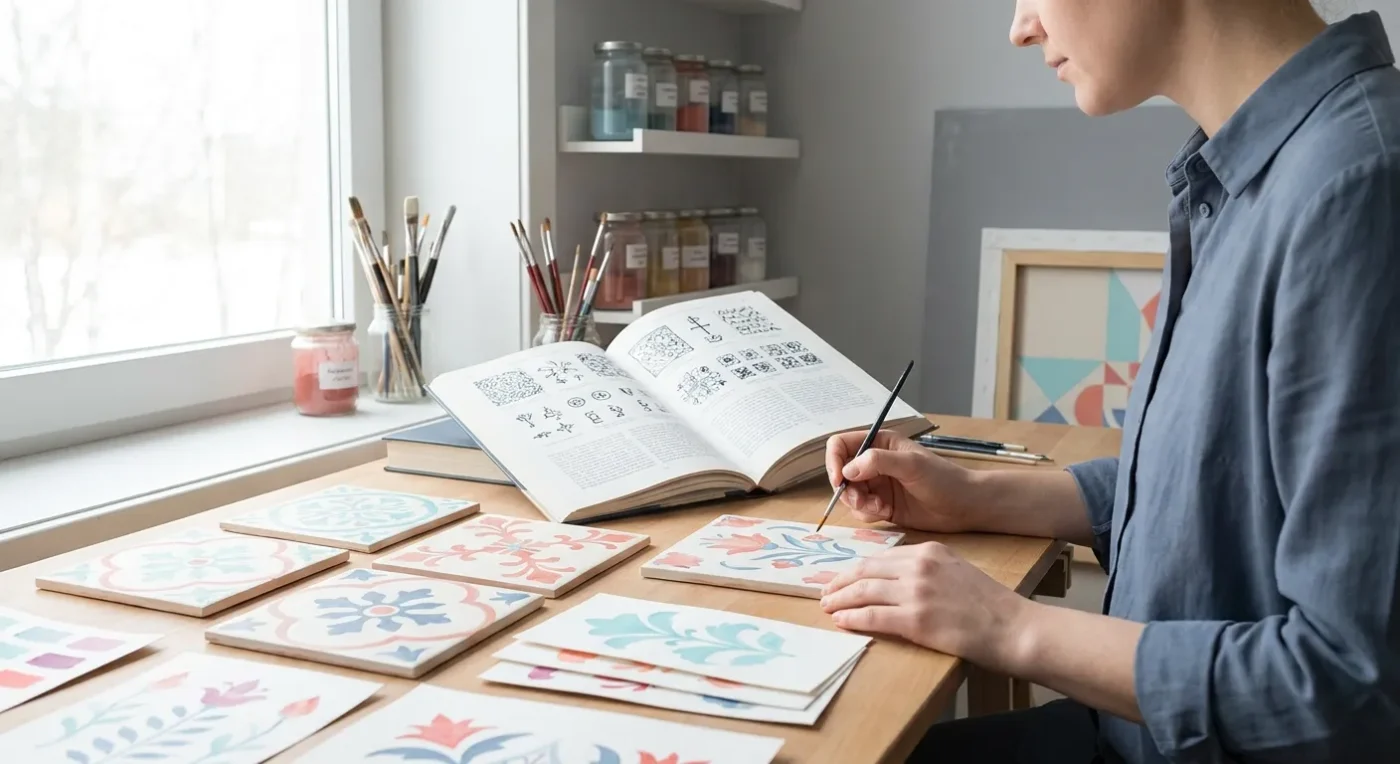

Decorative art often goes beyond mere aesthetics, carrying layers of history, culture, and symbolism within its patterns and imagery. For folk artists, understanding the decorative motifs meaning can enrich your work, allowing you to tell deeper stories and connect with traditions. This exploration delves into how common motifs have communicated ideas and beliefs across generations, inviting you to infuse your own art with profound significance. Indeed, every brushstroke can hold a hidden narrative, transforming simple decoration into meaningful expression. Furthermore, discovering these underlying messages can deepen your appreciation for historical folk art pieces.
The world of decorative arts is vast and varied, encompassing styles from around the globe. Yet, a common thread among them is the intentional use of symbols. These aren’t just random designs; rather, they are visual shorthand for complex ideas, emotions, and cultural values. Consequently, learning to interpret these symbols is like learning a new language. It opens up new avenues for creativity and communication. As artists, we have the unique opportunity to both preserve and reinterpret these traditional symbols, ensuring their relevance for contemporary audiences. Ultimately, this practice connects us to a lineage of creators who have used art to express the human experience.
The Language of Nature in Folk Art
Nature has always been a primary source of inspiration for folk art, with countless motifs carrying specific meanings. Birds, for instance, often symbolize freedom, peace, or the soul, while doves specifically represent love and hope. Trees can denote life, growth, or family lineage, and flowers frequently convey beauty, joy, or specific sentiments (like roses for love or lilies for purity). Even leaves and vines can suggest interconnectedness and cycles of life. When you incorporate these elements into your work, you’re not just adding decoration; you’re speaking a visual language that resonates with timeless human experiences. Understanding the decorative motifs meaning enhances your ability to communicate visually. Moreover, it allows your art to echo the profound respect for nature found in many ancient cultures.
Consider the humble acorn, often depicted in folk art. This small seed, in fact, frequently symbolizes potential, strength, and good fortune, especially in its connection to the mighty oak tree. Similarly, a flowing river motif can represent the journey of life, change, and continuity. These natural elements are not merely beautiful; they are imbued with generations of human observation and interpretation. Therefore, by consciously selecting these natural symbols, artists can create pieces that are not only visually appealing but also rich in narrative and cultural resonance. This thoughtful approach transforms a simple painting into a dialogue with the natural world and its enduring wisdom.
Animals, Hearts, and Stars: Universal Symbols
Beyond flora, animals, hearts, and stars are prominent in many folk art traditions. Animals often embody characteristics attributed to them – a lion for strength, a rabbit for fertility, or an owl for wisdom. Hearts are almost universally recognized as symbols of love, affection, and compassion, making them popular in gifts and commemorative pieces. Stars can represent guidance, destiny, or the divine. By consciously choosing these motifs, artists can imbue their pieces with layers of meaning, creating works that are not only beautiful but also emotionally resonant and culturally significant. This connection to broader narratives makes folk art so powerful. Furthermore, the universal appeal of these symbols ensures that their message transcends geographical and linguistic barriers.
For example, the depiction of a fish often symbolizes abundance, good luck, or even spiritual rebirth in various cultures. Likewise, a deer might represent grace, gentleness, or a connection to the wilderness. These animal representations are not arbitrary; they stem from observations of animal behavior and their roles in human life. Consequently, incorporating such animals thoughtfully can add significant depth to your folk art. The enduring popularity of hearts, in particular, showcases humanity’s universal need to express love and connection. Meanwhile, the celestial beauty of stars has inspired awe and wonder for millennia, making them powerful symbols of hope and aspiration. Understanding the decorative motifs meaning for these common symbols enriches your artistic vocabulary.
Geometric Patterns and Abstract Symbolism
Not all meaningful motifs are representational. Geometric patterns, while seemingly abstract, often carry profound significance in folk art. For instance, spirals can symbolize growth, cycles of life, or the journey of self-discovery. Circles frequently represent wholeness, unity, or eternity. Triangles, depending on their orientation, might suggest stability, divinity, or the elements. These patterns are not just decorative fillers; they are fundamental expressions of order and cosmic understanding. Moreover, their repetitive nature can induce a meditative quality, reflecting ancient rituals and beliefs. Therefore, exploring the geometry within folk art reveals another layer of symbolic communication.
Consider the intricate patterns found in quilting or pottery. Each line, curve, and angle is often intentional, contributing to a larger symbolic narrative. For example, a labyrinthine pattern might represent a journey or a quest for knowledge. Chevrons, or V-shapes, can symbolize protection or a path forward. The simplicity of these shapes belies their deep cultural resonance. By studying these geometric forms, artists can learn to construct visual narratives without relying on literal imagery. This approach offers a different, yet equally powerful, way to convey the decorative motifs meaning. It encourages viewers to look beyond the surface and ponder the underlying structure of existence. For more on how artistic choices shape meaning, explore our article on Crafting Vibrant Hues: Understanding Folk Art Color Palettes.
Cultural Context: Where Meaning Takes Root
The meaning of decorative motifs is rarely static; it is deeply rooted in cultural context. A symbol that signifies good fortune in one culture might have a different, or even opposite, connotation in another. For example, the color red can symbolize love and passion in Western cultures, but in some Eastern traditions, it represents prosperity and happiness. Similarly, certain animal symbols carry specific cultural weight. The dragon, revered in many Asian cultures as a symbol of power and good luck, is sometimes depicted as a malevolent force in Western folklore. Consequently, understanding the origin and cultural background of a motif is crucial for its accurate interpretation and respectful use.
When incorporating traditional motifs into your own work, it is important to research their historical and cultural significance. This ensures that your art communicates the intended message and honors the traditions from which it draws inspiration. Moreover, this research enriches your understanding of global art history and fosters a deeper appreciation for cultural diversity. Folk artists, in particular, often draw directly from their local heritage, infusing their work with specific regional symbols. This localized approach gives their art a unique authenticity and connection to place. Thus, the pursuit of decorative motifs meaning is also a journey into cultural anthropology.
Infusing Your Art with Deeper Significance
Now that you have a clearer understanding of the profound stories embedded in decorative motifs, how can you apply this knowledge to your own folk art? Firstly, begin by identifying themes or emotions you wish to convey in your piece. Do you want to express hope, resilience, or connection to nature? Once your theme is clear, research motifs that traditionally align with those concepts. For instance, if you aim to convey protection, you might consider incorporating specific animal symbols or geometric patterns known for that association. This intentional selection elevates your work beyond mere decoration. Indeed, every choice becomes a deliberate act of communication.
Secondly, consider combining multiple motifs to create a more complex narrative. A bird nestled in a tree, for example, could symbolize freedom within a familial structure. Experiment with how different symbols interact and enhance each other’s meanings. Thirdly, don’t be afraid to reinterpret traditional motifs in a way that feels authentic to your personal style and contemporary perspective. While respecting their origins, you can infuse them with new life and relevance. This process allows your art to be both timeless and timely. Ultimately, the goal is to make your art speak volumes, connecting with viewers on an emotional and intellectual level through the thoughtful application of symbolic language. The exploration of decorative motifs meaning is an ongoing journey of discovery.
The Enduring Legacy of Symbolic Art
The practice of embedding meaning into decorative motifs is not a new phenomenon; it is a thread that runs through human history, connecting us to our ancestors. From ancient cave paintings to intricate tribal textiles, people have always used symbols to make sense of their world, convey beliefs, and preserve their stories. Folk art, in particular, serves as a vital repository of these symbolic traditions. It often reflects the values, aspirations, and daily lives of communities, making it a powerful form of cultural heritage. By engaging with these traditions, contemporary artists become custodians of this rich legacy. They ensure that these visual languages continue to evolve and resonate.
Furthermore, understanding the decorative motifs meaning allows us to appreciate the ingenuity and wisdom of past artists. It reveals how they communicated profound ideas without written language, relying instead on a universally understood visual vocabulary. This historical perspective can also inspire new forms of expression. It encourages us to think about the lasting impact of our own creative choices. As you continue your artistic journey, remember that every line, shape, and color has the potential to carry a message. This makes folk art not just a craft, but a powerful medium for storytelling and cultural preservation. For deeper insights into where to find such inspiration, visit Where to Find Folk Art Inspiration: Everyday Discoveries.
Personalizing Meaning: Your Artistic Voice
While understanding traditional decorative motifs meaning is invaluable, it is equally important to develop your own artistic voice and interpretation. Your personal experiences, beliefs, and emotions can infuse traditional symbols with fresh perspectives. For example, a common motif like a heart, while universally recognized for love, can be depicted in a unique style or combined with other elements to tell a highly personal story of affection or loss. This blend of tradition and individuality is what makes folk art dynamic and continuously engaging. It allows the art to be both a reflection of the past and a statement about the present.
Consider keeping a sketchbook dedicated to researching and reinterpreting motifs. How does a traditional symbol resonate with you personally? Can you adapt its form or context to convey a contemporary message? Perhaps a traditional symbol of growth could be reimagined to represent personal development in a modern context. This process of introspection and creative adaptation is key to making your art truly your own. Ultimately, your unique perspective adds another layer to the enduring conversation about symbolic meaning. It ensures that folk art remains relevant and continues to speak to new generations. As you refine your understanding of decorative motifs meaning, you also refine your own artistic identity.
The Global Tapestry of Symbols
The beauty of studying decorative motifs lies in its ability to connect us to a global tapestry of human expression. Every culture, from ancient Celtic knots to intricate African patterns, has developed its own rich symbolic language. Exploring these diverse traditions not only broadens your artistic vocabulary but also fosters a greater appreciation for global heritage. For example, the detailed patterns in Indian Mehndi designs often carry meanings related to fertility, good health, and spiritual awakening. Similarly, the storytelling patterns in Native American weaving convey tribal histories and cosmological beliefs. These examples highlight the universal human desire to imbue art with deeper significance.
By looking beyond your immediate cultural sphere, you can discover new sources of inspiration and develop a more nuanced understanding of how symbols function. This cross-cultural exploration can also inform your own creative choices, allowing you to draw from a wider array of visual languages. However, it is essential to approach these global motifs with respect and a commitment to understanding their original context. Learning about the decorative motifs meaning from different parts of the world enriches your perspective and encourages thoughtful cultural exchange. For further exploration of diverse art forms and their symbolism, consider resources like the Metropolitan Museum of Art’s Decorative Arts collection, or articles from Britannica on Decorative Art.
Conclusion: Your Art, Your Story
Exploring the decorative motifs meaning transforms your artistic practice from simply painting pretty pictures to engaging in a profound dialogue with history and culture. By thoughtfully selecting and interpreting these symbols, your folk art can tell stories, convey emotions, and connect with viewers on a deeper, more meaningful level. Remember that every motif you choose carries a legacy, a whisper from generations past. Your role as an artist is to listen to these whispers and translate them into a visual language that resonates today. Embrace the journey of discovery, allowing the rich world of symbolism to inspire and elevate your creations. Ultimately, your art becomes a powerful narrative, a testament to the enduring human desire to find and make meaning. If you have questions or want to share your own discoveries, feel free to Contact us.
FAQ Section
What do common folk art symbols represent?
Many common folk art symbols represent fundamental human experiences and natural elements. For example, birds often symbolize freedom or the soul, trees can represent life and growth, and hearts are universally recognized for love and compassion. Animals typically embody characteristics attributed to them, like a lion for strength or an owl for wisdom. These symbols draw from shared human observations and cultural beliefs.
How can understanding symbolic patterns enhance my artwork?
Understanding symbolic patterns can profoundly enhance your artwork by adding layers of depth and narrative. Instead of merely decorating, you can intentionally choose motifs that convey specific messages, emotions, or cultural connections. This transforms your art into a form of visual communication, allowing it to tell richer stories and resonate more deeply with viewers. It moves your work beyond aesthetics to meaningful expression.
Are there universal meanings for decorative designs?
While some decorative designs, like the heart for love, have near-universal recognition, many others are culturally specific. The interpretation of a symbol can vary significantly between different cultures and historical periods. It is crucial to research the cultural context of a design to understand its intended meaning accurately. This ensures respectful and effective use in your art.
How do I choose the right motifs for my folk art project?
To choose the right motifs, first identify the theme or emotion you wish to convey in your folk art project. Then, research symbols that traditionally align with those concepts. Consider the cultural context and historical significance of potential motifs. You can also experiment with combining different symbols to create more complex narratives that reflect your personal artistic vision and message.
Where can I learn more about the significance of art symbols?
You can learn more about the significance of art symbols through various resources. Books on art history, cultural anthropology, and folklore often delve into symbolic meanings. Museums, both online and physical, frequently provide context for their collections. Additionally, reputable online encyclopedias and academic art journals can offer detailed insights into specific symbols and their cultural interpretations. Continuously exploring diverse sources will deepen your understanding.