
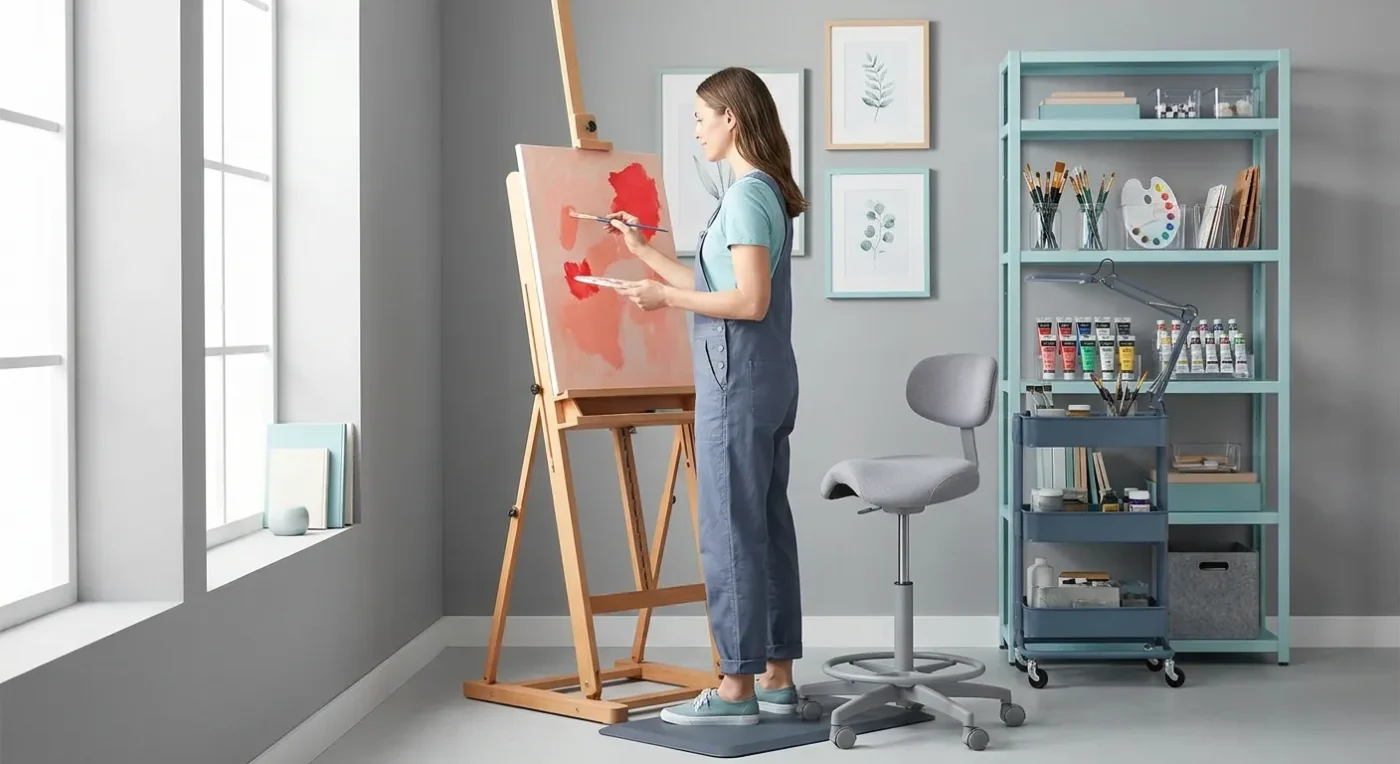

As decorative painters, we often lose ourselves in the creative process, sometimes for hours on end. While passion is essential, neglecting your physical well-being can lead to discomfort, strain, and even injury. Creating an ergonomic painting studio at home is not a luxury, but a necessity for sustained comfort and creativity. This guide will help you set up a workspace that supports your body, allowing you to paint longer and more comfortably.
Understanding the principles of ergonomics is vital for any artist. It means designing your workspace to fit you, rather than forcing your body to adapt to an ill-suited environment. This approach reduces physical stress and boosts efficiency, ultimately enhancing your artistic output. Moreover, a well-arranged space can inspire creativity and make your time at the easel even more enjoyable. Let’s explore the key elements of a supportive art space.
The Importance of Your Painting Surface Height
One of the most critical aspects of an ergonomic painting studio is the height of your painting surface. Whether you work at an easel, a desk, or a table, ensure it is at a height that allows you to paint without excessive bending or reaching. For sitting, your forearms should be roughly parallel to the floor when holding your brush, with your shoulders relaxed. If standing, the painting surface should be at a height where you can comfortably reach all parts of your canvas without straining your back or shoulders. Adjustable easels and tables are excellent investments, allowing you to switch positions and accommodate different projects. Good posture starts with your setup.
Considering different painting styles is also important. For instance, detailed folk art painting might require a closer, more stable surface, whereas larger abstract pieces might benefit from more movement and distance. Therefore, flexibility in your setup is key. Furthermore, if you frequently switch between seated and standing work, an adjustable desk or easel becomes even more valuable. This adaptability helps prevent repetitive strain injuries and encourages better circulation throughout your body. Remember, your comfort directly impacts your focus and precision.
Seating, Lighting, and Organization
Beyond surface height, your seating, lighting, and organization play significant roles in studio ergonomics. Choose a chair that offers good lumbar support and allows your feet to be flat on the floor or a footrest. Avoid stools without back support for long painting sessions. Adequate, natural-spectrum lighting is crucial to reduce eye strain and ensure accurate color perception; position your light source to avoid glare. Finally, keep your most frequently used tools and paints within easy reach to minimize twisting and stretching. Organize your space so that you can access everything you need without interrupting your flow or putting unnecessary strain on your body. Regular short breaks to stretch and move are also highly recommended.
Regarding lighting, consider a combination of ambient and task lighting. Ambient light illuminates the general area, while task lighting, such as an adjustable desk lamp, focuses on your painting surface. For accurate color mixing, especially when working with folk art color palettes, full-spectrum bulbs that mimic natural daylight are highly beneficial. This type of lighting helps prevent color distortion, ensuring your painted hues are true to your vision. Moreover, proper lighting reduces fatigue, allowing you to work longer without eye strain.
Designing Your Optimal Art Space
Creating an optimal art space extends beyond just a chair and a table. Think about the overall flow and arrangement of your creative haven. A well-designed ergonomic painting studio considers every detail, from storage solutions to the proximity of your water source. For example, having a dedicated area for cleaning brushes can prevent spills and maintain a tidy workspace. Similarly, a mobile cart for frequently used supplies can enhance accessibility and reduce unnecessary movement.
Storage is another critical element. Keep paints, brushes, and other materials neatly organized. Clear containers or labeled drawers can save time and frustration, allowing you to quickly find what you need. This systematic approach not only contributes to a tidy environment but also minimizes bending and searching, thereby supporting your body. Furthermore, consider vertical storage options to maximize space, especially in smaller studios. This helps keep your work surfaces clear, offering more room for your creative projects.
Selecting the Right Tools and Equipment for Your Painting Nook
The tools and equipment you use are integral to an efficient and comfortable painting nook. Investing in high-quality, ergonomically designed tools can make a significant difference. For instance, brushes with comfortable handles can reduce hand fatigue during extended painting sessions. Consider also specialized palettes that are easy to hold or position to avoid awkward wrist angles. These small adjustments contribute greatly to overall comfort.
When choosing your easel or desk, look for features like height adjustability and tilt options. These allow you to customize your setup for various projects and body positions. A sturdy easel will also prevent wobbling, which can be disruptive and frustrating. Remember, your art setup should adapt to you, not the other way around. Therefore, take time to research and select items that truly enhance your painting experience. You can find many options that cater to different needs, which is why an Amazon Affiliate Disclaimer is often present on art supply review sites.
Maintaining Good Posture and Movement in Your Art Workspace
Even with the best equipment, maintaining good posture and incorporating movement is essential in your art workspace. No matter how perfect your setup, staying in one position for too long is detrimental. Therefore, make it a habit to take regular breaks. Stand up, stretch, and walk around every 30-60 minutes. Simple stretches for your neck, shoulders, and wrists can prevent stiffness and improve circulation. You might find inspiration for these breaks by exploring where to find folk art inspiration during your brief pauses.
During your breaks, consciously reset your posture. Roll your shoulders back and down, gently tuck your chin, and ensure your spine is aligned. When seated, ensure your lower back is supported, and your feet are flat on the floor. When standing, distribute your weight evenly and avoid locking your knees. These small, consistent efforts significantly contribute to your long-term comfort and health in your painting area. Moreover, listening to your body’s signals is paramount; if you feel discomfort, adjust your position or take a break immediately.
Optimizing Your Environment for Well-being
Optimizing your environment goes beyond just physical setup; it also includes creating a calm and inspiring atmosphere. A comfortable painting area should be a place where you feel relaxed and focused. Consider aspects like air quality, temperature, and even background noise. Good ventilation is important, especially when working with certain paints or mediums. Air purifiers can help if you’re sensitive to fumes or dust.
Furthermore, maintaining a comfortable temperature and humidity level can impact both your well-being and the longevity of your art materials. Some artists find that incorporating plants into their studio not only improves air quality but also adds a touch of natural beauty and serenity. Think about what truly makes you feel at ease and inspired in your creative space. A well-organized and aesthetically pleasing art area can significantly enhance your creative flow. For further insights, you might consult resources like the OSHA Ergonomics Guidelines for general principles of workplace comfort.
Preventing Common Painter’s Ailments in Your Art Nook
Understanding and preventing common painter’s ailments is crucial for any artist. Repetitive strain injuries (RSIs) are common, affecting wrists, hands, shoulders, and neck. Carpal tunnel syndrome, tendonitis, and back pain are just a few examples. By actively creating an ergonomic painting studio, you are taking proactive steps to mitigate these risks. This involves not only the physical setup but also your habits and awareness.
For instance, using a wrist rest when working on detailed areas can alleviate pressure on your carpal tunnel. Regularly stretching your hands and fingers can improve flexibility and circulation. Furthermore, varying your painting techniques and body positions can prevent overuse of specific muscle groups. If you experience persistent pain, it is important to consult a healthcare professional. Remember, early intervention can prevent minor discomfort from becoming a chronic issue. Prioritize your health to ensure a long and fulfilling artistic journey. Another great resource for artists’ health is the Arts Care organization.
The Long-Term Benefits of an Ergonomic Art Space
The long-term benefits of an ergonomic painting studio are extensive. Firstly, it protects your physical health, preventing chronic pain and injuries that could otherwise cut short your artistic career. Secondly, it enhances your comfort, allowing you to focus more intently on your art without distractions from discomfort. This sustained focus often leads to higher quality work and increased productivity. Imagine being able to paint for hours without stiffness or aches!
Moreover, a well-designed art space fosters creativity. When you feel comfortable and supported, your mind is free to explore new ideas and techniques. It reduces mental fatigue and frustration, making the artistic process more enjoyable and rewarding. Ultimately, investing in your studio’s ergonomics is an investment in your artistic longevity and overall well-being. It allows you to continue pursuing your passion for decorative arts for many years to come. Your creativity deserves a supportive environment.
Making Adjustments to Your Current Painting Environment
Perhaps you already have a painting environment set up, but it’s not quite meeting your ergonomic needs. The good news is that you don’t need to overhaul everything at once. Small, incremental adjustments can make a big difference. Start by identifying the areas where you experience the most discomfort. Is it your back, neck, or wrists? Once you pinpoint the problem, you can target specific solutions. For example, a simple cushion can improve chair lumbar support, or a stack of sturdy books can elevate a canvas.
Consider also how you move within your space. Are there frequently used items that require awkward reaching? Rearranging these can immediately improve flow and reduce strain. Experiment with different heights for your easel or table by using risers or blocks temporarily. This allows you to test what feels best before investing in adjustable equipment. Over time, these thoughtful adjustments will transform your current setup into a more supportive and enjoyable painting area. Don’t hesitate to reach out to us if you need more personalized advice via our Contact page.
Investing time in creating an ergonomic painting studio is an investment in your health and artistic longevity. By optimizing your workspace, you can protect your body, enhance your comfort, and keep your creative spirit flowing for years to come. Embrace these principles, and watch how your well-being and art flourish together.
FAQ: Crafting a Comfortable Art Space
What is an ergonomic art studio?
An ergonomic art studio is a workspace designed to maximize an artist’s comfort, health, and efficiency by fitting the environment to the artist’s body and movements. This helps prevent strain and injury.
How important is chair selection for painters?
Chair selection is very important for painters, especially for those who spend long hours seated. A good chair offers proper lumbar support, allows feet to be flat on the floor, and promotes healthy posture to prevent back pain and fatigue.
What kind of lighting is best for a painting area?
Natural-spectrum or full-spectrum lighting is best for a painting area. It mimics natural daylight, which is crucial for accurate color perception and reduces eye strain. A combination of ambient and adjustable task lighting is ideal.
How can I organize my art supplies to be more ergonomic?
Organize your art supplies by keeping frequently used items within easy reach to minimize twisting and stretching. Use clear containers or labeled drawers for efficiency, and consider vertical storage to free up workspace and reduce bending.
What are some simple stretches for artists?
Simple stretches for artists include neck rolls, shoulder shrugs, wrist circles, and finger extensions. Taking short breaks every 30-60 minutes to stand, walk, and perform these gentle stretches can alleviate stiffness and improve circulation.