
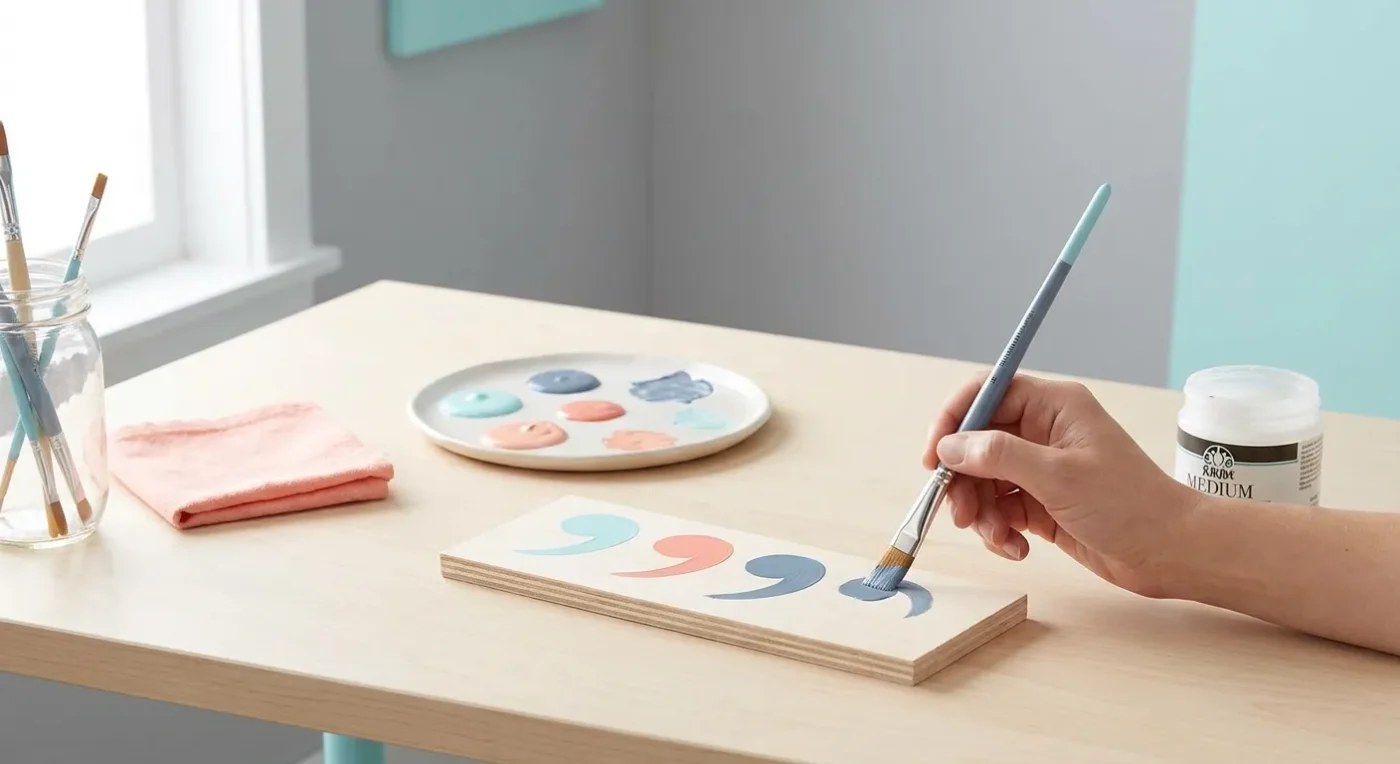

Every great painting begins with a single stroke. In decorative and folk art, few strokes are as foundational and versatile as the comma stroke. If you’re looking to learn basic painting strokes, this is truly the perfect place to begin. It’s a simple, elegant movement that forms the basis for countless leaves, petals, and decorative flourishes. Despite its simplicity, mastering this stroke will unlock a world of design possibilities. Moreover, it will significantly build your confidence as a painter.
Why the Comma Stroke is Essential for Beginners
The comma stroke is more than just a shape. It’s a fundamental exercise that teaches crucial skills. Specifically, it helps you develop brush control, understand paint consistency, and practice pressure variation. All of these are critical for decorative painting. Furthermore, it serves as a cornerstone for:
- Versatility in Folk Art: From creating delicate flower petals and leaves to adding decorative scrolls and accents, the comma stroke appears everywhere in traditional and contemporary folk art designs.
- Building Muscle Memory: Repeated practice of the comma stroke helps you develop the fine motor skills and hand-eye coordination necessary for more complex designs. It’s like learning to walk before you run, creating a solid foundation for all future techniques.
Preparing for Your First Comma Stroke
Before you begin painting, proper preparation is key. Ensure your supplies are ready and your paint is at the correct consistency. This careful setup is vital for successfully learning fundamental painting techniques.
- Materials Needed: A round brush (size 4 or 6 is excellent for practice), acrylic paint, a palette (a ceramic tile or plastic lid works well), and a non-absorbent practice surface (like a piece of watercolor paper, a ceramic tile, or even a plastic sheet).
- Paint Consistency: Acrylic paint is often too thick straight from the tube for smooth strokes. Therefore, add a tiny drop of water at a time to your paint on the palette, mixing until it reaches the consistency of thin cream or ink. It should flow smoothly off your brush without being watery.
Step-by-Step Guide to the Perfect Comma Stroke
Follow these steps to learn basic painting strokes by perfecting your comma:
- Load the Brush: Dip the tip of your round brush into the thinned paint, twisting it slightly to coat the bristles evenly and form a nice point.
- The Initial Press: Place the very tip of your brush onto your practice surface. Gently press down, allowing the bristles to spread and create the widest part of your comma.
- The Curve and Lift: While maintaining light pressure, begin to pull your brush in a gentle curve. As you curve, gradually lift the pressure off the brush, allowing the bristles to come back together into a fine point. The stroke should taper off to a delicate tail, resembling a comma.
- Practice Exercises: Practice making commas in different directions – curving left, curving right, upward, and downward. Experiment with varying the initial pressure to see how it affects the width.
Common Challenges and How to Overcome Them
Learning any new skill comes with its own set of challenges. The comma stroke is no exception. However, with a little patience and the right adjustments, you can easily overcome these hurdles. Many beginners struggle with maintaining a consistent paint flow or achieving that perfect tapered tail. Let’s explore some common issues and their solutions.
- Wobbly Lines: If your lines appear shaky, it often indicates you’re holding your breath or tensing your hand too much. Try to relax your grip and breathe naturally. Practice long, continuous strokes without lifting your brush. This helps build steadiness.
- Inconsistent Taper: The key to a smooth taper is the gradual release of pressure. If your tail is blunt, you might be lifting your brush too quickly. Conversely, if it’s too thin, you might not be pressing down enough at the start. Focus on a slow, controlled lift.
- Paint Blobs or Dry Brush: This is almost always a paint consistency issue. If you have blobs, your paint is too thick. Add a tiny bit more water. If your brush runs out of paint quickly or leaves a scratchy line, it’s too thin or your brush isn’t loaded enough. Adjust accordingly. Remember, consistent paint is essential when you want to master painting fundamentals.
- Lack of Confidence: Don’t get discouraged! Every artist, no matter their skill level, started exactly where you are. The goal is progress, not perfection. Keep practicing, and celebrate every small improvement.
Applying the Comma Stroke in Folk Art Designs
Once you feel comfortable with the basic comma stroke, it’s time to explore its application. This is where the magic of decorative painting truly comes alive. The comma stroke is incredibly versatile, forming the basis for many elements you’ll see in traditional folk art. For instance, think of the beautiful floral motifs found in Pennsylvania Dutch or Scandinavian designs. Each petal or leaf often starts with this very stroke. You can combine multiple comma strokes to create more complex shapes.
Consider creating simple flowers. Start with a central dot, then paint comma strokes around it, curving outwards to form petals. Overlap them slightly for a fuller bloom. For leaves, paint two opposing comma strokes that meet at a point. You can also vary the color and size to add depth and interest to your designs. Practicing these combinations will significantly enhance your ability to learn basic painting strokes and apply them creatively. The possibilities are truly endless, limited only by your imagination. For more advanced decorative techniques, explore our guide on Mastering Glazing Techniques.
Advanced Comma Stroke Variations
After mastering the fundamental comma stroke, you can experiment with variations to add more flair and complexity to your work. These variations allow for a broader range of textures and decorative elements. Expanding your repertoire of painting fundamentals is always beneficial.
- Double-Loaded Comma: This technique involves loading your brush with two different colors. Dip one side of your brush into a lighter color and the other side into a darker color. When you paint the comma stroke, the two colors will blend slightly, creating a beautiful shaded effect. This adds instant depth to petals and leaves.
- S-Stroke: The S-stroke is essentially two comma strokes joined together in an S-shape. It’s perfect for creating elegant scrolls, vines, or more dynamic leaf shapes. Practice the smooth transition between the two curves, maintaining consistent pressure.
- C-Stroke: Similar to the comma, but often wider and more open, the C-stroke is excellent for creating larger petals or broader decorative curves. It emphasizes the initial press and a gradual lift.
- Reverse Comma: This involves starting with the thin tail and building pressure to end with the wider base. It offers a different flow and can be useful for specific design elements or when working from a different angle.
Experimenting with these variations will not only refine your brush control but also broaden your decorative vocabulary. It’s a natural progression as you continue to develop your painting fundamentals.
Integrating Comma Strokes into Larger Projects
The comma stroke isn’t just for practice sheets; it’s a building block for substantial projects. Think about how you can use this simple stroke to embellish everyday items. For example, you could transform a plain wooden box into a charming folk art piece. Imagine painting a border of tiny comma-stroke leaves around a picture frame, or creating a floral design on a ceramic coaster. These small projects are ideal for reinforcing what you’ve learned. They provide a tangible sense of accomplishment. Furthermore, they allow you to display your growing skills.
Consider upcycling furniture. A simple dresser can be adorned with comma-stroke flowers and vines. This adds a unique, handcrafted touch. Remember, the goal is to integrate these fundamental painting techniques seamlessly into your creative process. For more inspiration on transforming objects, take a look at our article on Upcycling Everyday Objects with Decorative Paint. These projects are excellent opportunities to apply and refine your ability to learn basic painting strokes in a practical setting.
The Importance of Consistent Practice
Like any artistic skill, mastering the comma stroke requires consistent practice. Don’t expect perfection on your first try, or even your fiftieth. The beauty lies in the journey and the gradual improvement you’ll see. Dedicate a small amount of time each day, even just 15-20 minutes, to practicing your strokes. This regular engagement helps build muscle memory and refines your hand-eye coordination more effectively than sporadic, long sessions. Think of it as an artist’s daily warm-up.
Keep a dedicated sketchbook or practice pad. Date your pages to track your progress. You’ll be amazed at how far you’ve come after just a few weeks. Focus on consistency in pressure, curve, and taper. As you gain confidence, you’ll find that the comma stroke becomes second nature. It’s truly a foundational skill for anyone who wants to learn basic painting strokes and excel in decorative arts. For additional resources and inspiration, you might enjoy exploring articles from reputable art instruction sites like Artists Network, which offers a wealth of painting tips.
Beyond the Comma: Next Steps in Folk Art Painting
Once you’ve confidently mastered the comma stroke and its variations, you’ll be well-prepared for more complex folk art techniques. This foundational skill opens doors to a vast array of decorative possibilities. Consider exploring other essential strokes, such as the C-stroke, S-stroke, or dot work. These strokes, when combined with your comma stroke expertise, will allow you to create intricate patterns and beautiful motifs. Moreover, understanding how to control your brush and paint consistency, skills honed through comma stroke practice, will be invaluable.
You might also delve into specific folk art styles, like Bauernmalerei, Rosemaling, or Tole painting. Each style has its unique characteristics and traditional motifs, many of which are built upon fundamental strokes like the comma. Learning about color theory and composition will further enhance your designs. Remember, every master artist started with the basics. Your journey to becoming a skilled decorative painter begins with these simple yet powerful steps. For further reading on brush control and foundational techniques, consider resources like Dick Blick Art Materials’ educational content.
Embracing the Journey of Artistic Growth
Embarking on the path to learn basic painting strokes, specifically the comma stroke, is more than just acquiring a technical skill. It’s about embracing a journey of artistic growth and self-expression. Each stroke you paint contributes to your unique artistic voice. There will be moments of frustration, certainly. However, there will also be moments of pure joy when a stroke comes out perfectly. Celebrate these small victories. They are markers of your progress and dedication.
Decorative painting is a wonderfully rewarding hobby. It allows you to create beauty, personalize objects, and connect with a rich artistic tradition. Don’t be afraid to experiment with colors, surfaces, and combinations of strokes. Your personal style will naturally emerge over time. Keep your passion alive by continuously seeking inspiration and trying new things. The world of folk art is rich and inviting, and your mastery of the comma stroke is your key to unlocking its many wonders. We encourage you to share your progress and connect with other artists. Visit our Blog for more articles and community engagement.
Conclusion: Your Foundation for Folk Art Success
The comma stroke is truly a cornerstone for anyone aspiring to excel in decorative and folk art painting. It teaches crucial brush control, paint consistency, and pressure variation, which are fundamental skills for all future endeavors. By diligently practicing this versatile stroke, you’re not just learning a shape; you’re building the muscle memory and confidence required to tackle more intricate designs. From delicate petals to elegant scrolls, the applications are vast. Remember, every expert was once a beginner. With consistent practice and a willingness to explore, you will undoubtedly transform your initial efforts into beautiful, confident artwork. Embrace the process, enjoy the journey, and watch your artistic abilities flourish. This simple stroke is indeed your first, vital step towards creating stunning folk art designs. Now you are ready to learn basic painting strokes and apply them to your projects!
FAQ: Frequently Asked Questions About the Comma Stroke
What is a comma stroke in painting?
A comma stroke is a fundamental decorative painting technique. It starts with a broad press of the brush, gradually tapering to a fine point, resembling the punctuation mark. It’s used to create petals, leaves, and various decorative flourishes in folk art.
What kind of brush is best for learning this painting technique?
A round brush, typically a size 4 or 6, is ideal for practicing this particular painting stroke. Its pointed tip allows for both broad pressure and fine lines, which are essential for achieving the characteristic shape.
How do I make my paint the right consistency for smooth strokes?
To achieve a smooth flow for your painting strokes, your acrylic paint should be thinned to the consistency of thin cream or ink. Add water sparingly, mixing well, until it flows easily off your brush without being watery or clumpy.
How can I make my decorative painting strokes less wobbly?
To reduce wobbliness in your decorative painting strokes, try to relax your grip on the brush and breathe naturally. Consistent, steady pressure and continuous movement, rather than short, jerky motions, will help improve your line quality.
What are some common uses for this foundational painting stroke?
This foundational painting stroke is incredibly versatile. It’s commonly used to form flower petals, create various leaf shapes, add decorative scrolls and swirls, and build up intricate folk art motifs. It’s a core element in many traditional designs.