
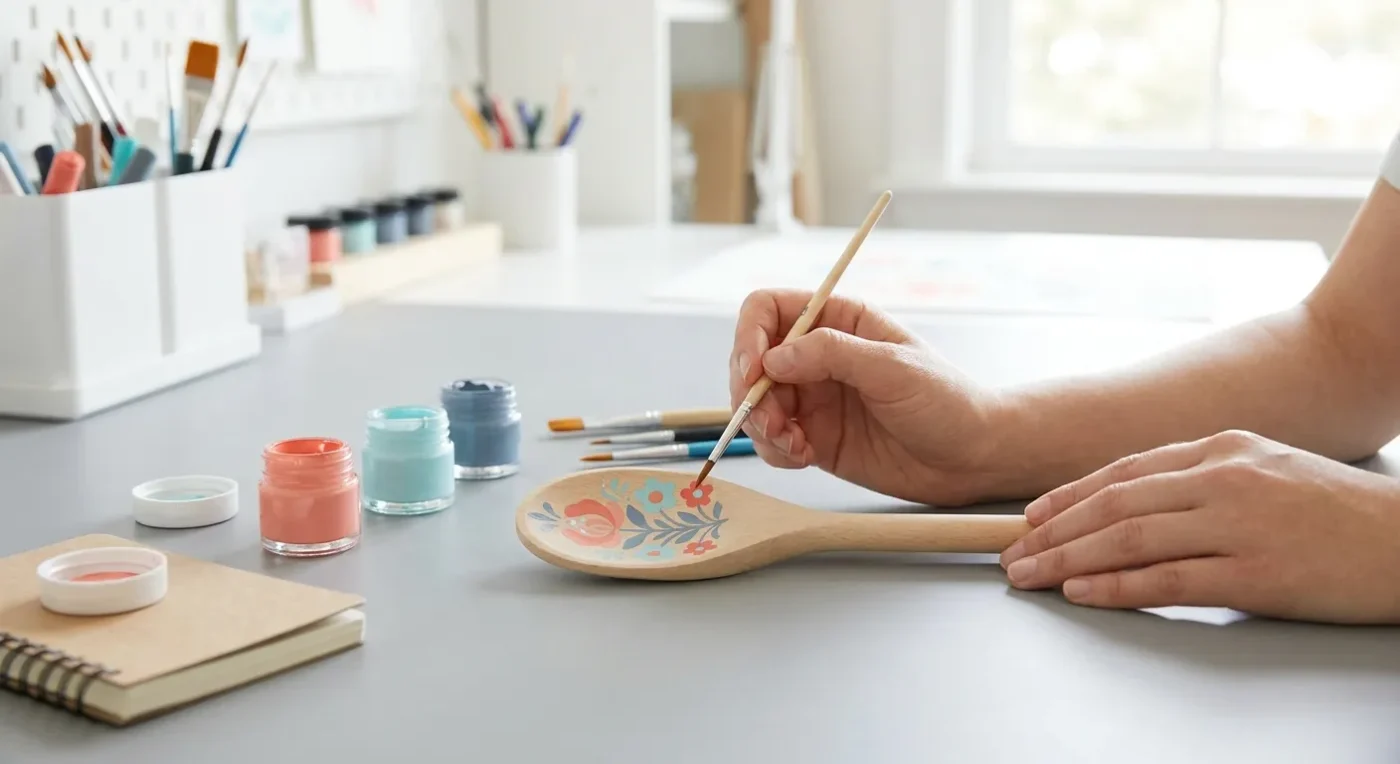

Adding handmade touches to your home is a wonderful way to infuse personality and warmth into your space. For hobbyist decorative painters and DIY crafters, there’s immense satisfaction in creating something beautiful and functional. This month, Paint Works Mag brings you one of our favorite easy folk art home projects: transforming a plain wooden spoon into a decorative kitchen accent. This project is perfect for beginners and uses basic techniques to achieve a delightful, personalized result.
Why Choose a Wooden Spoon for Your Folk Art Project?
Wooden spoons are inexpensive, readily available, and offer a small, manageable surface that’s perfect for practicing basic folk art motifs. In fact, they make charming gifts, kitchen decor, or even a unique utensil for serving. Plus, using low-VOC (volatile organic compound) paints ensures your project is not only beautiful but also aligns with the growing demand for eco-friendly solutions, a paramount trend in the industry. Many craft acrylics are now low-VOC, making them a great choice for indoor projects. Consequently, this simple item becomes an ideal canvas for creativity.
Materials You’ll Need for This Decorative Painting Project
Gathering your supplies beforehand ensures a smooth painting process. Consequently, you will need the following items:
- Unfinished wooden spoon (or a well-sanded, clean old one)
- Fine-grit sandpaper (220-grit)
- Craft acrylic paints (e.g., a base color like antique white, accent colors like deep navy, forest green, warm gold, and a touch of dusty rose)
- Flat brush (for basecoat)
- Round brush (#2 or #4 for details)
- Liner brush (00 or 0 for very fine lines)
- Water container, paper towels
- Clear, non-toxic, food-safe sealer or varnish (matte or satin finish)
For more insights into various materials, consider exploring our Glossary of Terms.
Step-by-Step Guide: Folk Art Spoon Decoration
This section outlines the process for creating your beautiful decorative spoon. Follow these steps carefully for the best results.
Step 1: Prepare Your Surface
Good preparation is key to any painting project. Firstly, lightly sand your wooden spoon with fine-grit sandpaper to ensure a smooth surface for painting. Then, wipe away any dust with a damp cloth and let it dry completely. This crucial step ensures your paint adheres beautifully and prevents any rough patches from showing through. Furthermore, proper preparation enhances the longevity of your artwork.
Step 2: Apply Your Basecoat
Using your flat brush, apply one or two thin, even coats of your chosen base color (e.g., antique white) to the handle and the back of the spoon bowl. Allow each coat to dry thoroughly before applying the next. Acrylics dry quickly, so this won’t take long. Ensure full coverage for a clean canvas for your folk art design. Moreover, thin coats prevent streaking and ensure an even finish.
Step 3: Sketch Your Design (Optional but Recommended)
Before painting, you might want to lightly sketch your folk art design onto the dried basecoat with a pencil. Simple motifs like small flowers, leaves, berries, or geometric patterns work wonderfully. Think about a repeating pattern along the handle or a small cluster of elements on the back of the spoon bowl. If you’re feeling confident, you can skip the sketch and paint freehand! However, for beginners, a sketch provides a helpful guide.
Step 4: Paint Your Folk Art Motifs
Now for the fun part! Load your round brush with your accent colors. For simple flowers, use a few dabs of color for petals and a contrasting dot for the center. Similarly, for leaves, use a gentle C-stroke. Use your liner brush for fine details like stems, veins, or delicate outlines. Build your design layer by layer, allowing each color to dry slightly before adding the next. This prevents colors from blending unintentionally. Remember, folk art embraces charming imperfections, so don’t strive for absolute photographic realism. Instead, focus on the joy of creation. Consequently, your unique artistic touch will shine through.
Expanding Your Skills with Easy Folk Art Home Projects
Once you’ve mastered the decorative spoon, consider other surfaces. For example, small wooden boxes, coasters, or even picture frames can be delightful canvases for similar folk art techniques. The beauty of these projects lies in their simplicity and the ability to personalize everyday items. Furthermore, exploring different motifs and color palettes can further enhance your artistic journey. These types of easy folk art home projects are perfect for honing your brush control and color mixing skills.
For those interested in adding depth to their decorative pieces, understanding glazing techniques can be incredibly beneficial. Learn more about Mastering Glazing Techniques: Achieve Luminous Depth in Decorative Art to elevate your projects.
Tips for Success in Your Folk Art Creations
Achieving beautiful results is easier with a few helpful tips. Firstly, always work in good lighting. This helps you see your colors accurately and ensures precision in your brushstrokes. Secondly, keep your brushes clean. Rinse them frequently in water and gently blot them dry with a paper towel. This prevents paint from drying in the bristles and maintains their shape. Thirdly, practice on scrap paper or another inexpensive item before committing to your main project. This builds confidence and allows you to experiment with different strokes and designs. Finally, don’t be afraid to experiment with color. Folk art often features vibrant and contrasting hues. Therefore, let your creativity guide your choices. These simple suggestions will undoubtedly improve your experience with easy folk art home projects.
Applying a Food-Safe Sealer to Your Decorative Spoon
After your paint has completely dried (allow at least 24 hours), it’s time to seal your masterpiece. This final step protects your artwork and makes the spoon safe for light use or display. Choose a clear, non-toxic, food-safe sealer or varnish. Apply it according to the manufacturer’s instructions, typically in thin, even coats. Allow adequate drying time between coats and before full use. This ensures durability and longevity. Moreover, a good sealer brings out the vibrancy of your colors. Always ensure the product specifies it is food-safe if you intend for the spoon to come into contact with food. This makes your easy folk art home projects both beautiful and practical.
You can find many suitable sealers at craft stores or online. For more information on responsible product selection, you might also refer to resources like the EPA’s Safer Choice program, which highlights products with safer chemical ingredients. This attention to detail reflects a commitment to both art and safety.
Caring for Your Hand-Painted Wooden Spoon
To ensure your hand-painted wooden spoon remains beautiful for years to come, proper care is essential. Avoid soaking it in water or placing it in a dishwasher, as this can damage the paint and sealer. Instead, gently hand wash with mild soap and water, wiping it dry immediately. This gentle approach helps preserve the integrity of your artwork. Consequently, your decorative spoon will continue to add charm to your home. Remember, these are decorative items or for light serving, not for heavy-duty cooking or prolonged immersion. This careful maintenance ensures your easy folk art home projects last.
The Joy of Creating Decorative Home Accents
There’s a unique satisfaction that comes from transforming an ordinary object into a work of art with your own hands. This simple wooden spoon project is more than just a craft; it’s an opportunity to express your creativity, learn new skills, and add a personal touch to your home. Furthermore, it serves as a wonderful reminder of the beauty of handmade items in a world full of mass-produced goods. We hope this guide inspires you to embrace the joy of decorative painting. Discovering new ways to personalize your space through easy folk art home projects is truly rewarding.
For more inspiration on transforming everyday items, explore our article: From Drab to Fab: Upcycling Everyday Objects with Decorative Paint. This resource offers additional ideas for your creative endeavors.
Beyond the Spoon: Exploring More Folk Art Ideas for Your Home
Once you’ve enjoyed the process of decorating a wooden spoon, you might find yourself eager to tackle other creative endeavors. Folk art is incredibly versatile and can be applied to a multitude of surfaces around your home. Consider small wooden trays, decorative boxes, or even ceramic tiles as your next canvases. These items provide slightly larger surfaces, allowing for more intricate designs or broader color palettes. Moreover, experimenting with different types of wood or ceramic can introduce new textures and challenges, further developing your painting skills. The possibilities are truly endless when it comes to incorporating folk art into your home décor. These pursuits are truly fulfilling easy folk art home projects.
You could also explore painting on fabric items, such as throw pillow covers or canvas tote bags, using fabric paints. This opens up an entirely new dimension of decorative arts, allowing you to bring your folk art style into soft furnishings. Always remember to research the appropriate paints and sealers for each specific material to ensure durability and proper care. Taking on varied materials helps broaden your artistic horizons. Consequently, your confidence will grow with each completed piece. For more project ideas and tips, check out our Blog.
The Enduring Appeal of Handmade Home Decor
In an era dominated by mass production, handmade home decor holds a special charm. Each piece tells a story, imbued with the care and creativity of its maker. A hand-painted wooden spoon, while a small item, contributes significantly to the unique character of your living space. It reflects a personal aesthetic and a connection to traditional crafts. Furthermore, creating such items can be a meditative and relaxing activity, offering a welcome break from daily routines. These types of easy folk art home projects are not just about the finished product, but also about the enjoyable process of creation. This enduring appeal ensures that folk art remains a beloved form of expression.
The value of handmade items extends beyond aesthetics; they often become cherished heirlooms, passed down through generations. Imagine your beautifully painted spoon becoming a conversation piece for years to come. This legacy of craftsmanship adds another layer of meaning to your efforts. Embrace the journey of creating beautiful things for your home, one brushstroke at a time. The satisfaction is immense, and the results are truly personal. For further inspiration, consider exploring resources on traditional folk art patterns, such as those found on museum websites like the Metropolitan Museum of Art, which showcase diverse historical examples. This can provide a wealth of ideas for your next decorative painting endeavor.
Conclusion: Your Journey with Folk Art Begins
We hope this guide has inspired you to pick up a brush and embark on your own decorative painting adventure. Transforming a simple wooden spoon into a charming piece of folk art is a rewarding experience, perfect for artists of all skill levels. It’s a testament to how small, creative efforts can significantly enhance your home’s ambiance. Moreover, it’s a fantastic way to practice fundamental painting techniques while creating something beautiful and functional. Remember, every stroke is a step in your artistic journey. These easy folk art home projects are just the beginning of what you can achieve. Happy painting!
FAQ: Common Questions About Folk Art Painting
What kind of paint is best for wooden spoons?
Craft acrylic paints are generally ideal for decorating wooden spoons. They are water-based, dry quickly, and offer a wide range of colors. For spoons that might come into contact with food, ensure you use a non-toxic, food-safe sealer.
Can I use an old wooden spoon for this project?
Absolutely! An old wooden spoon can be repurposed. Just make sure it’s thoroughly cleaned and sanded to remove any old finishes or rough spots. This provides a smooth surface for your new design.
How do I make my painted spoon food-safe?
To make your painted spoon food-safe, you must apply a clear, non-toxic, food-safe varnish or sealer after the paint has dried completely. Always check the product label to confirm it meets food safety standards.
What if I make a mistake while painting?
Don’t worry about mistakes! If the paint is still wet, you can often wipe it away with a damp cloth or paper towel. If it’s dry, you can gently sand the area and repaint, or simply incorporate the