
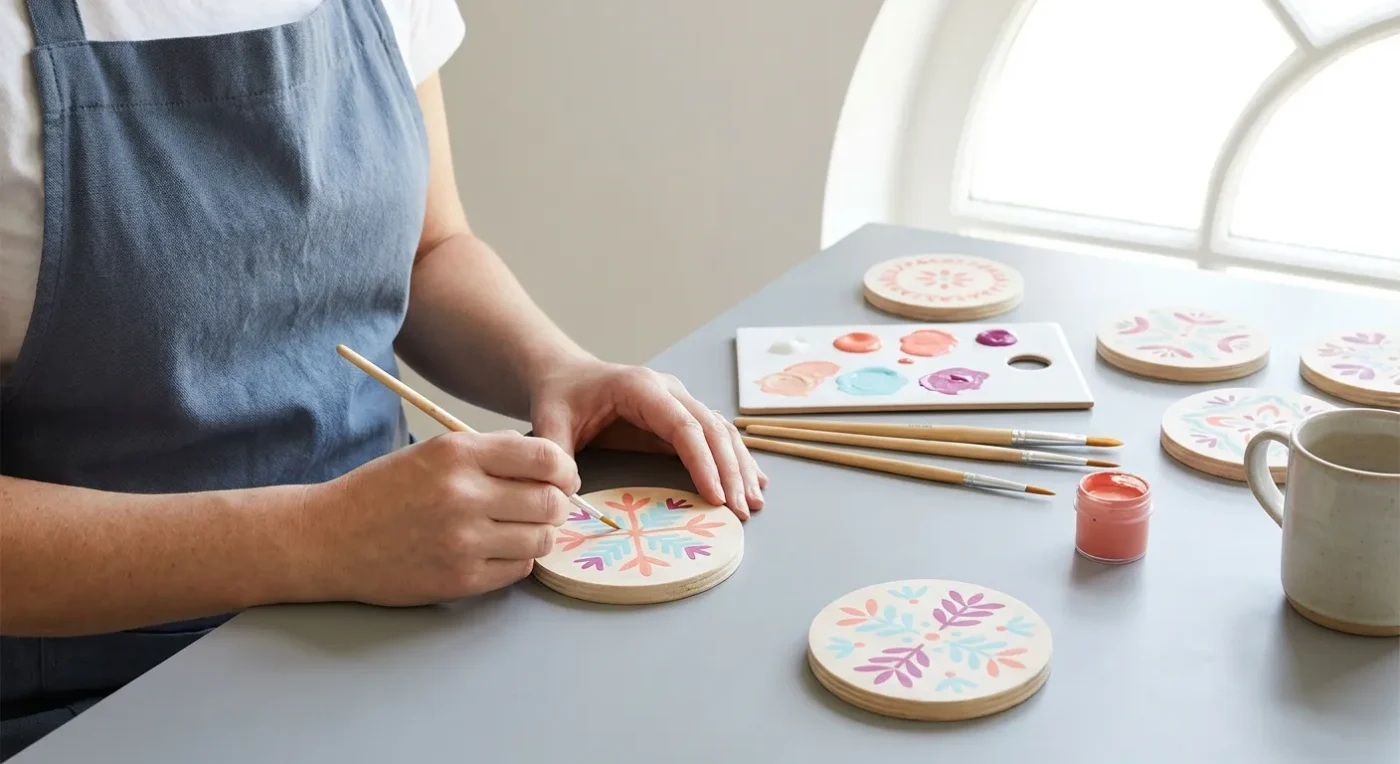

Want to infuse your living space with personalized charm and unique artistry? This folk art coasters tutorial is your perfect starting point. Decorative painting doesn’t have to be daunting; with a few simple techniques and readily available materials, you can transform plain coasters into miniature canvases of folk art beauty. This project is ideal for hobbyists seeking practical guidance and inspiration, offering a delightful way to add handmade touches to your home or create thoughtful gifts.
At Paint Works Mag, we believe in empowering every crafter with the confidence and skills to create beautiful projects. This guide will walk you through each step, ensuring a fun and rewarding experience as you craft something truly special. Plus, embracing DIY projects like this aligns perfectly with the growing trend of homeowners seeking affordable yet impactful upgrades and creative outlets, as nearly 60% plan interior projects for 2026. Indeed, home improvement projects are a significant trend, and handmade items contribute to this desire for personalization.
Gathering Your Materials: The Foundation of Your Folk Art Coasters Tutorial
Before diving into the painting, let’s assemble your folk art toolkit. You’ll need:
- Plain Coasters: Cork, wood, or ceramic tiles work wonderfully. Choose a surface that suits your style.
- Acrylic Paints: Opt for a range of colors that evoke a folk art feel—think earthy tones, deep blues, and warm reds. Consider low or zero VOC paints, which are now a baseline expectation for eco-friendly crafting and improved indoor air quality, reflecting a paramount industry trend.
- Brushes: A small round brush for details, a flat brush for filling in larger areas, and a liner brush for fine lines.
- Palette: A ceramic plate or plastic palette works well.
- Water Container: For rinsing brushes.
- Paper Towels or Cloth: For dabbing brushes.
- Clear Sealer/Varnish: A water-based, non-toxic sealer is recommended to protect your finished coasters.
- Optional: Pencil for sketching, tracing paper, and our free folk art motif template.
Step-by-Step Guide to Painting Your Folk Art Coasters
Follow these steps to bring your folk art visions to life:
1. Prepare Your Coaster Surface
Ensure your coasters are clean and dry. If using wood or ceramic, a light sanding with fine-grit sandpaper can help the paint adhere better. Wipe away any dust. For lighter designs on darker surfaces, you might apply a thin coat of white or cream gesso or acrylic paint as a base layer and let it dry completely. This initial step is crucial for a smooth painting experience.
2. Sketch Your Design (Optional but Recommended)
Lightly sketch your folk art design onto the coaster using a pencil. Common folk art motifs include simple flowers, leaves, birds, hearts, or geometric patterns. Don’t worry about perfection; folk art embraces a charming, handmade aesthetic. If you’re using our template, simply trace the design onto your coaster. This preparation makes the painting process much easier.
3. Begin with Base Colors
Start by painting the largest areas of your design with your chosen base colors. For example, if you’re painting a folk art flower, begin with the main petals. Apply thin, even coats of paint, allowing each layer to dry before adding the next. This prevents smudging and creates a more professional finish. Remember that patience is key in decorative painting.
4. Add Details and Outlines
Once your base colors are dry, use a smaller brush to add finer details. This could include veins on leaves, dots on flowers, or patterns within geometric shapes. Use a liner brush for delicate outlines, which will define your design and give it that characteristic folk art look. Experiment with different brush strokes to add texture and interest. This stage truly brings your coaster designs to life.
5. Layering and Shading
To add depth, consider layering different shades of the same color or adding subtle shading. For instance, a slightly darker shade around the edges of a petal can create a sense of dimension. This technique, often explored in mastering glazing techniques, can elevate your coaster art. Don’t overdo it; folk art often maintains a relatively flat, graphic quality, but a little shading adds richness.
6. Finishing Touches
Review your coaster designs. Are there any areas that need touch-ups? Perhaps a few more dots or a bolder line? Take your time at this stage to refine your artwork. Once you are satisfied with your painted coasters, ensure all paint is completely dry before moving to the final step.
7. Seal Your Masterpiece
Apply a clear, water-based sealer or varnish to protect your finished folk art coasters. This step is essential for durability, especially since coasters will be exposed to moisture and heat. Apply 2-3 thin coats, allowing each coat to dry thoroughly according to the product instructions. A good sealer will ensure your handmade coasters last for years to come. For more on protecting your creations, explore our blog for additional tips.
Tips for Success in Your Folk Art Coasters Tutorial
To make your coaster painting experience even more enjoyable and successful, consider these helpful tips:
- Start Simple: If you’re new to folk art painting, begin with straightforward designs. Complex patterns can be tackled once you’ve built confidence.
- Practice Makes Perfect: Don’t be afraid to practice your brush strokes and designs on scrap paper or extra coaster blanks. This builds muscle memory and improves control.
- Embrace Imperfection: Folk art celebrates the handmade quality, so minor imperfections add to its charm. Don’t strive for machine-like precision.
- Color Palette Cohesion: Choose a limited color palette that works well together. This creates a harmonious and visually pleasing set of folk art coasters.
- Clean Brushes Regularly: Rinse your brushes frequently during painting to prevent paint from drying in the bristles, which can damage them.
- Work in a Well-Ventilated Area: Especially when using sealers, ensure good airflow in your workspace.
- Consider Theme Sets: Create a set of coasters with a unifying theme, such as seasonal motifs, local flora, or abstract folk patterns. This makes for a thoughtful gift.
By following these guidelines, you’ll find the process of crafting decorative coasters incredibly rewarding. This particular folk art coasters tutorial offers a tangible way to express creativity and enhance your home environment.
The Enduring Appeal of Folk Art in Home Decor
Folk art has a timeless appeal, bringing warmth, history, and a touch of whimsy to any space. It often reflects cultural traditions, local stories, and the beauty of everyday life, making it profoundly personal. Incorporating handmade items like decorative coasters into your home is a wonderful way to connect with this rich artistic heritage. Furthermore, the act of creating these items, guided by a folk art coasters tutorial, provides a meditative and fulfilling experience.
These charming coasters are not just functional; they are conversation starters, little pieces of art that reflect your personality and crafting skills. They make excellent housewarming gifts, holiday presents, or simply a lovely treat for yourself. Imagine serving drinks on your beautifully hand-painted folk art coasters, impressing guests with your unique creations. This simple project allows for immense creative expression without requiring advanced artistic training.
For those interested in expanding their decorative painting skills, consider exploring other surfaces. The techniques learned in this craft coaster painting guide can be applied to small wooden boxes, picture frames, or even upcycling everyday objects with decorative paint, as discussed in our article From Drab to Fab: Upcycling Everyday Objects with Decorative Paint. The possibilities are truly endless once you master the basics of folk art painting.
Beyond the Tutorial: Continuing Your Artistic Journey
Completing this folk art coasters tutorial is just the beginning of your decorative painting adventure. Many artists find joy in exploring different folk art styles from around the world, from Scandinavian rosemaling to Mexican talavera. Each style offers unique patterns and color palettes, providing endless inspiration for future projects.
Paint Works Mag is dedicated to supporting your artistic growth. We offer a wealth of resources, including detailed guides, project ideas, and a Glossary of Terms to help you understand various techniques and materials. We encourage you to share your finished folk art coaster creations with us and our community. Connecting with other crafters can provide motivation and new ideas, further enriching your creative journey.
Remember, the most important aspect of any creative endeavor is to have fun and enjoy the process. This specific folk art coasters tutorial is designed to be accessible and enjoyable for everyone, regardless of prior painting experience. So gather your supplies, find a comfortable spot, and let your creativity flow. You’ll be amazed at what you can create with a little paint and imagination.
In conclusion, crafting your own folk art coasters is a delightful and rewarding project. It offers a perfect blend of creativity and practicality, allowing you to personalize your home decor or create thoughtful, handmade gifts. This comprehensive guide, your ultimate folk art coasters tutorial, has provided all the necessary steps and tips to ensure your success. We hope you feel inspired to pick up your brushes and start painting today!
FAQ
What types of coasters work best for this craft?
Cork, wood, or ceramic tiles are excellent choices. They provide a sturdy surface and absorb paint well. Consider the overall look you want to achieve when selecting your coaster material.
Can I use different types of paint for these decorative coasters?
Acrylic paints are highly recommended because they are versatile, dry quickly, and are easy to clean up with water. While other paints might work, acrylics are generally the most user-friendly for this type of project.
How do I make my painted coasters waterproof?
After your paint is completely dry, apply several thin coats of a clear, water-based, non-toxic sealer or varnish. This protective layer is crucial for making your handmade coasters durable and resistant to moisture.
What if I’m not good at drawing for the coaster design?
No problem at all! You can use stencils, tracing paper with pre-made designs, or even simple geometric shapes. Folk art often features straightforward patterns, so intricate drawing skills aren’t necessary for beautiful results.
Where can I find inspiration for folk art patterns?
Look for inspiration in traditional folk art from different cultures, nature (flowers, leaves, birds), or even everyday objects. Paint Works Mag also offers free templates and ideas on our website to get you started on your decorative coaster journey.