
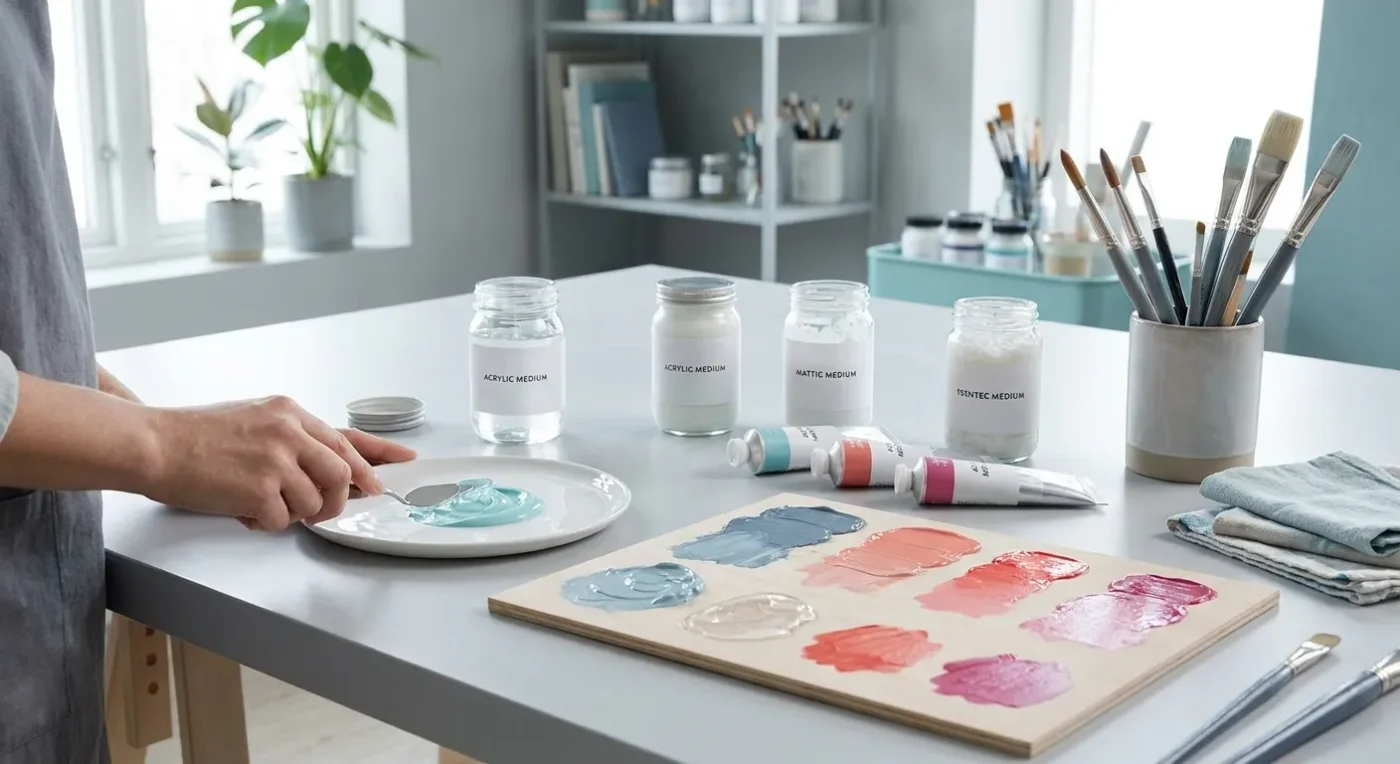

Acrylic paints offer incredible versatility. However, you can expand their capabilities even further with acrylic paint mediums. These special additives modify the texture, transparency, drying time, and finish of your paints. They open a new world of creative possibilities for your decorative art projects. Understanding how to use these mediums helps you achieve specific artistic effects. This ranges from subtle glazes to dramatic impasto textures, making your folk art truly distinctive.
For instance, imagine adding a rich, sculptural quality to a painted birdhouse or achieving a smooth, glass-like sheen on a decorative plate. These effects are all within reach when you incorporate various paint modifiers into your creative process. Many artists find that exploring these additives deepens their understanding of paint behavior. Furthermore, it allows for greater control over the final appearance of their work. Let’s explore the different types of mediums available and how they can elevate your painting.
Exploring Common Acrylic Paint Mediums
A wide array of acrylic paint mediums exists, each possessing unique properties. Gel mediums, for example, add body and transparency. They make your paint thicker and extend its volume without diminishing color intensity. These are excellent for creating textured surfaces or for impasto techniques. Heavy gel mediums can even build significant relief on your canvas or wood. This allows for truly three-dimensional elements in your compositions.
Flow improvers, sometimes called pouring mediums, work differently. They reduce the viscosity of acrylic paint. This enables the paint to flow more smoothly. Consequently, you can create beautiful drips, puddles, or even pouring art without significantly diluting the color. They are essential for achieving flat, even coats or for intricate detail work where drag is undesirable. When using these, remember that a little goes a long way to maintain pigment saturation.
Retarders slow down the drying time of acrylics. This provides more open time for blending colors. They are especially useful for achieving subtle gradients or intricate shading in your folk art. If you’re working on a large piece or in a warm environment, a retarder can be invaluable. It prevents paint from drying too quickly on your palette or brush. This allows for seamless transitions between hues. For more on blending, consider our resource on Mastering Glazing Techniques: Achieve Luminous Depth in Decorative Art.
Finally, texture pastes and gels incorporate materials like sand, glass beads, or ceramic stucco. These create unique tactile surfaces either before or during painting. They can add a rustic feel, a gritty texture, or even a shimmering effect depending on the additive. Imagine a sandy beach scene or a glittering mosaic created directly with your paint! These mediums are fantastic for adding an extra dimension to your decorative pieces. They truly invite viewers to experience the art not just visually, but also texturally.
Understanding the Science Behind Paint Modifiers
To truly master acrylic paint mediums, it helps to understand a bit about their composition. Most acrylic mediums are essentially acrylic polymer emulsions, similar to the binder in your acrylic paints. This compatibility is what allows them to mix seamlessly without compromising the paint’s integrity or archival quality. The specific polymers and additives within each medium determine its unique properties.
For instance, gloss mediums contain polymers that dry to a clear, shiny finish, enhancing the vibrancy of your colors. Matte mediums, on the other hand, include matting agents that diffuse light, resulting in a non-reflective surface. Understanding these basics helps you predict how a medium will interact with your paint. It also helps you choose the right product for your desired outcome. Always check the product’s specifications for details on flexibility, water resistance, and UV stability.
Furthermore, some mediums offer specific protective qualities. Varnishes, for example, provide a final, non-removable layer that protects your finished artwork from dust, dirt, and UV radiation. While not strictly a ‘medium’ in the mixing sense, they are an important part of the finishing process for many decorative artists. Therefore, consider the entire lifecycle of your artwork when selecting your materials.
Different brands may have slightly different formulations, so experimentation is key. Always test new mediums on a scrap piece of your chosen surface before applying them to your main project. This ensures you understand its behavior and achieve the desired effect. This proactive approach saves time and prevents unexpected results.
Incorporating Mediums into Your Folk Art
When working with acrylic paint mediums, experimentation is key. Always begin with small amounts. Mix the medium thoroughly with your paint on a palette. For gel mediums, start by adding a small dollop to your paint. Gradually increase the amount until you achieve the desired consistency and texture. Remember, these mediums can significantly extend your paint’s volume, making your colors go further.
When using flow improvers, add drops gradually until the paint flows as you wish. Too much can make the paint too thin and cause it to lose its opacity. It’s often better to add less and build up the effect. This preserves the pigment’s intensity. With retarders, a few drops are often enough to extend drying time significantly. Overuse can result in a sticky, slow-drying surface that can be difficult to work with. Always consult the manufacturer’s guidelines for recommended ratios.
Consider the final effect you wish to achieve. Do you need a smooth, glass-like finish for a painted tray? A gloss medium can certainly help. Are you aiming for a raised, sculptural element on a wooden box? A heavy gel medium or texture paste will be your friend. For a softer, more fabric-like texture, a textile medium mixed with paint can be applied to cloth. This opens up possibilities for painting on garments or decorative textiles.
Always read the manufacturer’s instructions for specific ratios and application tips to get the best results. Different brands may have slightly different concentrations. Therefore, understanding the product you are using is crucial. Moreover, proper ventilation is advisable when working with some mediums, especially those with strong odors. Your safety and the longevity of your artwork are paramount.
Creative Applications for Decorative Artists
The beauty of acrylic paint mediums lies in their ability to transform ordinary paint into something extraordinary. For decorative artists, this means endless opportunities to add unique touches to their folk art. For example, you can create stunning crackle effects on furniture using a crackle medium. This gives a charming, aged appearance to new pieces. Or, use a glitter medium to add sparkle to festive decorations without loose glitter mess.
For artists interested in mixed media, these modifiers are invaluable. You can embed small objects like beads, fabric scraps, or dried leaves directly into your painting using a heavy gel medium. This creates fascinating assemblages. Furthermore, some mediums can act as adhesives, bonding different materials together seamlessly within your artwork. This expands the definition of what a painting can be.
Consider also the application of glazing mediums. These thin the paint while maintaining its transparency. This allows you to build up layers of luminous color, creating depth and richness. This technique is particularly effective for achieving subtle shifts in tone and light. It adds a sophisticated dimension to your decorative pieces. For more inspiration on transforming everyday items, explore our article on From Drab to Fab: Upcycling Everyday Objects with Decorative Paint.
Do not be afraid to combine different mediums. For instance, you might mix a flow improver with a transparent color to create a delicate wash, then add a heavy gel medium for impasto details. The possibilities are truly limitless. Each combination can yield a unique result. This encourages a playful and experimental approach to your art. Consequently, your creative journey becomes more exciting and rewarding.
Essential Tips for Working with Mediums
To get the most out of your acrylic paint mediums, a few best practices can help. Firstly, always use clean tools and palettes. Contamination can affect the medium’s performance and the archival quality of your paint. Secondly, mix thoroughly but gently. Over-mixing, especially with gels, can introduce air bubbles, which may become visible when dry.
Thirdly, consider drying times. While retarders extend open time, some texture pastes or heavy gels can take longer to dry completely, especially if applied thickly. Plan your layers accordingly to avoid smudging or incomplete drying. Patience is often a virtue in decorative painting. Furthermore, proper storage of your mediums is important. Keep lids tightly sealed to prevent drying out and store them in a cool, dry place.
Finally, always clean your brushes and tools immediately after use. Acrylics and their mediums can be very difficult to remove once dry. A good quality brush cleaner and warm water will usually suffice. This practice ensures your tools remain in good condition for future projects. It also saves you the frustration of trying to revive stiff brushes. Explore our Glossary of Terms for more painting terminology.
Remember that every artist’s experience with mediums will be slightly different. Your personal style and the specific paints you use will influence the outcomes. Therefore, embrace the process of discovery. Allow yourself to experiment and learn from each application. This continuous learning will enhance your skills and expand your artistic repertoire.
Caring for Your Medium-Enhanced Artworks
Once you’ve incorporated acrylic paint mediums into your decorative art, proper care ensures the longevity of your creations. While acrylics are generally durable, some textured surfaces might be more delicate. Avoid placing textured pieces in areas where they might be frequently touched or rubbed. This prevents damage to the raised elements.
For artworks with a gloss finish, a soft, dry cloth can be used for dusting. Avoid abrasive cleaners, which can scratch the surface. If your artwork has a matte finish, be aware that oils from hands can sometimes leave marks. Therefore, handling with clean hands or gloves is recommended. Additionally, consider framing pieces under glass for added protection, especially those with intricate details or delicate textures.
Exposure to direct sunlight over long periods can cause colors to fade, even with UV-resistant paints and mediums. Position your artworks in locations where they are not constantly exposed to harsh sunlight. This helps preserve the vibrancy of your colors. Furthermore, extreme temperature fluctuations can sometimes affect the stability of paint layers. Maintain a stable environment for your cherished pieces.
If you’ve used a protective varnish, this layer adds significant defense against environmental factors. However, varnishes themselves can sometimes be affected by harsh cleaners. Always follow the varnish manufacturer’s recommendations for cleaning and maintenance. By taking these simple steps, your folk art, enhanced with various mediums, will remain beautiful for years to come. For any further questions, please contact us.
Conclusion
Incorporating acrylic paint mediums into your decorative painting practice can unlock exciting new dimensions for your folk art. By understanding the properties of different mediums and experimenting with their application, you can control the paint’s behavior, create stunning textures, and achieve finishes that elevate your artistry. Do not be afraid to try new combinations and discover how these versatile additives can enhance your creative expression. Whether you aim for subtle depth, dramatic texture, or extended blending time, there is a medium to help you achieve your vision. Embrace the journey of discovery and watch your artwork transform.
FAQ: How do paint modifiers change acrylic paint properties?
Paint modifiers, or mediums, can significantly alter acrylic paint properties. They can increase transparency, thicken or thin consistency, extend drying time, and change the final finish from matte to gloss. Some even add texture or special effects.
FAQ: Can I mix different types of acrylic painting additives?
Yes, you can often mix different types of acrylic painting additives, but it’s crucial to test combinations on a scrap surface first. Always ensure the products are compatible and follow manufacturer guidelines to avoid unexpected results.
FAQ: What is the best additive for creating texture in my paintings?
For creating texture, heavy gel mediums and texture pastes are excellent choices. These products often contain various aggregates like sand, glass beads, or ceramic stucco to build up pronounced, tactile surfaces in your artwork.
FAQ: How do I make my acrylic paint dry slower for blending?
To make your acrylic paint dry slower for better blending, use an acrylic retarder medium. Add a few drops to your paint on the palette. This will extend the open time, allowing for smoother transitions and more intricate shading.
FAQ: Are there specific mediums for pouring art?
Yes, pouring mediums or flow improvers are specifically designed for pouring art. They reduce the viscosity of acrylic paint without compromising color intensity, allowing it to flow smoothly and create beautiful, marbled effects.
FAQ: What’s the difference between a gloss medium and a varnish?
A gloss medium is mixed with paint to increase shine and transparency within the paint layer. A varnish, on the other hand, is a final, protective coating applied over dried artwork to shield it from dust, UV light, and damage, also available in gloss or matte finishes.