
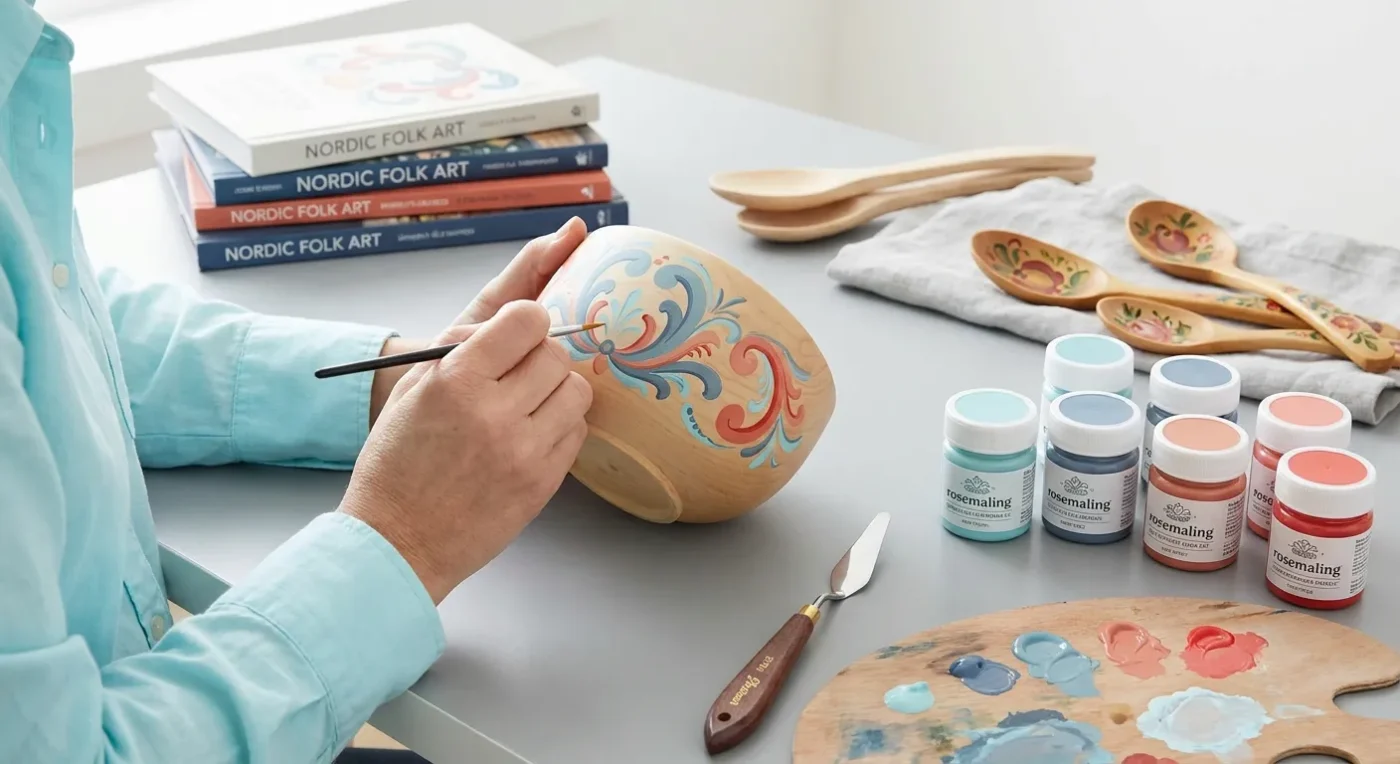

For those fascinated by intricate patterns and rich cultural heritage, exploring Rosemaling painting offers a delightful journey into Nordic folk art. This traditional Norwegian decorative painting style, with its flowing lines, vibrant colors, and distinctive motifs, tells a story of artistry passed down through generations. More than just a technique, Rosemaling is a celebration of beauty, history, and the human desire to adorn everyday objects with extraordinary skill.
The Enchanting History of Traditional Norwegian Painting
Rosemaling, meaning ‘rose painting’, emerged in the valleys of Norway in the 18th century. It flourished as a decorative art form on furniture, walls, and household items. Initially influenced by European rococo and baroque styles, Norwegian artisans adapted these trends, infusing them with local symbolism and a unique rustic charm. Each region developed its own distinct style. Telemark, Hallingdal, Rogaland, and Valdres are just a few, each recognizable by specific color palettes, flower types, and scrollwork patterns. This rich tapestry of traditional Norwegian painting styles speaks to the creativity and regional identity of its practitioners. Furthermore, these regional variations provide endless inspiration for contemporary artists.
Key Motifs and Characteristics of Nordic Folk Art Styles
The beauty of Rosemaling lies in its characteristic motifs. While roses are central, the term ‘rose’ often refers to stylized flowers, leaves, and intricate scrollwork rather than botanically accurate depictions. Here’s what defines these Nordic folk art styles:
- C- and S-Scrolls: These elegant, flowing curves are the backbone of Rosemaling designs, creating movement and continuity.
- Stylized Flowers: Imaginary and highly decorative flowers, often with multiple petals and intricate centers, are a hallmark.
- Leaves and Acanthus: Lush foliage, sometimes resembling acanthus leaves, intertwines with the floral elements.
- Symmetry and Asymmetry: Designs often balance symmetrical elements with a lively, asymmetrical flow, creating dynamic compositions.
- Color Palettes: Traditionally, colors were derived from natural pigments, often featuring deep reds, rich blues, forest greens, warm ochres, and creamy whites. Modern Rosemaling embraces a wider spectrum but often retains this earthy, harmonious feel. Therefore, understanding these core elements is crucial for anyone interested in this art form.
Rosemaling Techniques: Bringing the Designs to Life
Rosemaling techniques primarily involve oil paints, though acrylics are popular today for their faster drying time. Artists use specific brushes – often flat and round brushes – to create the characteristic shading, blending, and fine lines. The ‘wet-on-wet’ technique is common, where colors are blended directly on the surface, allowing for soft transitions and vibrant depth. Learning these decorative scrollwork art methods requires patience and practice, but the results are incredibly rewarding. For example, mastering the essential strokes is a key step. You can find a beginner’s guide to Norwegian folk art strokes on our site.
Finding Inspiration in Scandinavian Painting Patterns
For those eager to start their own projects, inspiration is abundant. Scandinavian painting patterns can be found in museums, historical texts, and online archives. Observing traditional pieces helps artists understand the flow and balance inherent in the designs. Many contemporary Rosemaling artists also share their interpretations, offering fresh perspectives on classic motifs. Consequently, new artists can build upon centuries of tradition.
Regional Rosemaling Styles: A Tapestry of Tradition
As mentioned, Rosemaling developed distinct regional styles, each with its unique flavor. The Telemark style, for instance, is known for its dramatic C- and S-scrolls, often featuring a central fantasy flower. Hallingdal designs tend to be bolder and more symmetrical, frequently incorporating strong architectural elements. Rogaland, conversely, showcases delicate, often understated patterns with softer colors. Valdres is recognized for its exuberant, often whimsical designs, sometimes including figures or animals within the scrollwork. Understanding these differences enriches the experience of Norwegian decorative painting. Indeed, each style offers a unique challenge and reward for the artist.
Materials and Tools for Your Rosemaling Journey
Starting with Rosemaling requires a few essential materials. You will need good quality oil or acrylic paints. A selection of brushes, including flat, round, and liner brushes, is also crucial for creating different strokes and details. Wooden surfaces are traditional, but you can practice on paper or canvas. Additionally, a palette for mixing colors and a cleaning solution for brushes are necessary. Many artists find a steady hand and good lighting to be invaluable tools as well. Therefore, gathering the right supplies is the first step.
Mastering the Art of Decorative Scrollwork
The intricate scrollwork is arguably the most recognizable element of Rosemaling. Mastering these flowing lines and delicate curves takes practice. Artists often begin by practicing basic C- and S-strokes before combining them into more complex patterns. The key is to maintain a consistent pressure and smooth movement. This creates the characteristic tapered ends and graceful transitions. Furthermore, understanding how to build up layers of paint to create depth is vital. For advanced techniques, consider advanced folk art color blending techniques to add realism and dimension to your work.
The Cultural Significance of Norwegian Folk Art
Norwegian folk art, including Rosemaling, is more than just decoration; it is a profound expression of cultural identity. Historically, these patterns adorned everyday objects, transforming utilitarian items into works of art. They reflected the values, beliefs, and natural surroundings of the communities where they originated. Today, Rosemaling continues to be cherished as a link to the past and a living tradition. It represents a connection to heritage and a celebration of skilled craftsmanship. The preservation of this art form is therefore very important.
Tips for Aspiring Rosemaling Artists
If you are considering exploring Rosemaling painting, here are some tips to get started. Firstly, begin with simple patterns and focus on mastering basic strokes. Don’t be afraid to make mistakes; they are part of the learning process. Secondly, study examples of traditional Rosemaling to understand the principles of design and color. Thirdly, consider joining a painting community. There are many benefits of joining a decorative painting community, including access to experienced artists and valuable feedback. Finally, practice regularly. Consistent effort will yield significant improvements over time. For small projects, you can even find specific Rosemaling painting techniques for small projects on our site.
Modern Interpretations and Adaptations
While rooted in tradition, Rosemaling is not static. Contemporary artists are finding new ways to interpret and adapt this ancient art form. Some experiment with different color palettes, while others apply Rosemaling motifs to modern objects or even integrate them into abstract compositions. This evolution keeps the art form vibrant and relevant. For instance, you might see Rosemaling patterns on contemporary textiles or ceramic pieces. This demonstrates the enduring appeal of its designs. Indeed, the adaptability of Rosemaling ensures its continued presence in the art world.
Expanding Your Folk Art Repertoire
Rosemaling is just one facet of the rich world of folk art. Many other traditions offer similar opportunities for creative expression and cultural exploration. Drawing inspiration from historical folk art patterns can broaden your artistic horizons. Learning about various historical styles can also inform your Rosemaling practice, providing new ideas for motifs and compositions. Furthermore, exploring other decorative painting styles can enhance your overall skill set. For example, understanding different cultural approaches to ornamentation can inspire unique fusions in your own work.
The Joy of Creating: Why Rosemaling Endures
Ultimately, the enduring appeal of Rosemaling lies in the joy of creation. The process of meticulously painting intricate designs, blending colors, and bringing a piece to life is deeply satisfying. For many, it is a meditative practice, a way to connect with history and express personal creativity. The finished pieces are not just beautiful objects; they are tangible expressions of skill, patience, and cultural appreciation. Therefore, exploring Rosemaling painting offers a rewarding artistic journey for anyone. It continues to inspire artists worldwide.
Conclusion: Embracing the Legacy of Rosemaling
Exploring Rosemaling painting truly offers a profound and beautiful experience. It is an art form that transcends mere decoration, embodying centuries of history, regional identity, and artistic skill. From its intricate scrollwork to its vibrant color palettes, Rosemaling continues to captivate artists and enthusiasts alike. Whether you are a seasoned painter or a curious beginner, delving into this Nordic folk art tradition promises a rewarding journey of discovery and creation. We encourage you to pick up a brush and begin your own adventure in this captivating world. You can find more resources and inspiration on sites like Vesterheim Norwegian-American Museum, which is dedicated to preserving and promoting Norwegian folk art. Also, the official portal to Norway offers insights into the broader cultural context of such art forms.
FAQ
What is the origin of Norwegian rose painting?
Norwegian rose painting, or Rosemaling, originated in the valleys of Norway during the 18th century. It developed as a decorative art form, influenced by European art styles but adapted with local symbols and rustic charm.
What are the common design elements in this Nordic art?
Common design elements in this Nordic art include C- and S-scrolls, stylized flowers, lush leaves, and sometimes acanthus motifs. Designs often feature a balance of symmetry and asymmetry, rendered in rich, earthy color palettes.
What types of paint are typically used for this traditional Norwegian art?
Traditionally, oil paints were used for this traditional Norwegian art. However, many contemporary artists now prefer acrylic paints due to their faster drying time and ease of use.
How can I learn to paint Nordic folk designs?
You can learn to paint Nordic folk designs by starting with basic strokes, studying traditional examples, and practicing regularly. Joining a local or online painting community can also provide valuable guidance and support.
Is this decorative painting style still practiced today?
Yes, this decorative painting style is still widely practiced today. It continues to be cherished as a vibrant living tradition, with artists finding new ways to interpret and adapt its classic motifs while honoring its historical roots.