
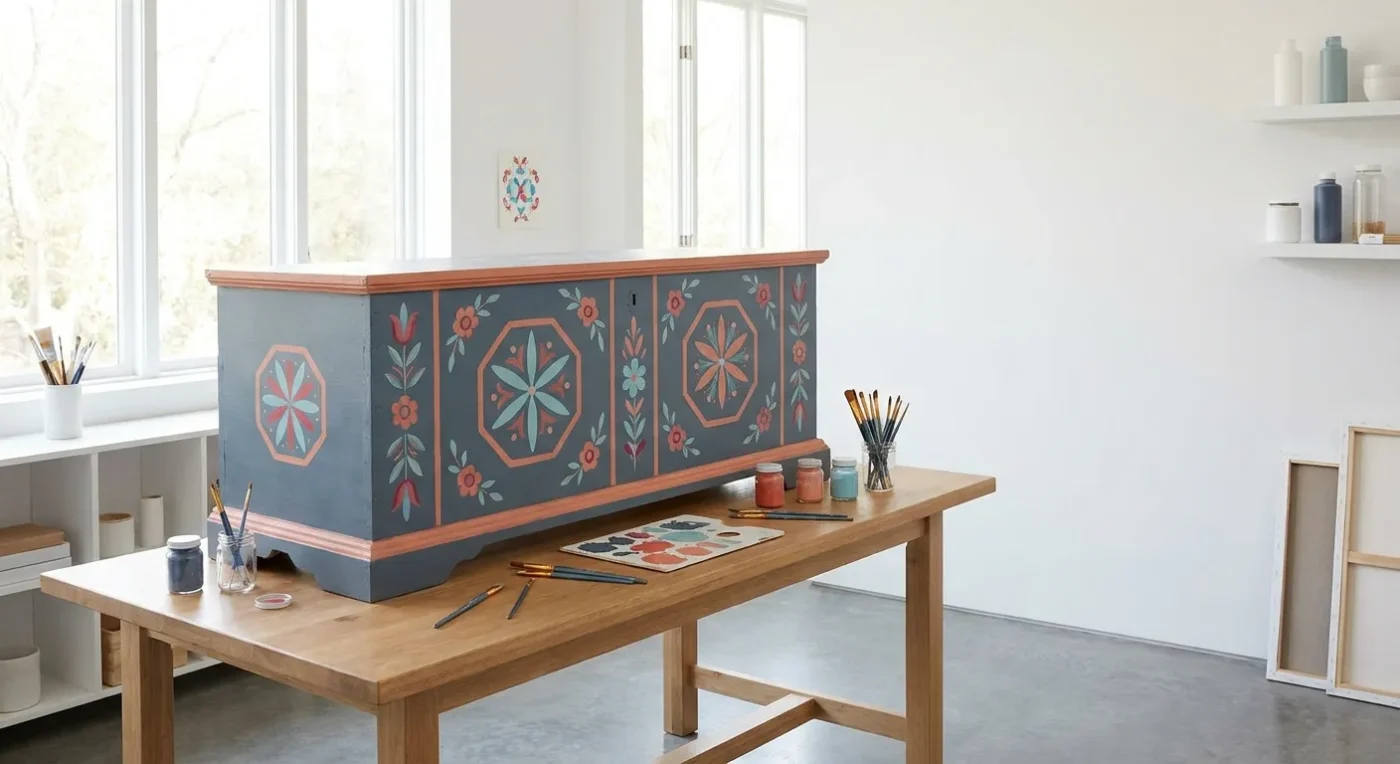

Among the rich tapestry of American folk art traditions, Pennsylvania Dutch folk art stands out for its distinctive charm, vibrant symbolism, and enduring appeal. Originating from the German-speaking immigrants who settled in Pennsylvania in the 17th and 18th centuries, this unique artistic style beautifully blends European influences with American ingenuity. It’s an art form deeply rooted in everyday life, transforming utilitarian objects into delightful expressions of culture and belief. Today, its cheerful aesthetics continue to inspire decorative painters worldwide. For example, many artists enjoy recreating its iconic motifs.
Symbols and Motifs in Pennsylvania Dutch Folk Art
At the heart of Pennsylvania Dutch artistic expression are its iconic symbols and motifs, each often carrying a specific meaning. The ‘distelfink’ (thistle finch) is a popular bird motif, often depicted in pairs, symbolizing good fortune and happiness. Tulips, representing faith and charity, are frequently seen in vibrant arrangements, sometimes emerging from hearts or pots. Stars, particularly the eight-pointed ‘hex sign’ star, are believed to bring luck and protection and are famously painted on barns. Hearts signify love and devotion, while pomegranates and other fruit motifs represent fertility and abundance. These symbols are not merely decorative; they were believed to bestow blessings and ward off evil, reflecting the deep spiritual connection of the community. In addition, the use of bright, bold colors—such as barn red, deep blue, golden yellow, and forest green—further enhances the joyful and optimistic nature of this art form. Exploring these traditional designs offers endless inspiration for contemporary decorative painters seeking to infuse their work with historical depth and cheerful aesthetics. For instance, you can learn more about drawing inspiration from historical folk art patterns to create your own unique pieces.
The Rich History of Pennsylvania Dutch Decorative Arts
The history of Pennsylvania German artistry is as colorful as the art itself. The term “Pennsylvania Dutch” actually comes from “Deutsch,” meaning German, referring to the German-speaking immigrants who settled in southeastern Pennsylvania. These settlers brought with them a rich heritage of European folk traditions, which then evolved in their new American home. Consequently, the art became a unique blend of their ancestral customs and their new environment. Early examples often appeared on everyday items, such as pottery, furniture, textiles, and fraktur (illuminated manuscripts). This made the art accessible to everyone in the community. Furthermore, the practical application of art on household goods truly defines the spirit of this tradition.
As time passed, the styles and techniques continued to develop. The vibrant colors and bold designs became a hallmark, readily identifiable even today. Many families passed down artistic skills through generations, ensuring the continuation of these cherished traditions. Moreover, the art served as a visual language, conveying stories, beliefs, and hopes. Understanding this background enriches the appreciation of each painted piece. It also highlights the ingenuity of these early American artisans. Indeed, the enduring appeal of these decorative arts speaks volumes about their cultural significance.
Common Techniques and Materials in Pennsylvania Dutch Folk Art
Creating authentic Pennsylvania Dutch designs involves specific techniques and materials. Historically, artisans used readily available pigments and natural dyes to achieve their characteristic bright hues. Today, acrylic paints are a popular choice for their versatility and vibrant color range. Many painters also utilize various brushes to achieve the distinct strokes and details seen in traditional pieces. For example, fine liner brushes are perfect for intricate details, while flat brushes help create broader strokes and fills. Understanding the right tools is crucial for replicating the authentic look. Consider exploring the essential brush kit for folk art home decor projects to get started. Additionally, surfaces like wood, tin, and fabric were common canvases. This broad range of surfaces allowed for widespread artistic expression within the home.
Painters often employ techniques such as freehand painting, stenciling, and even découpage to apply these motifs. Stenciling, in particular, was a practical method for reproducing popular designs efficiently. This allowed more people to enjoy decorative art in their homes. Furthermore, the simplicity of the forms often belies the skill required to achieve clean lines and balanced compositions. Learning these techniques helps contemporary artists connect with the historical methods. It also provides a solid foundation for developing personal style within the tradition. Therefore, practicing these foundational skills is highly recommended for aspiring folk artists. Many resources are available to guide you, from books to online tutorials.
Incorporating Pennsylvania Dutch Inspired Designs into Modern Decor
The cheerful and timeless appeal of Pennsylvania Dutch decorative art makes it perfect for integrating into contemporary home decor. You don’t need to live in a farmhouse to appreciate its beauty. Consider painting a distelfink motif on a small wooden box or a tulip design on a decorative plate. These small touches can add a unique, handcrafted charm to any room. Furthermore, the bold color palette can easily complement modern interior design schemes, adding a pop of color and personality. For instance, a barn red accent piece can draw the eye and create a focal point. Similarly, a deep blue design can evoke a sense of calm and tradition.
Think about applying these designs to various surfaces. You could paint a hex sign on a garden plaque or a heart motif on a kitchen canister. Even painting on fabric, such as a throw pillow or a tote bag, can bring this historical art form into your everyday life. Learn more about creative ideas for painting on fabric to expand your project possibilities. The beauty of Pennsylvania Dutch decorative arts lies in its adaptability and joyful spirit. It invites creativity and personal expression. Consequently, many artists find immense satisfaction in bringing these historical patterns to life in new ways. Moreover, sharing these creations can be a wonderful way to connect with others in the decorative painting community.
The Cultural Significance and Enduring Legacy of Pennsylvania Dutch Folk Art
The cultural significance of Pennsylvania Dutch artistic expression extends beyond its decorative appeal. It represents a living history, a tangible link to the industrious and devout communities that shaped early America. The art served as a means of cultural preservation, reinforcing identity and values within the community. For example, the symbols often carried moral or religious meanings, subtly educating and reminding individuals of their heritage. This deep connection to culture is what gives the art its profound resonance. Furthermore, the utilitarian nature of many pieces meant that art was woven into the fabric of daily life, not separated from it. This made it a truly democratic art form.
Today, the legacy of Pennsylvania Dutch artistic traditions continues to thrive. Museums preserve important historical pieces, while contemporary artists reinterpret and celebrate its motifs. Workshops and classes teach new generations the techniques and stories behind the art. This ensures its continuation for years to come. Moreover, the universal themes of good fortune, love, and protection resonate with people from all backgrounds. The enduring beauty of Pennsylvania Dutch folk art inspires a sense of heritage and continuity. It reminds us of the power of art to connect us to the past and enrich our present. Indeed, its cheerfulness and optimism remain as relevant as ever. Consider visiting a local historical society or museum to see authentic examples firsthand. The Pennsylvania Historical & Museum Commission offers resources on the region’s rich cultural heritage. Many of these resources highlight the contributions of the Pennsylvania German community. Also, organizations like the Pennsylvania German Cultural Heritage Center actively work to preserve and promote this unique cultural expression.
Creating Your Own Pennsylvania Dutch Inspired Projects
Embarking on your own Pennsylvania Dutch inspired painting projects can be a rewarding experience. Start by familiarizing yourself with the basic motifs and color schemes. Choose a simple object, like a small wooden plaque or a ceramic tile, as your first canvas. Sketch out your chosen design lightly with a pencil before applying paint. Remember, the goal is not necessarily perfect realism but rather the charming, stylized look characteristic of folk art. Practice makes perfect, so don’t be afraid to experiment. Moreover, embrace any imperfections as part of the handcrafted charm. You might also find inspiration in learning about advanced folk art color blending techniques to add depth to your creations.
As you gain confidence, you can tackle more complex projects, such as painting a traditional hex sign on a larger surface or creating a series of coordinated decorative items. Consider adding your own personal twist to traditional motifs, blending historical inspiration with your contemporary artistic vision. This blend of old and new often results in truly unique and meaningful pieces. Additionally, sharing your creations with a community of fellow artists can provide valuable feedback and encouragement. The journey of creating art is often as fulfilling as the finished product itself. Therefore, enjoy the process and let your creativity flourish. The spirit of Pennsylvania Dutch folk art encourages joy and personal expression in every brushstroke.
The Joyful Palette of Pennsylvania Dutch Folk Art
The distinctive color palette is a cornerstone of Pennsylvania Dutch artistry. Unlike some more subdued art forms, this tradition embraces bold, clear, and often primary colors. Barn red, a deep, earthy red, is perhaps the most iconic, frequently used for backgrounds or prominent motifs. Deep blues, golden yellows, and forest greens complete this vibrant core. These colors were not chosen randomly; they often held symbolic meanings themselves or were simply the most durable and readily available pigments. For example, the rich red could symbolize life or energy. Meanwhile, the blues might represent stability or spirituality. This thoughtful use of color contributes significantly to the overall cheerful and inviting aesthetic.
When creating your own pieces, don’t shy away from these strong hues. Experiment with combinations that feel harmonious and joyful. The beauty of these colors is their ability to stand out while still working together. Consequently, even a simple design can have a powerful visual impact. Moreover, the contrast between these bright colors and often natural, unpainted backgrounds creates a striking effect. This allows the painted motifs to truly pop. Mastering this palette is key to capturing the authentic spirit of Pennsylvania Dutch artistic expression. Furthermore, understanding how colors interact can enhance your overall painting skills. This knowledge can be applied to many other decorative art styles.
Beyond the Barn: Diverse Applications of Pennsylvania Dutch Motifs
While hex signs on barns are perhaps the most famous application, Pennsylvania Dutch decorative art extends far beyond agricultural structures. These charming motifs adorned nearly every aspect of daily life. Fraktur, intricate illuminated manuscripts often used for birth and baptismal certificates, showcased delicate lettering and colorful designs. Quilts and textiles featured bold patterns, bringing warmth and beauty to homes. Pottery, particularly redware, was often embellished with slip-trailed designs of birds, tulips, and hearts. Furniture, too, received decorative treatment, transforming functional pieces into works of art. This widespread application highlights the pervasive nature of art in the lives of the early Pennsylvania German settlers. It was truly an art for the people, by the people.
Today, this versatility means you can apply Pennsylvania Dutch inspired designs to a myriad of surfaces. Consider painting a small chest of drawers with tulip motifs or adding a distelfink to a handmade sign for your garden. The possibilities are truly endless. For instance, you could even create folk art coasters to bring this charm to your coffee table. The key is to embrace the playful and stylized nature of the art. This allows for creative freedom while still honoring the tradition. Moreover, by applying these motifs to new objects, you help keep the tradition alive and relevant. This continuous evolution is a testament to the enduring appeal of these designs. It shows how they can adapt across generations and contexts.
The Enduring Appeal of Pennsylvania Dutch Folk Art
The enduring appeal of Pennsylvania Dutch folk art lies in its unique blend of history, symbolism, and cheerful aesthetics. It offers a window into a specific cultural heritage while also speaking to universal human desires for beauty, protection, and good fortune. For decorative painters, it provides a rich source of inspiration, with its clear forms, vibrant colors, and meaningful motifs. It encourages creativity and allows for a personal connection to a historical art form. Furthermore, the accessibility of its techniques makes it suitable for artists of all skill levels. From beginners to experienced painters, everyone can find joy in creating these charming designs. Ultimately, this art form reminds us that beauty can be found in everyday objects and that art truly enriches life. The legacy of Pennsylvania Dutch folk art continues to brighten homes and hearts, proving that true beauty never fades. It serves as a constant reminder of the power of simple, heartfelt design.
FAQ
What is Pennsylvania Dutch art?
Pennsylvania German art refers to the decorative arts created by German-speaking immigrants who settled in Pennsylvania. It features distinctive symbols like distelfinks, tulips, and hex signs, often in bright colors, adorning everyday objects and household items.
What are common symbols in Pennsylvania German designs?
Common symbols include the distelfink (a stylized bird), tulips (representing faith and charity), hearts (love and devotion), stars (for luck and protection, like hex signs), and pomegranates (fertility and abundance). These motifs often carry specific meanings.
What colors are typical in this artistic style?
The traditional color palette is vibrant and bold, often featuring barn red, deep blue, golden yellow, and forest green. These colors are chosen for their visual impact and, historically, for their availability and durability.
Where can I find inspiration for creating my own Pennsylvania German-style paintings?
You can find inspiration in historical books, museum collections, and online resources dedicated to this art form. Look for examples of fraktur, painted furniture, and textiles. Many contemporary artists also share their interpretations, offering fresh perspectives.
Is this art form still practiced today?
Yes, Pennsylvania German decorative art is very much alive today. Artists continue to create new pieces inspired by traditional motifs, and many cultural centers and museums offer workshops and exhibits to preserve and promote this rich artistic heritage.