
Are you looking for creative ways to spend your weekend? Discovering easy folk art projects is a wonderful way to tap into your artistic side without feeling overwhelmed. Folk art embraces simplicity, charm, and a connection to tradition, making it perfect for beginners and seasoned crafters alike. This guide will walk you through five accessible projects that promise fun and beautiful results, helping you build confidence and add a personal touch to your home decor.
Project 1: Decorative Coasters
Coasters are a fantastic starting point for folk art. Indeed, they’re small, manageable, and provide a perfect canvas for practicing basic brushstrokes and simple motifs. Gather plain wooden coasters, acrylic paints in warm browns, earthy greens, and bright reds, and a few small brushes. Think about traditional floral patterns, simple stars, or geometric designs. Start by painting a base color, then add your chosen motif. Once dry, seal with a clear varnish for durability. This project is quick, satisfying, and results in functional art. For more detailed guidance, consider exploring our Folk Art Coasters Tutorial.
Project 2: Painted River Rocks
Turn ordinary river rocks into charming folk art pieces. This project requires minimal supplies and offers endless creative possibilities. Clean and dry your chosen rocks thoroughly. Using acrylic paints, you can create whimsical animals, abstract patterns, or inspirational words. The natural shape of the rock can often inspire the design itself. Consider painting ladybugs, small houses, or even miniature landscapes. These painted rocks make lovely garden decorations, paperweights, or thoughtful handmade gifts. They are incredibly forgiving and a joy to create.
Project 3: Simple Wooden Spoons
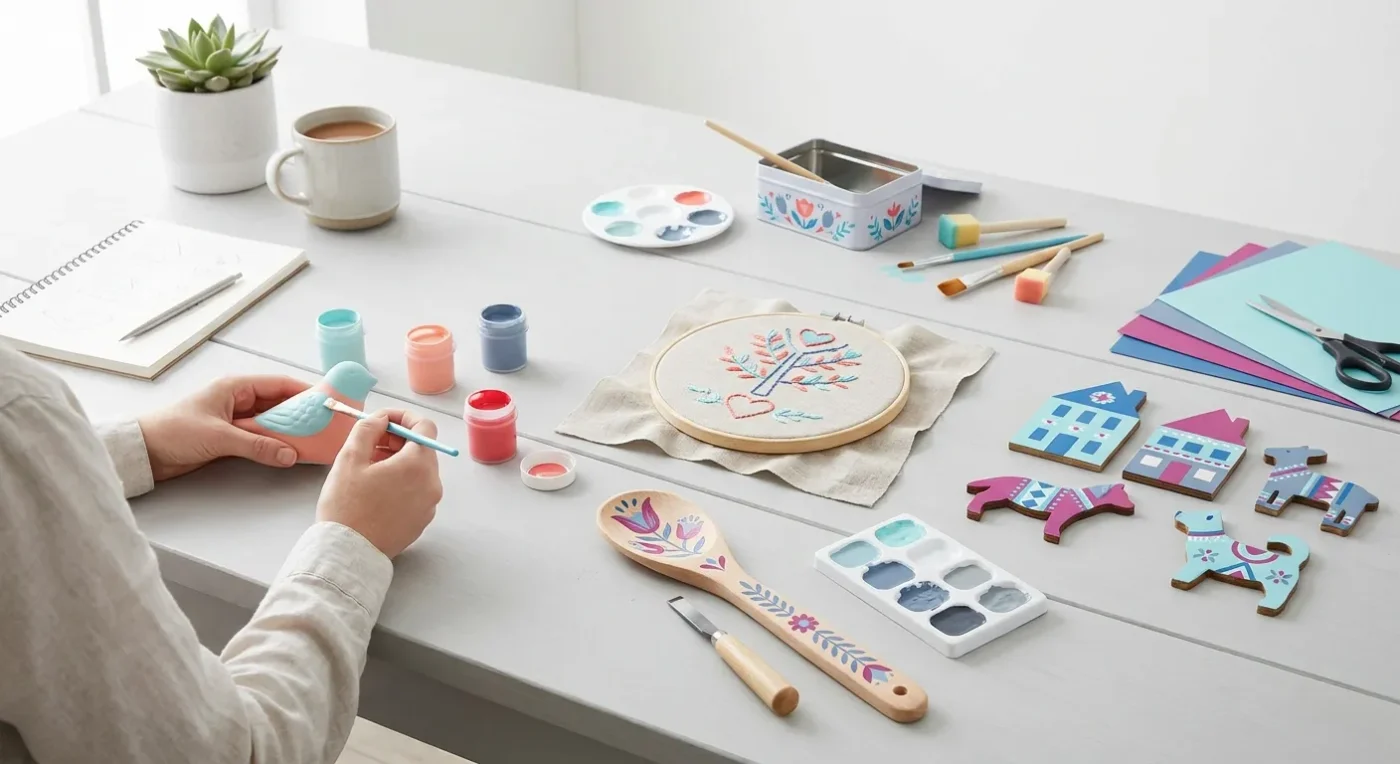
Transform plain wooden spoons into delightful kitchen decor with folk art designs. This is another one of those truly easy folk art projects that adds character to everyday items. You will need plain wooden spoons, acrylic paints, and a fine-tip brush. Begin by sanding the spoons lightly if they are rough. Next, apply a base coat of a light, neutral color. Then, paint small, repetitive patterns such as dots, swirls, or tiny flowers on the handles or bowls of the spoons. Traditional Scandinavian or Pennsylvania Dutch motifs work wonderfully here. Finally, seal your finished spoons with a food-safe varnish if they will be used for serving, or a regular clear varnish for decorative purposes. These make charming gifts or a lovely addition to your own kitchen.
Project 4: Hand-Painted Greeting Cards
Crafting hand-painted greeting cards is a wonderful way to share your artistic talents. This project is ideal for practicing small-scale designs and experimenting with color palettes. You will need blank cardstock, acrylic or watercolor paints, and small brushes. Consider simple folk art elements like stylized flowers, birds, or abstract patterns. Because the canvas is small, you can complete several cards in one session. Furthermore, these cards offer a personal touch that store-bought options simply cannot match. Think about the recipient and choose colors and designs that resonate with them. This is an accessible way to engage with easy folk art projects and spread a little handmade joy.
Project 5: Decorative Small Boxes
Small wooden boxes, readily available at craft stores, are perfect canvases for folk art. This project allows for slightly more intricate designs while remaining manageable for a weekend endeavor. Gather a plain wooden box, acrylic paints, and various brushes. You might also want some sandpaper for a smooth finish and a clear varnish. Start by painting the entire box a solid color. Subsequently, add your folk art design. Consider patterns inspired by nature, geometric shapes, or even simplified scenes. For example, you could paint a charming cottage or a field of wildflowers. These decorated boxes are perfect for storing keepsakes, jewelry, or as decorative accents on a shelf. They demonstrate how easy folk art projects can elevate simple objects into cherished pieces.
Embracing the Folk Art Journey
Crafting easy folk art projects allows you to explore creativity at your own pace. Each piece you create carries a unique story and adds a touch of handmade warmth to your surroundings. Enjoy the process of bringing these simple yet beautiful ideas to life. Remember, the beauty of folk art lies in its imperfections and personal expression. Do not strive for perfection; instead, embrace the joy of creation.
As you delve deeper into these creative endeavors, you might find yourself drawn to specific styles or techniques. For instance, exploring Drawing Inspiration from Historical Folk Art Patterns can provide a rich source of ideas. Additionally, understanding your tools is crucial. Our guide on The Essential Brush Kit for Folk Art Home Decor Projects can help you select the right instruments for your next masterpiece. Learning about the history and different regional styles of folk art can also enhance your appreciation and inspire new designs. For example, traditional Pennsylvania Dutch folk art often features vibrant tulips and hearts, while Scandinavian folk art, such as Rosemaling, is known for its graceful scrolls and floral motifs.
Building Confidence with Every Brushstroke
Beginning artists often worry about making mistakes. However, folk art is incredibly forgiving. Minor deviations often add to the charm and authenticity of the piece. Think of each project as a learning opportunity. With each painted coaster or rock, your confidence will grow. Soon, you will be experimenting with more complex patterns and color combinations. Furthermore, the satisfaction of creating something beautiful with your own hands is immensely rewarding. This journey of artistic growth is a key benefit of engaging in easy folk art projects regularly.
Consider joining a community of fellow artists. Sharing your work and learning from others can be incredibly motivating. The Power of Connection: Benefits of Joining a Decorative Painting Community highlights how valuable such interactions can be. You can exchange tips, receive constructive feedback, and find new inspiration. Many online forums and local groups cater specifically to decorative painting and folk art enthusiasts. These communities provide a supportive environment for artists of all levels, further enhancing your enjoyment of easy folk art projects.
Expanding Your Folk Art Horizons
Once you’ve mastered these initial easy folk art projects, you might feel ready to tackle new challenges. Perhaps you’ll want to explore painting on different surfaces. For instance, fabric offers a unique texture and opens up possibilities for custom apparel or home textiles. Our article, Beyond Canvas: Creative Ideas for Painting on Fabric, can guide you through this exciting area. Alternatively, you might be interested in incorporating specific tools like stencils to create intricate designs efficiently. Adding Detail with Decorative Painting Stencils offers great tips for this. Remember, the world of folk art is vast and full of creative avenues to explore.
The materials you use also play a significant role in your artistic journey. Understanding different types of paints and mediums can greatly enhance your results. Acrylic paints are versatile and widely used in folk art due to their quick drying time and vibrant colors. Learning about Unlocking New Effects: A Guide to Acrylic Paint Mediums can help you achieve various textures and finishes. Moreover, experimenting with different brush types and sizes will allow for greater detail and control in your designs. This knowledge empowers you to take on more ambitious easy folk art projects with confidence.
As you continue your folk art journey, remember that inspiration can be found everywhere. Look at everyday objects, nature, and historical designs. Folk art often tells a story, reflecting cultural heritage and personal experiences. For example, many traditional folk art pieces depict scenes of rural life, animals, or symbolic motifs. By observing these elements, you can develop your own unique artistic voice. Consider visiting museums or online archives of folk art to see how different cultures express themselves through this beautiful art form. The American Folk Art Museum offers a wealth of resources and inspiration at folkartmuseum.org.
Furthermore, don’t be afraid to personalize your projects. While traditional motifs provide a great starting point, adding your own flair makes each piece truly yours. Perhaps you’ll incorporate initials, significant dates, or colors that are meaningful to you. These personal touches transform simple crafts into cherished heirlooms. This aspect of customization is what makes easy folk art projects so endearing. The process is not just about painting; it is about infusing your personality into every creation.
Finally, consider the joy of sharing your creations. Handmade gifts carry a special sentiment. A painted river rock or a decorative coaster made by you can brighten someone’s day. Teaching a friend or family member how to create one of these easy folk art projects can also be a rewarding experience. Spreading the love of folk art helps preserve these charming traditions and encourages creativity in others. The National Folk Art Society also provides valuable insights into the preservation and celebration of folk art at folkartsociety.org.
In conclusion, embarking on easy folk art projects is a delightful and accessible way to engage with the decorative arts. From coasters to painted rocks, each project offers a chance to build skills, express creativity, and add unique, handmade beauty to your surroundings. So, gather your supplies, find a comfortable spot, and let your artistic spirit flourish this weekend!
FAQ: Frequently Asked Questions About Folk Art Projects
What materials are essential for beginner folk art projects?
For most beginner projects, you’ll need acrylic paints, a set of basic brushes (round, flat, and a fine-liner), plain wooden or rock surfaces, and a clear varnish. These fundamental supplies will get you started on many charming crafts.
How can I find inspiration for simple folk art designs?
Look to nature for inspiration, such as flowers, leaves, and animals. Historical folk art patterns from different cultures also offer a rich source of ideas. Additionally, simple geometric shapes and repetitive motifs are excellent starting points for beginners.
Are there any common mistakes beginners should avoid in folk art?
A common mistake is trying to achieve perfection. Folk art often celebrates a handmade, slightly rustic aesthetic, so don’t be afraid of minor irregularities. Also, ensure your surfaces are clean and dry before painting, and apply thin, even coats of paint to prevent clumping.
Can children participate in these types of crafts?
Absolutely! Many of these simple art crafts are suitable for children with adult supervision. Projects like painted river rocks or decorative greeting cards are particularly engaging for younger artists, helping them develop fine motor skills and creativity.
How do I make my painted folk art projects durable?
To ensure durability, always seal your finished pieces with a clear varnish or sealant. For items like coasters that will see heavy use, a durable, waterproof varnish is recommended. For decorative items, a standard clear craft sealant will suffice.